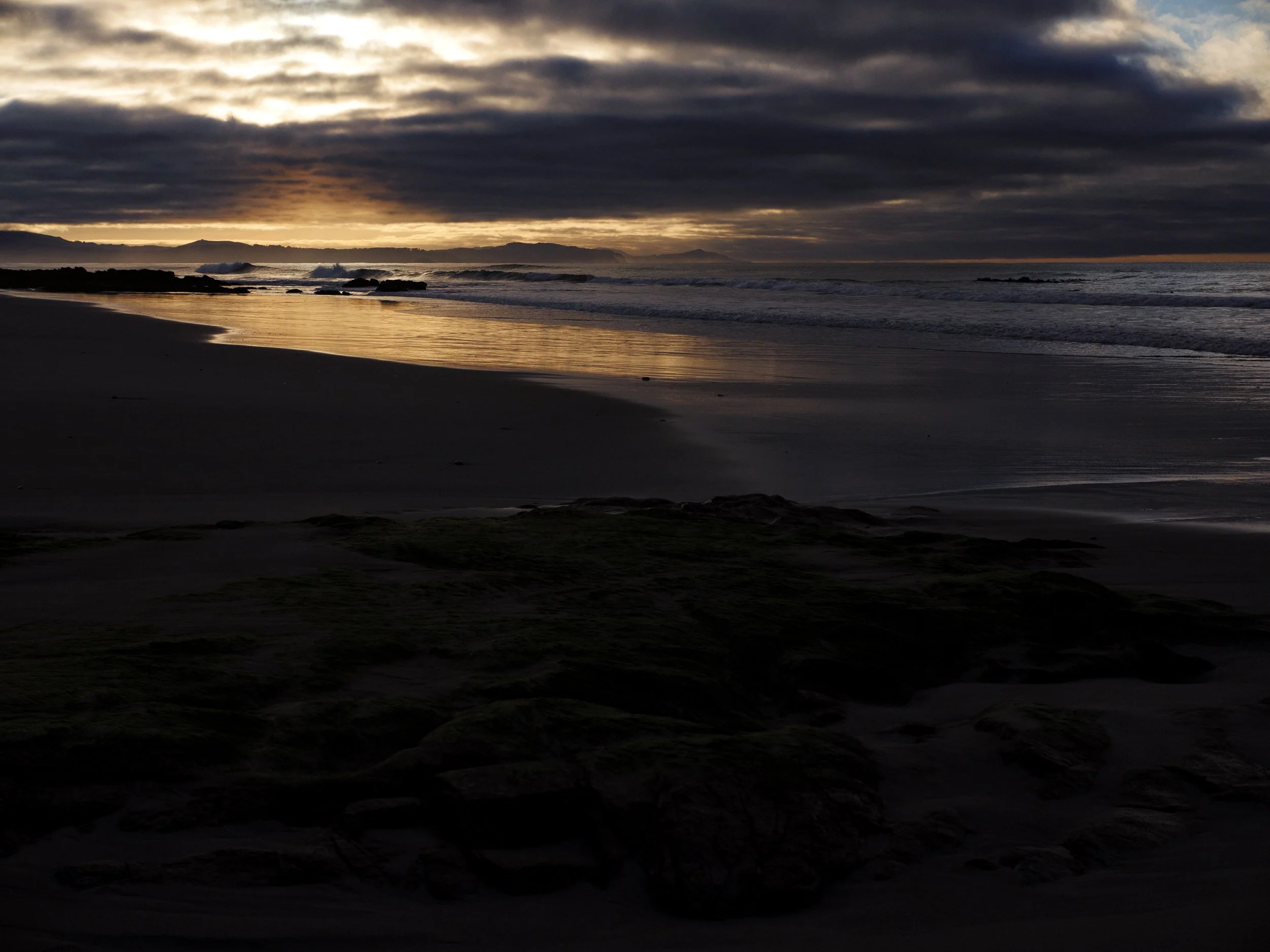
To the always talking sea
developmental project
copyright ©2026 jocelyn janon
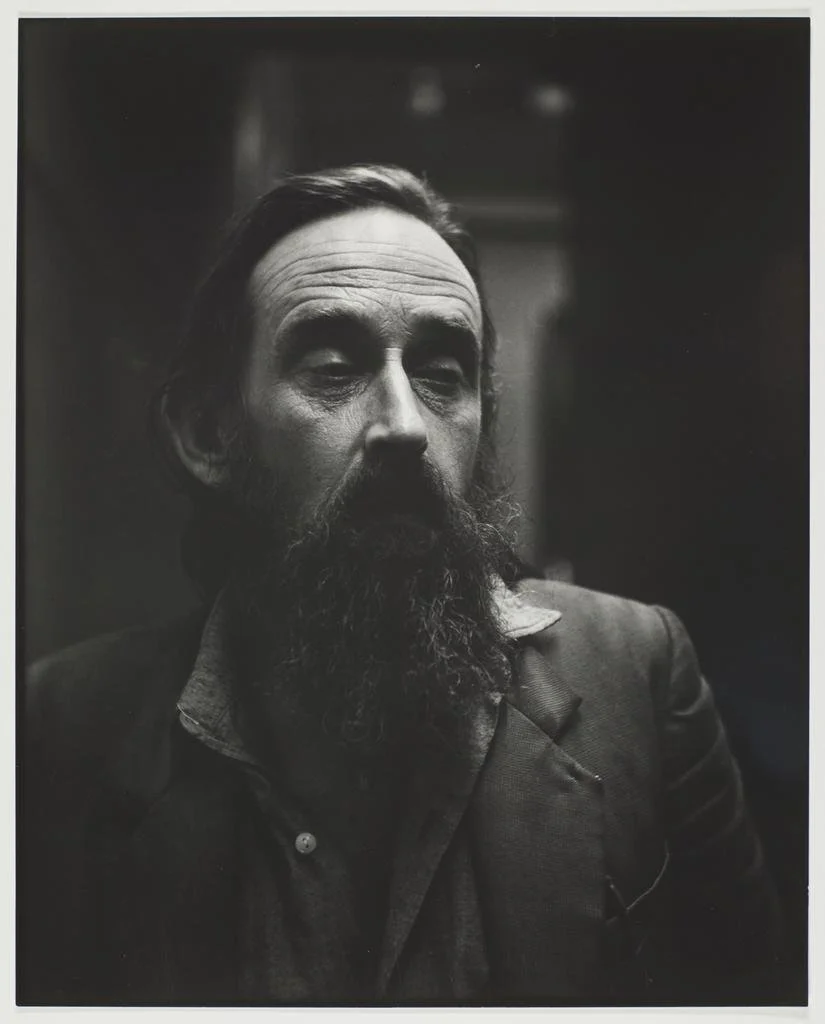
de Hamel, Michael, James K. Baxter (c.1965-1972).
Hocken Digital Collections, accessed 29/03/2026,
https://hocken.recollect.co.nz/nodes/view/53393
At Kuri Bush
James K. Baxter, 1966.
A few days back I climbed the mound
Where the farmhouse had stood,
As green as any that the Maoris made
Along that coast. The fog was blowing
Through gates and up gullies
Hiding even the stems of cocksfoot grass
That had sprung up in place of
The sitting-room table and the small brass
Kerosene lamp my mother lighted
Every night, whose white wick would burn
Without changing colour. Somebody must have
Used the old brushwood fence for kindling
Twenty years ago. Outside it
My father stood when I was three or less,
Holding me up to look at
The gigantic rotating wheel of the stars
Whose time isn't ours. The mound yielded
No bones, no coins, but only
A chip of the fallen chimney
I put in the pocket of a damp coat
Before I bumbled back down to the road
With soaking trousers. That splinter of slate
Rubbed by keys and cloth like an amulet
Would hold me back if I tried to leave this island
For the streets of London or New York.
I hope one day they'll plant me in
The kind of hole they dig for horses
Under a hilltop cabbage tree
Not too far from the river that goes
Southwards to the always talking sea.
Jocelyn
development
To the always talking sea
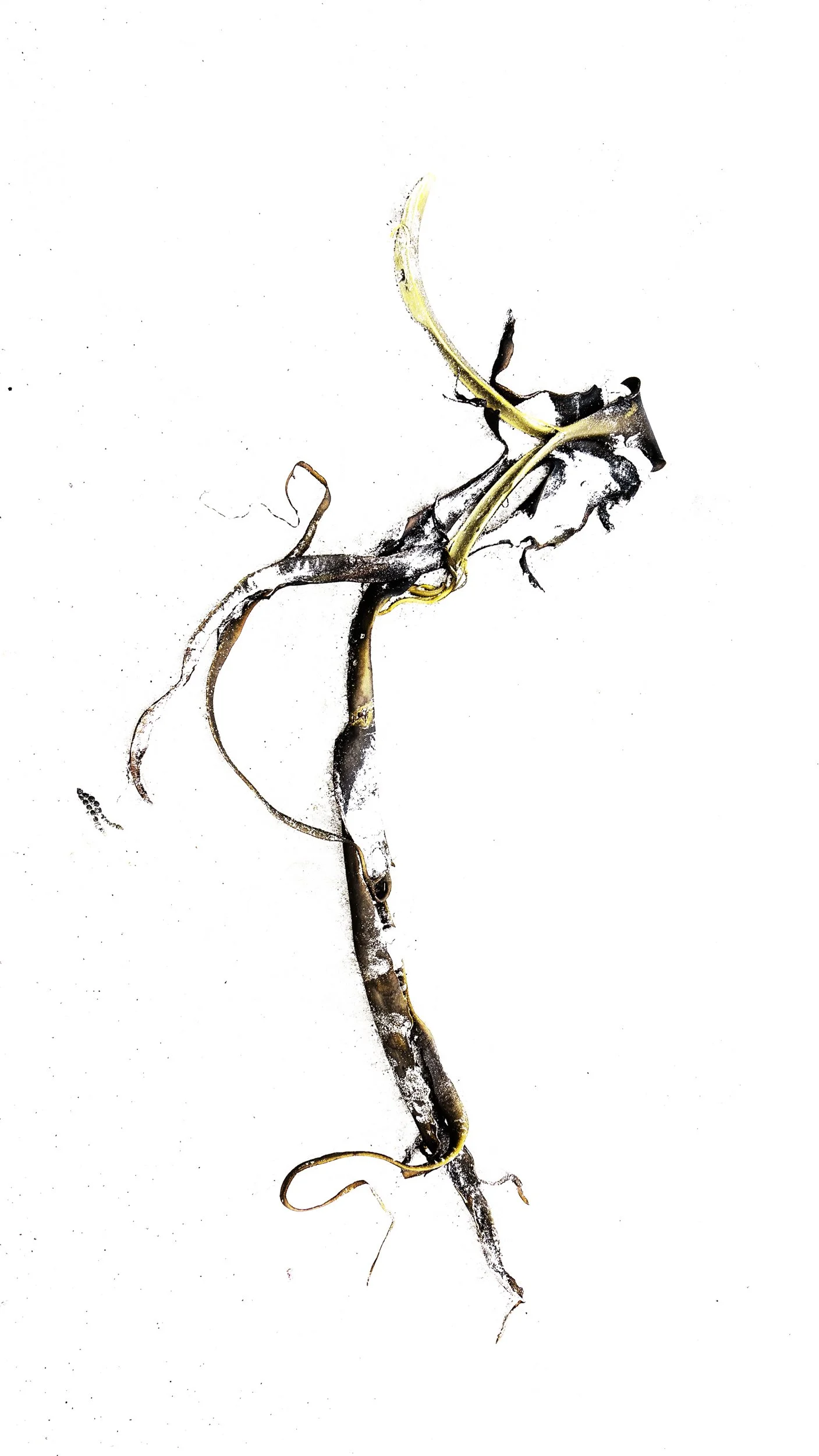
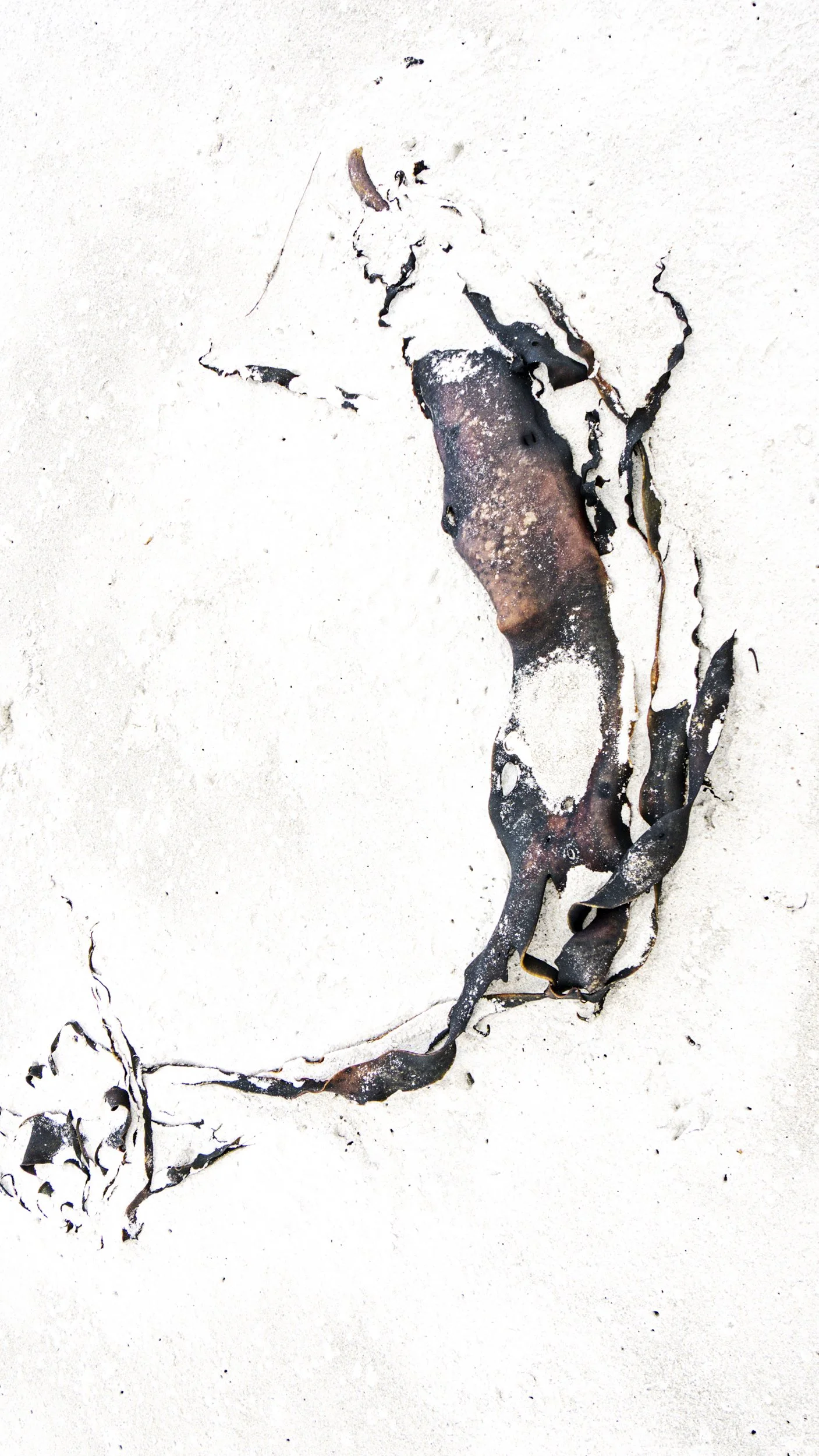
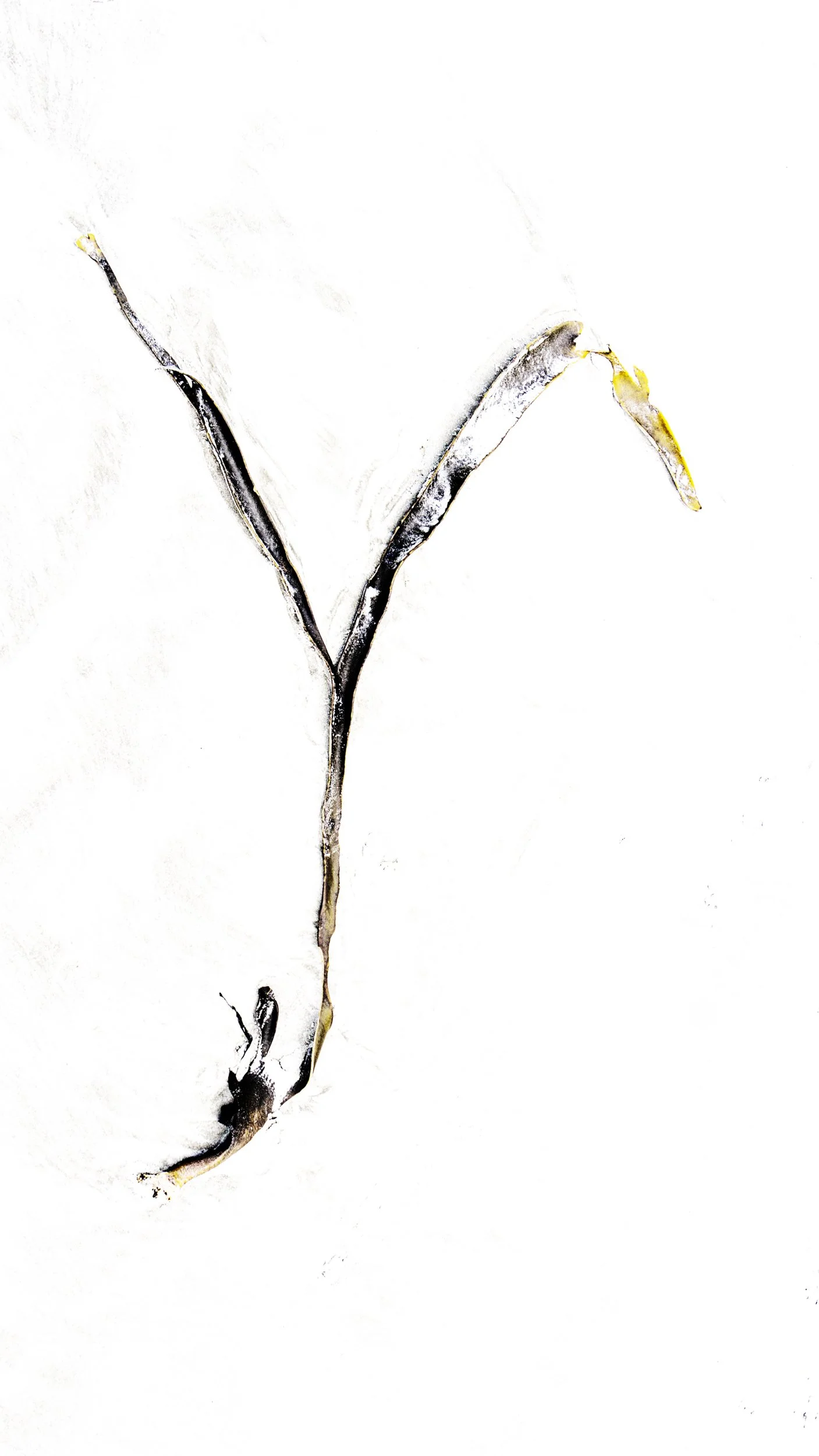
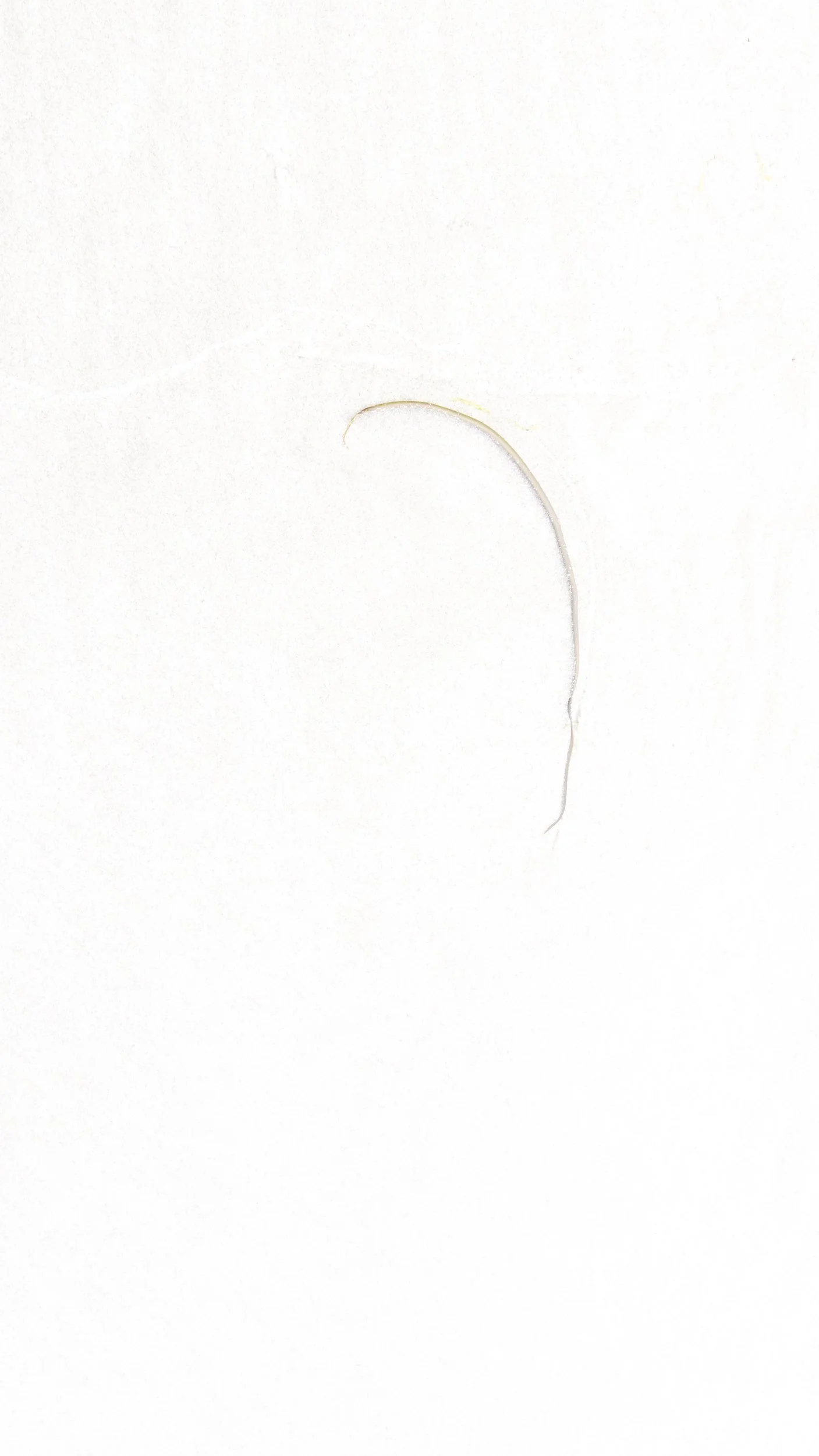
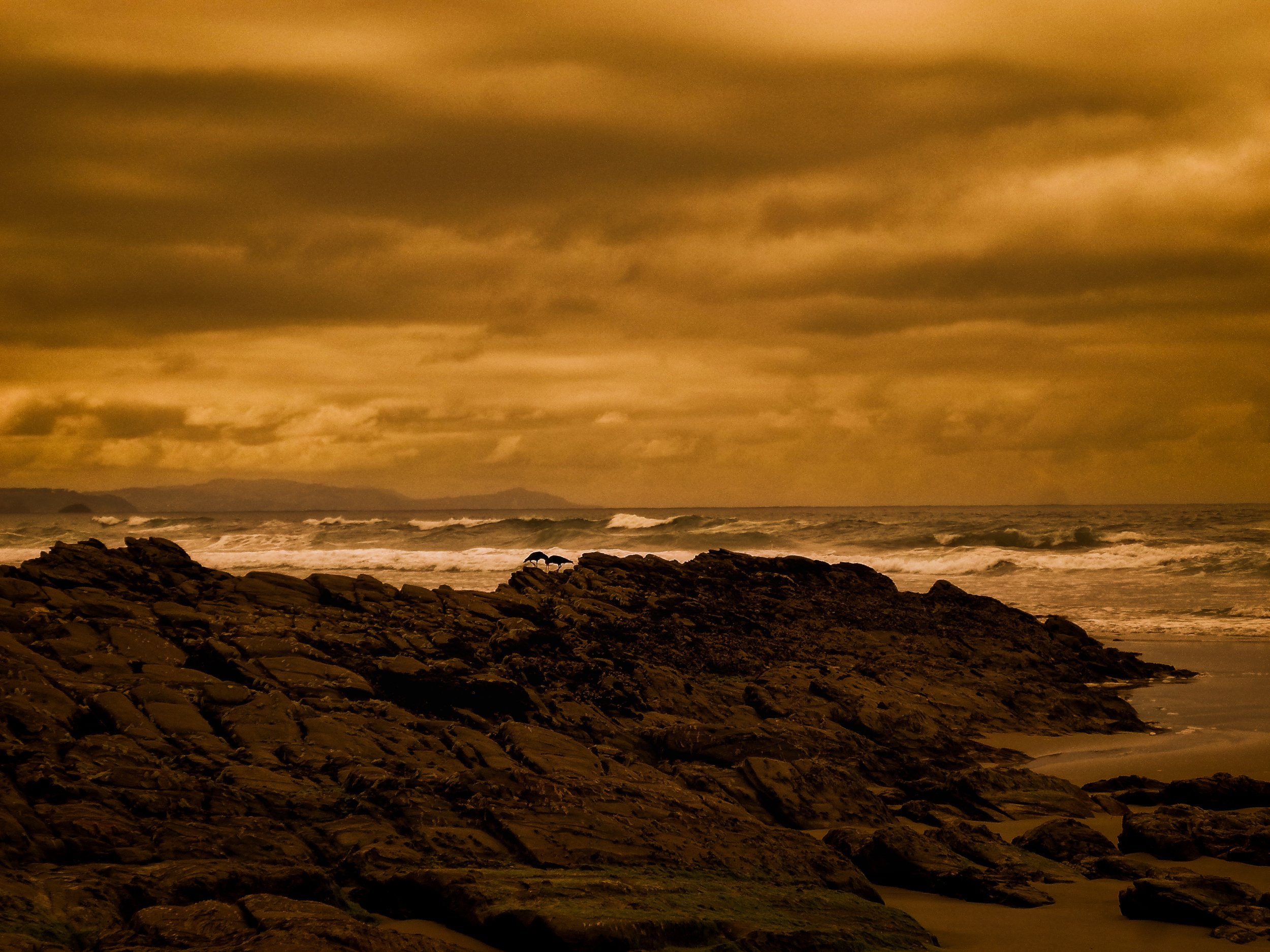
To the always talking sea, a title drawn from a James K. Baxter poem, explores how coastal environments can act as partners in shaping relational design practices.Early findings suggest that working “with” natural places unsettles extractive habits of looking and opens space for design approaches grounded in reciprocity, humility, and ecological literacy.At Kuri Bush, south of Dunedin, this partnership becomes visible through the continual arrival of seaweed carried by tides.In my project, beached seaweeds act as signs, a vocabulary, and a language yet to be deciphered, material expressions that invite designers into practices of listening, interpretation, response.Across iwi narratives, seaweed is understood as a message from Tangaroa, while in Japan, it is described as umi no tegami, letters from the sea.Both perspectives recognise seaweed as part of a living communication network, one that expresses the ocean’s movements, moods, and ecological conditions. Through repeated field visits and embodied engagement with the shoreline, the project explores how designers can cultivate sensitivity to these material cues and the forms of knowledge they convey.This developmental paper reflects on how such practices can expand relational design vocabularies and support more responsive, situated forms of practice in coastal environments.seaweed photography at Kuri Bush
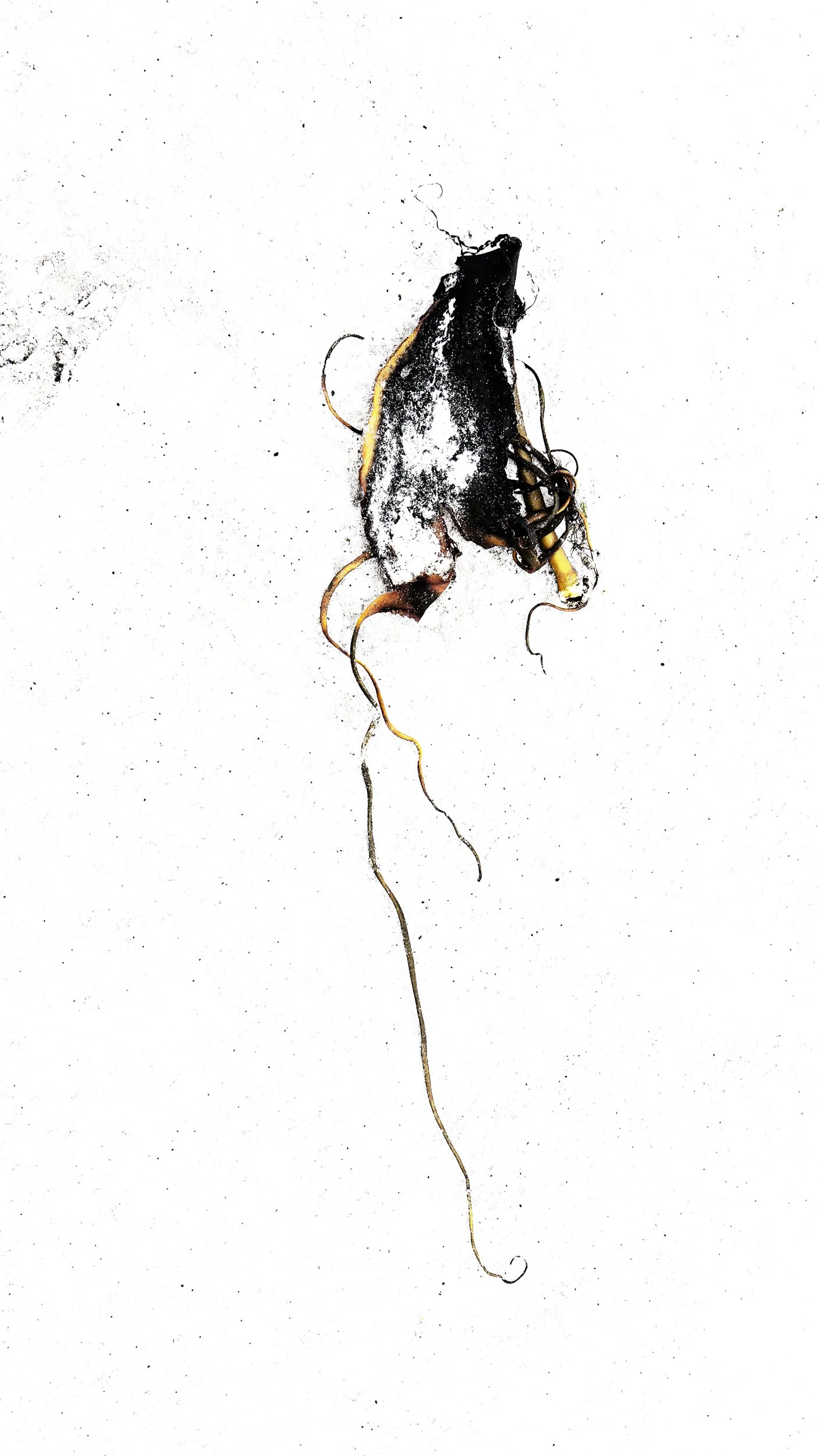
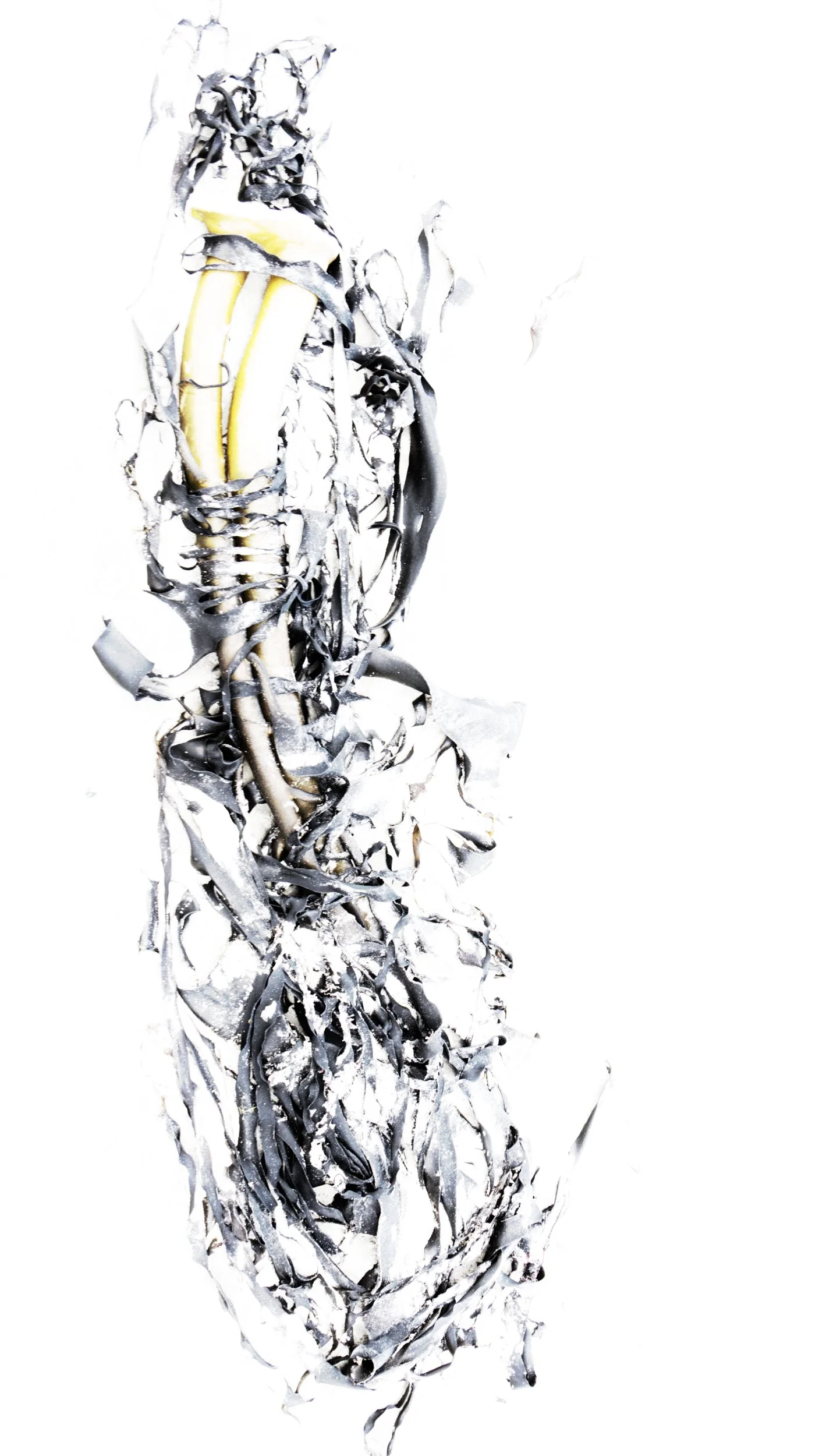
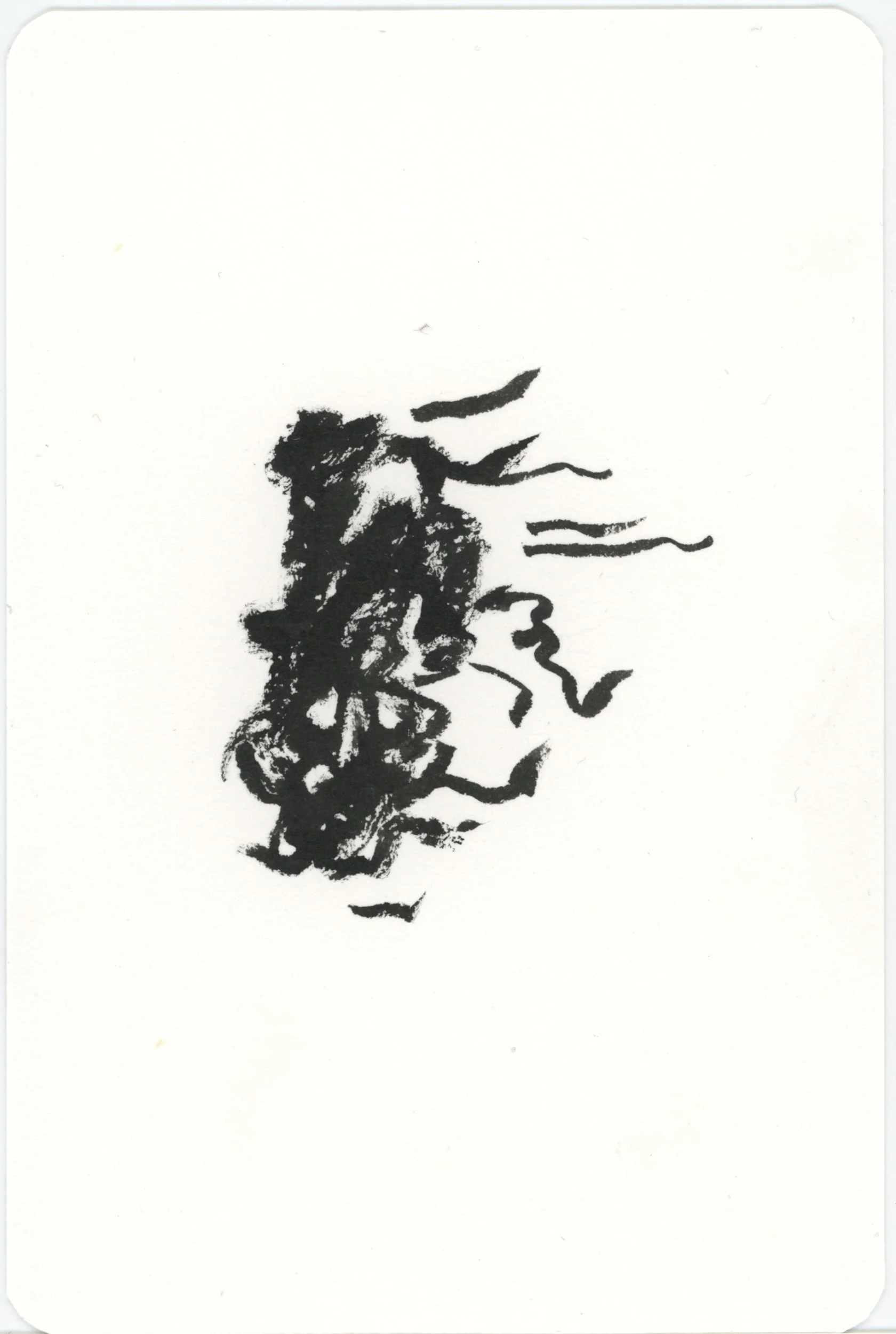
signs
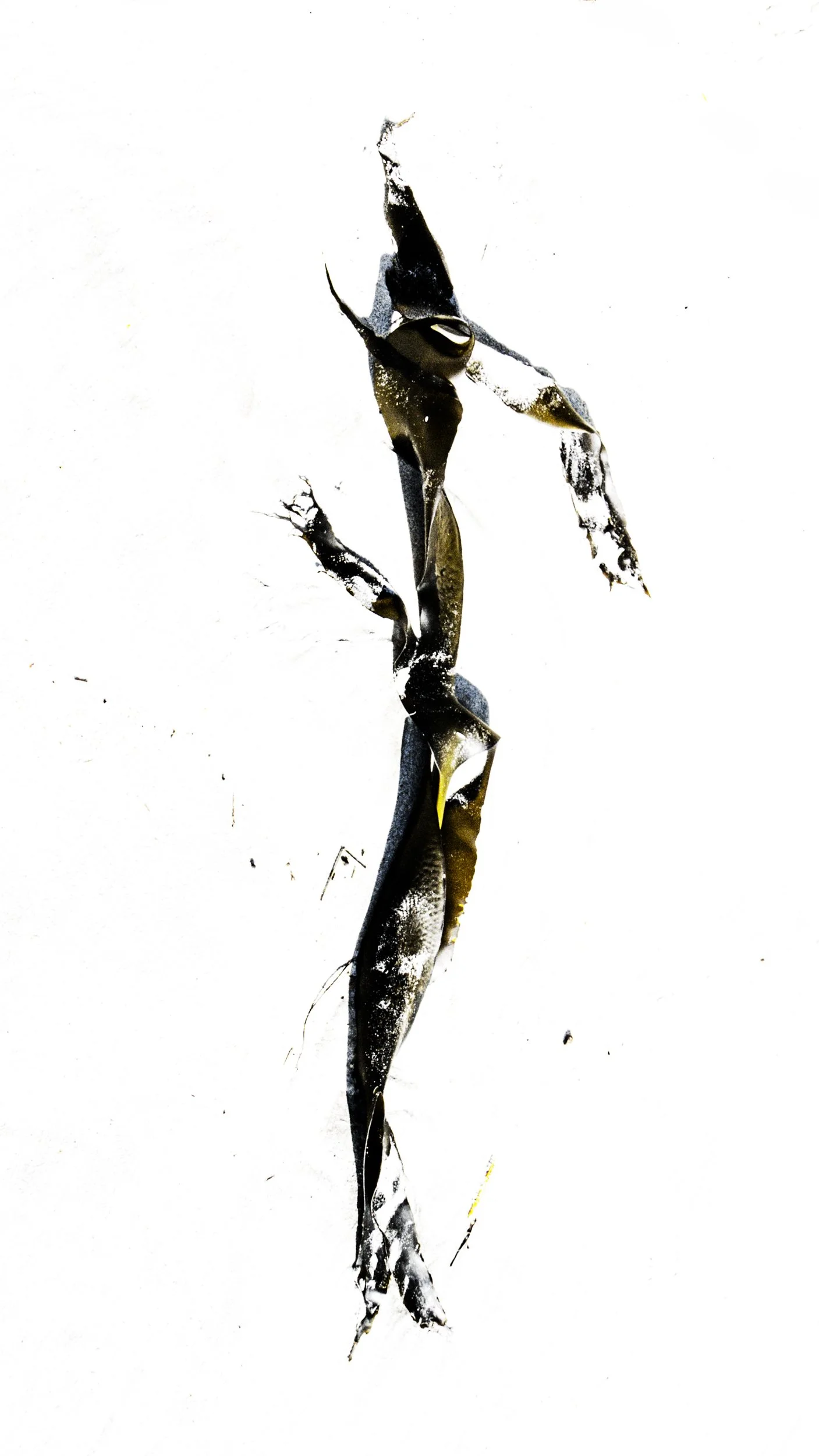
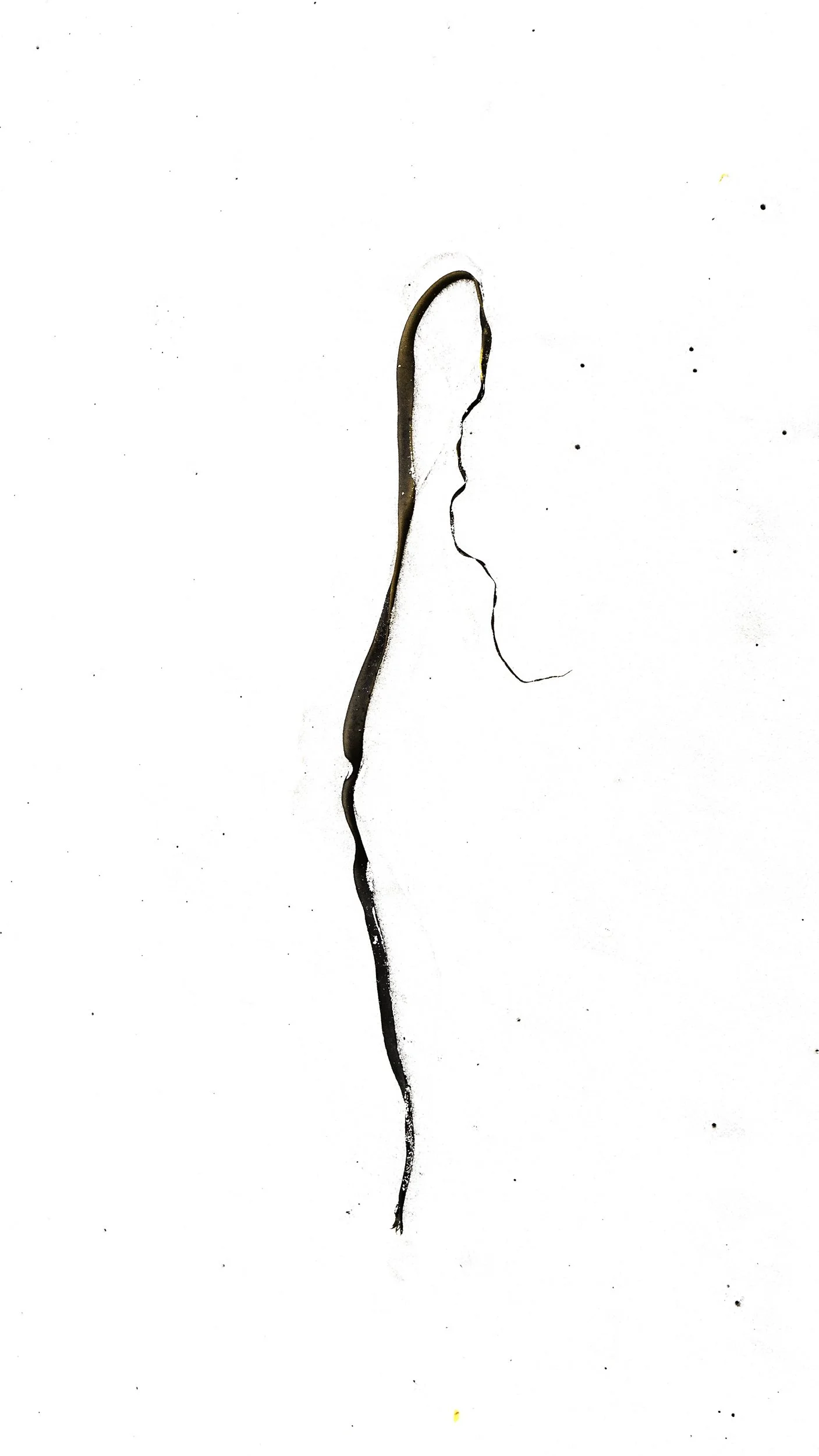
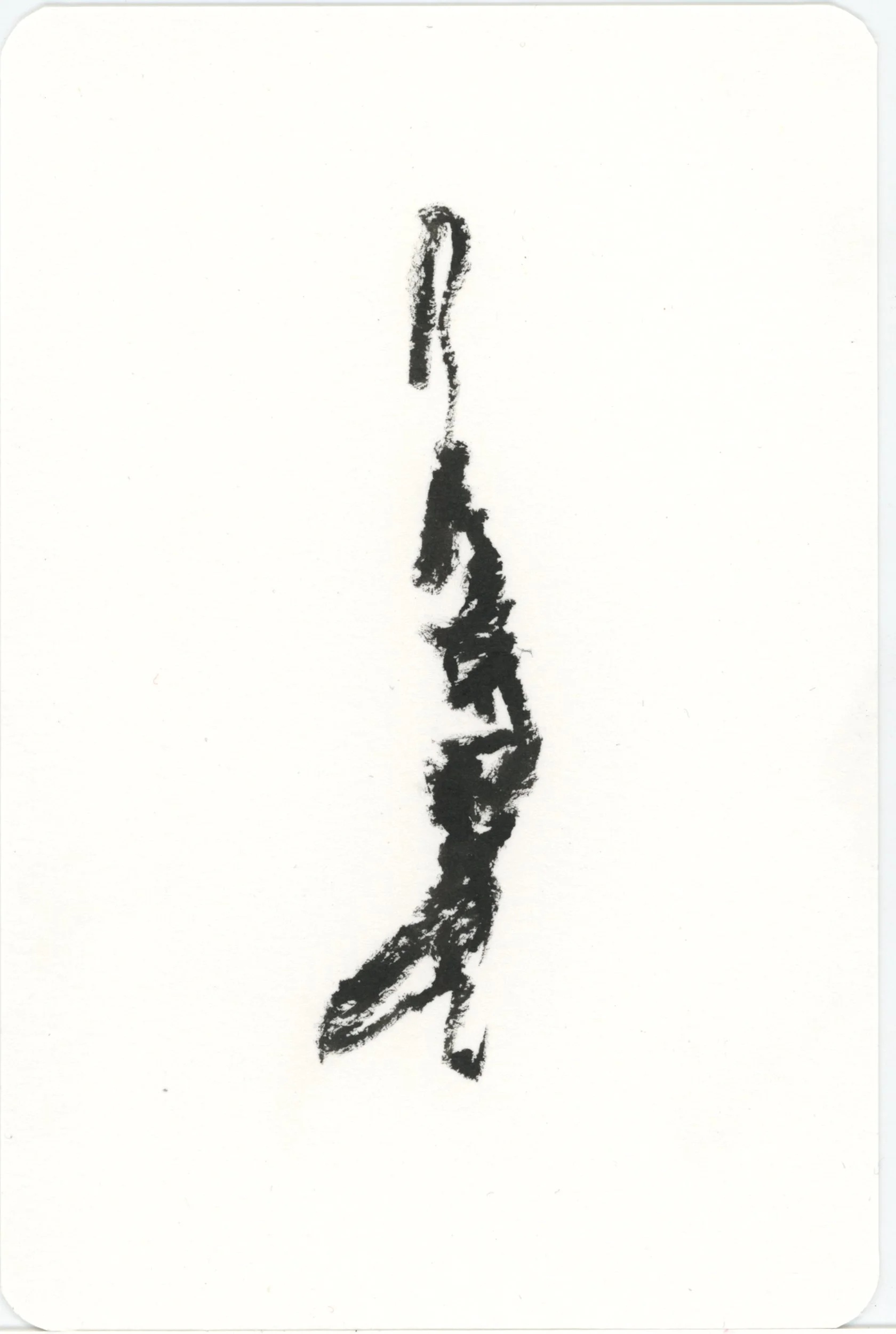
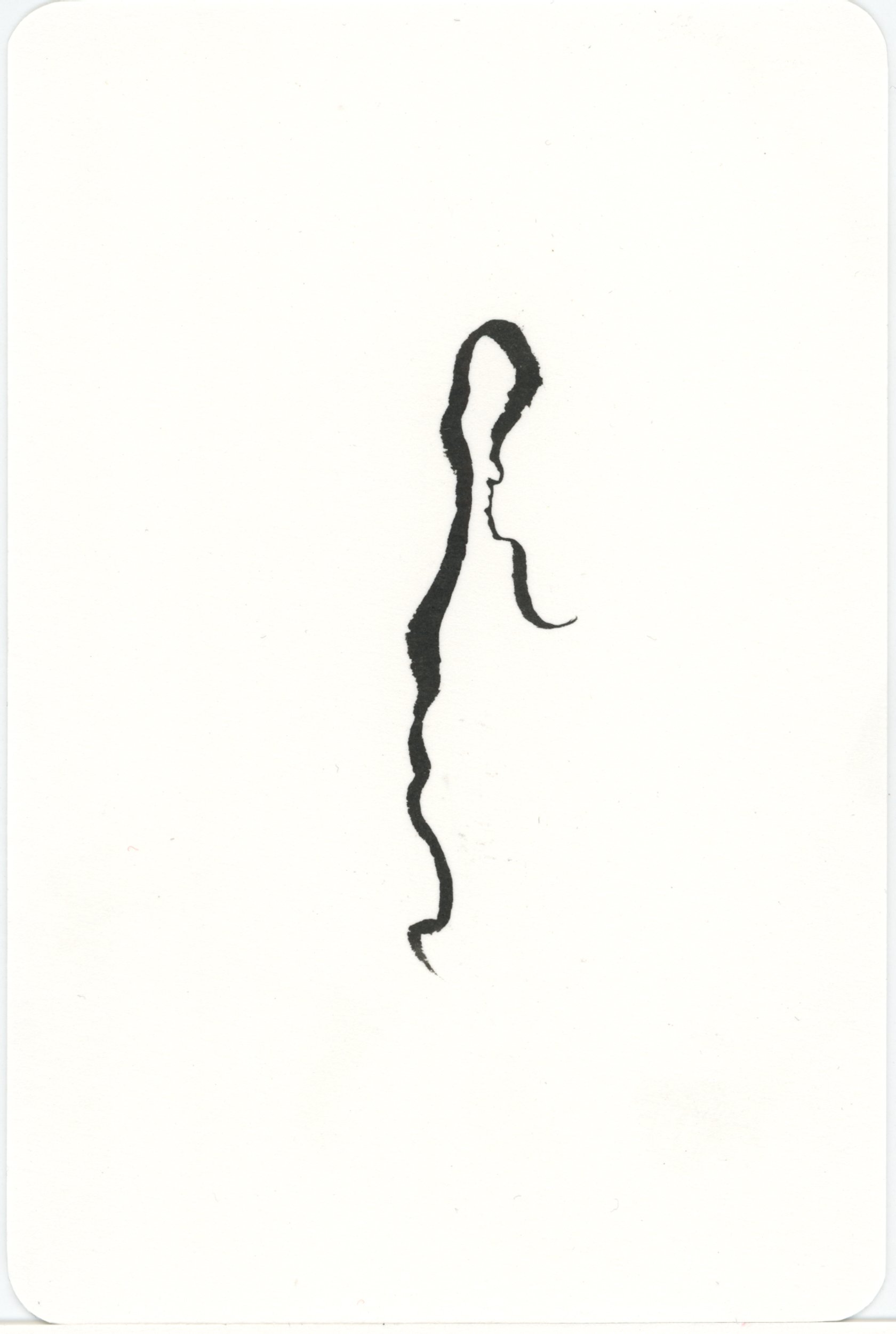
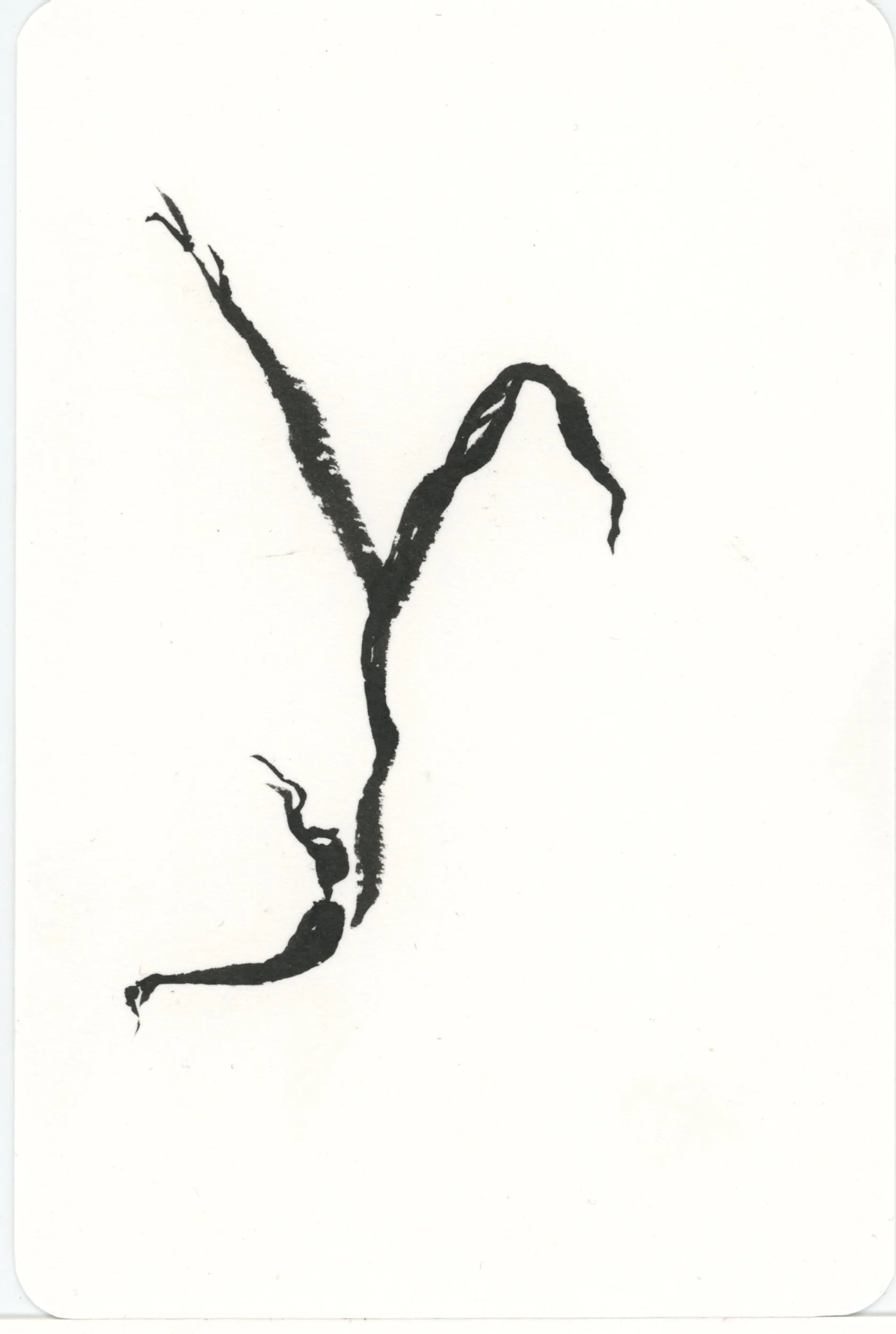
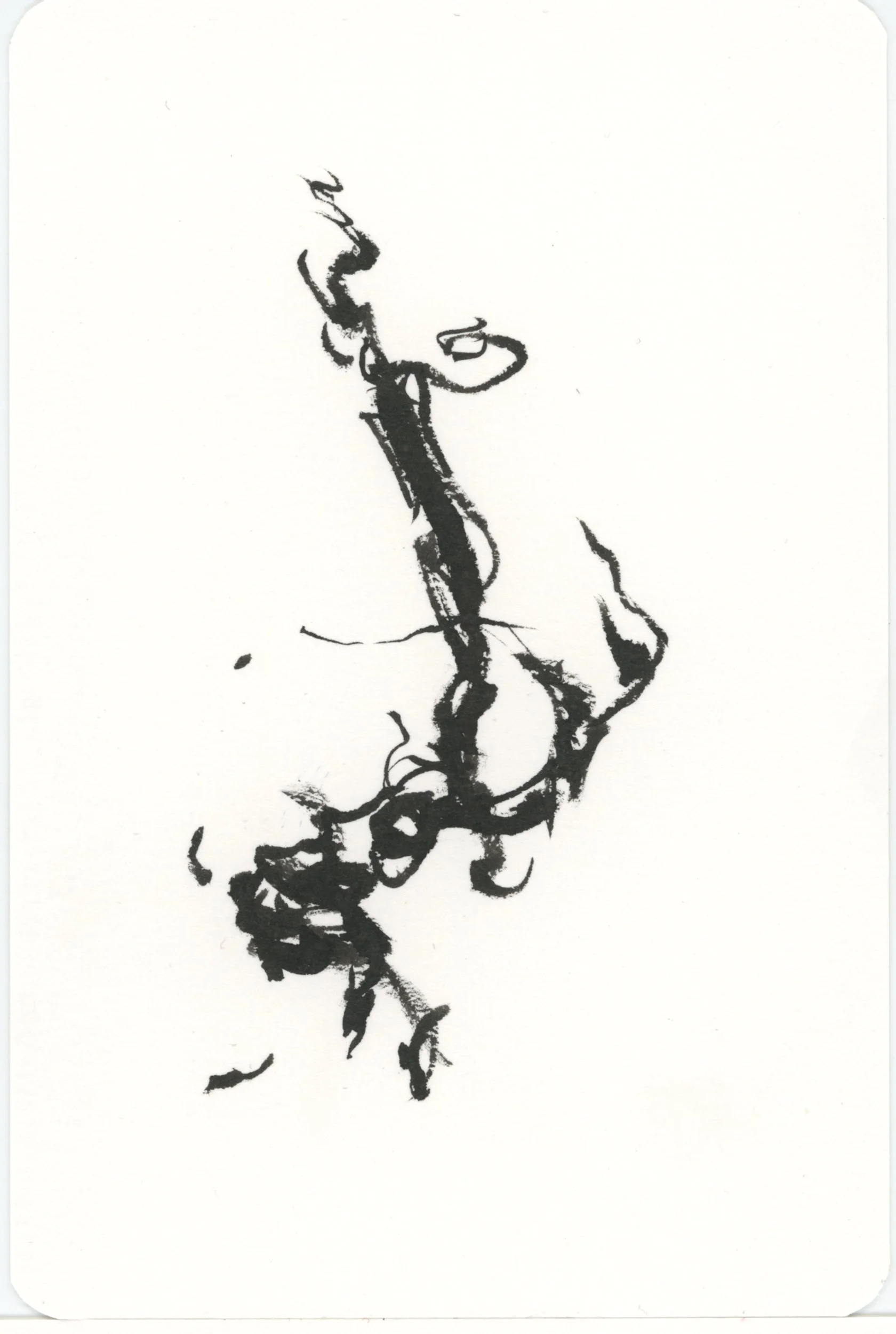
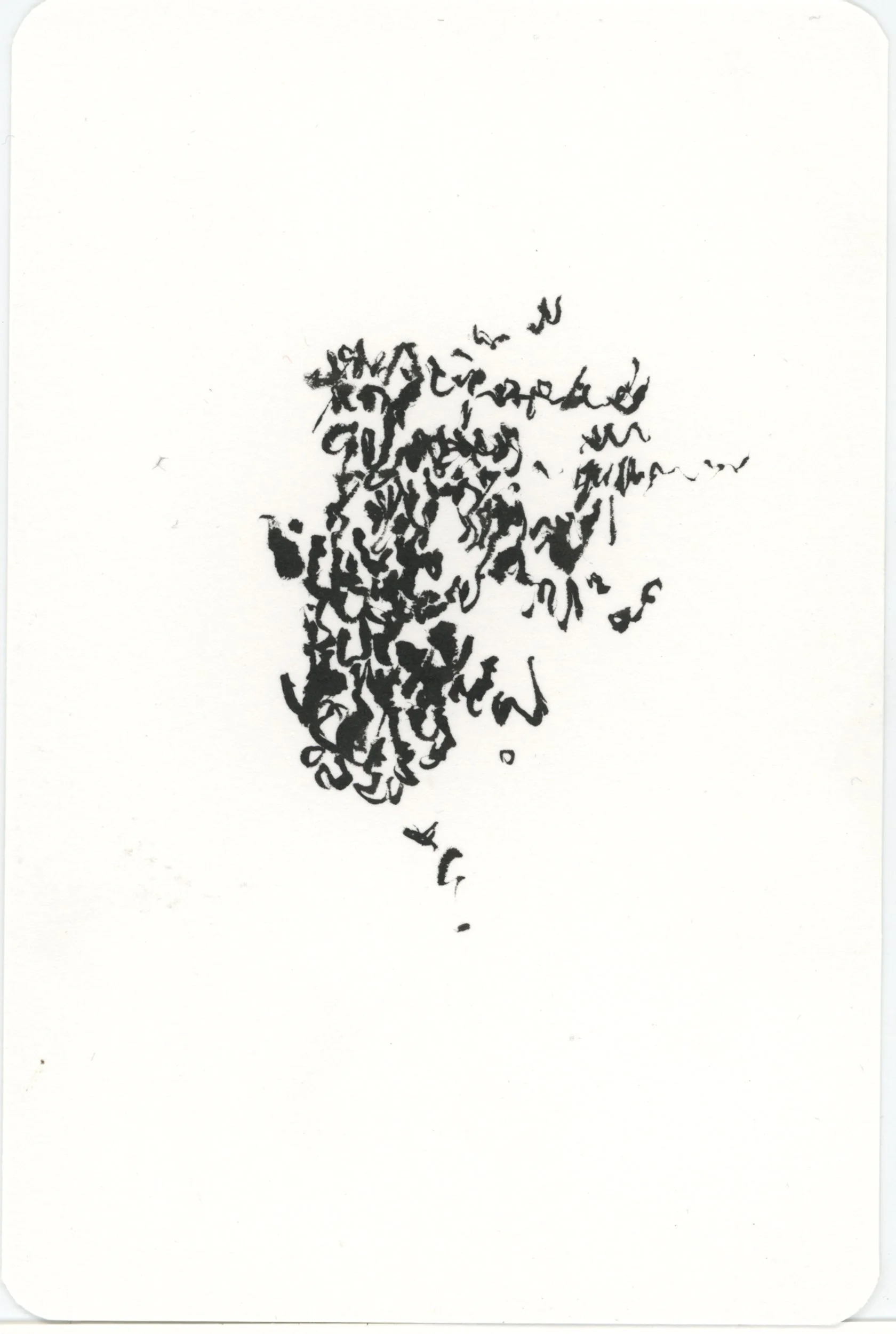
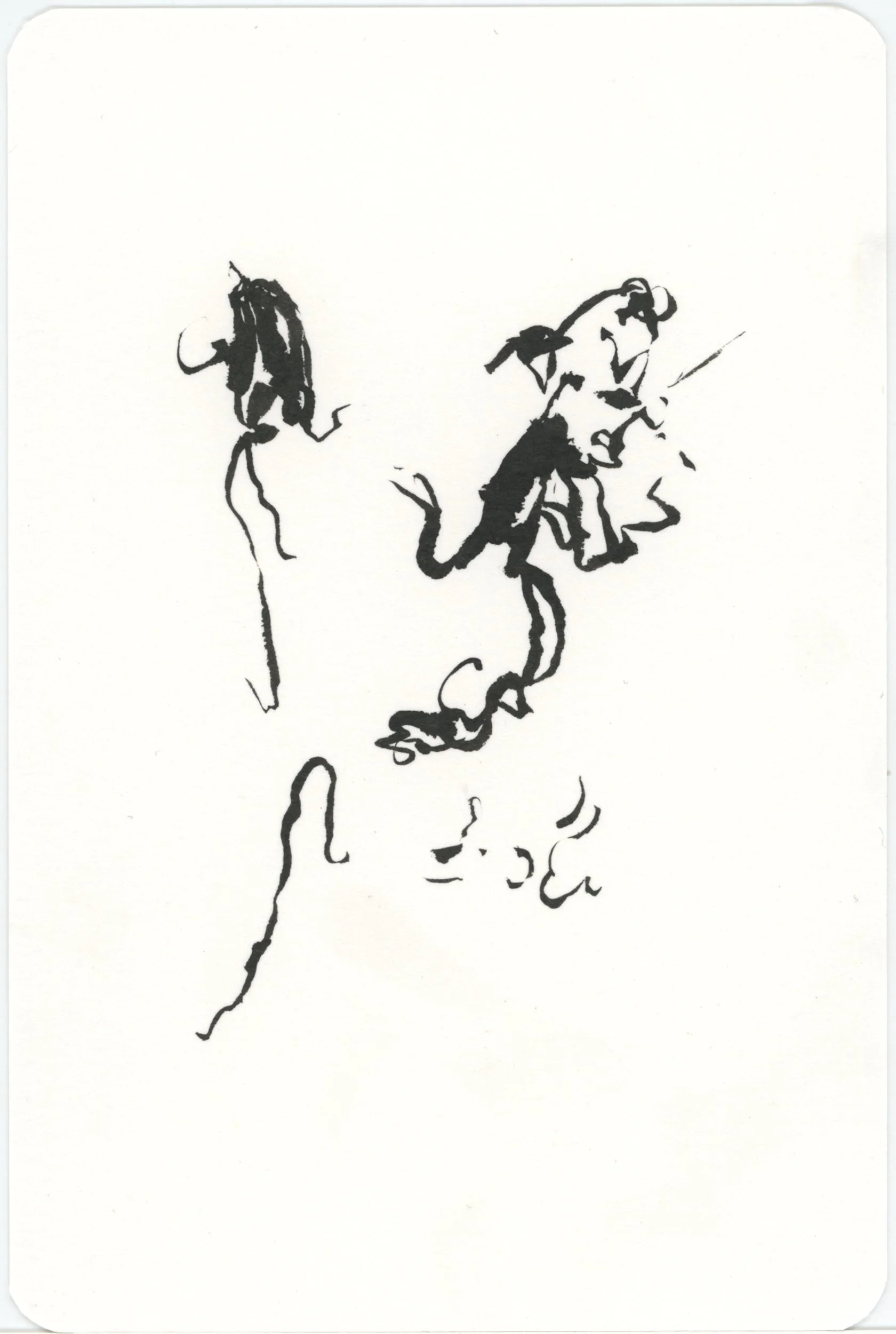
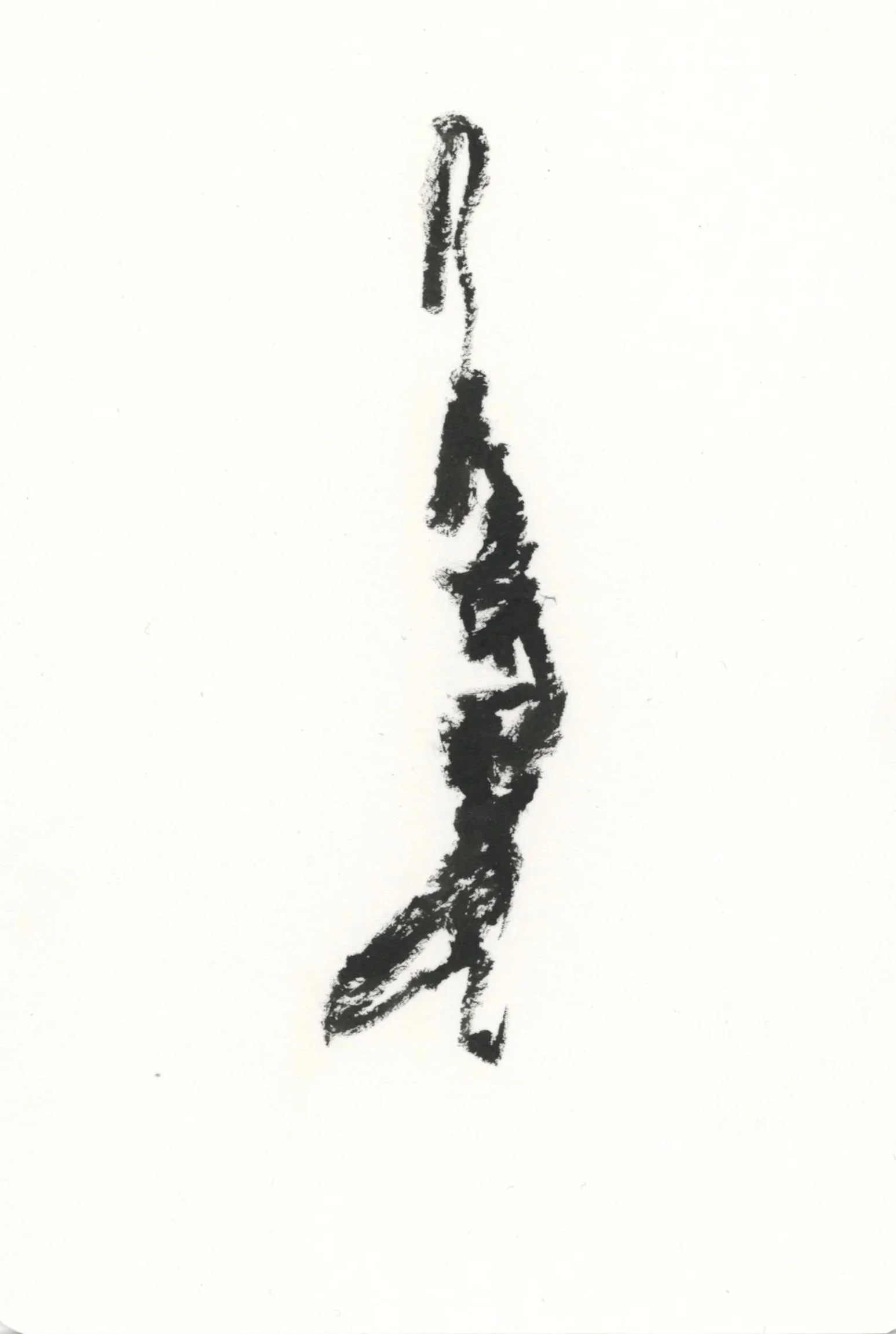
ink on paperThese drawings are proof of concept.
The final ones will use a specific ink.graphemes
A grapheme is the smallest unit of writing in a language.
It is the written counterpart to a spoken sound (a phoneme)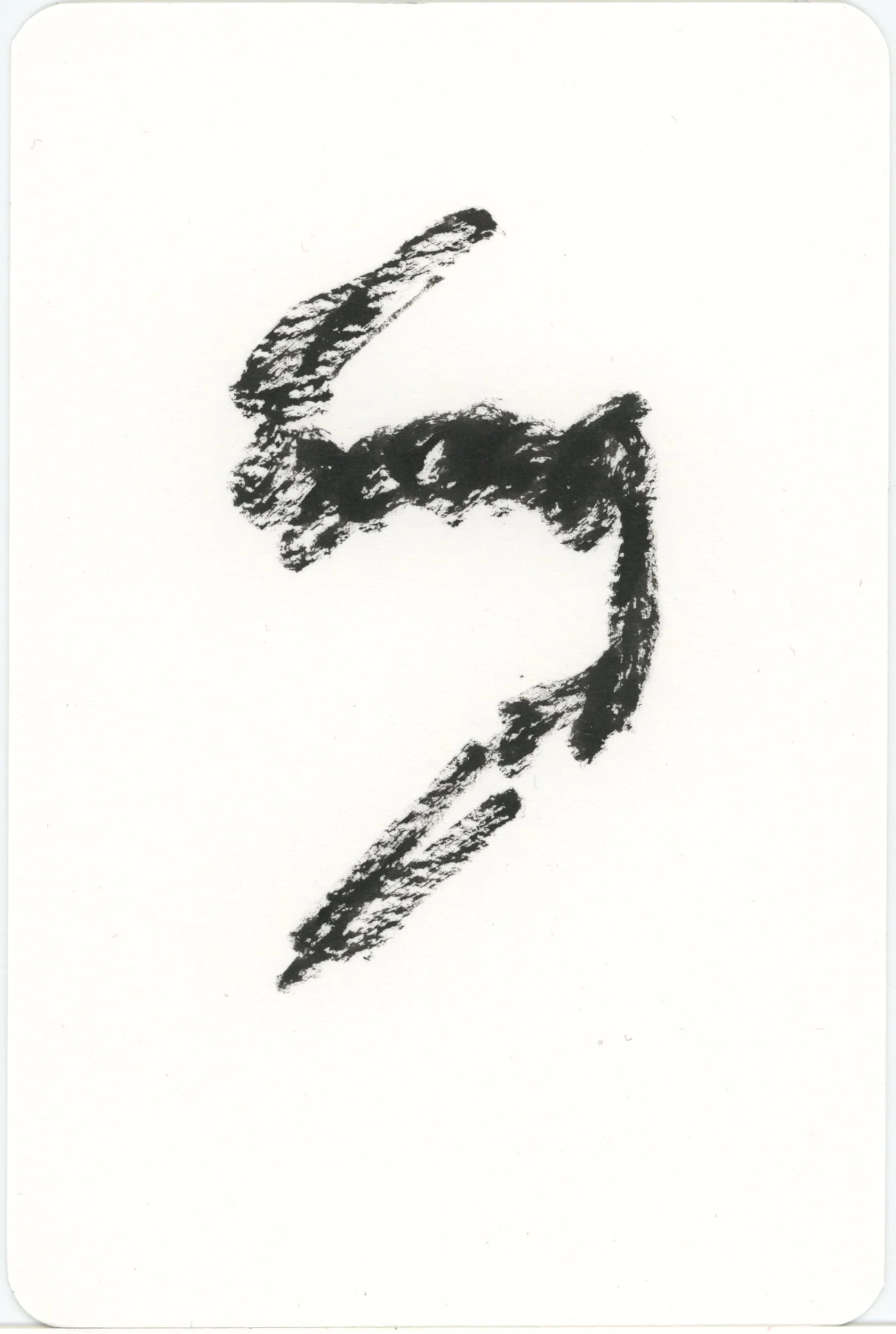
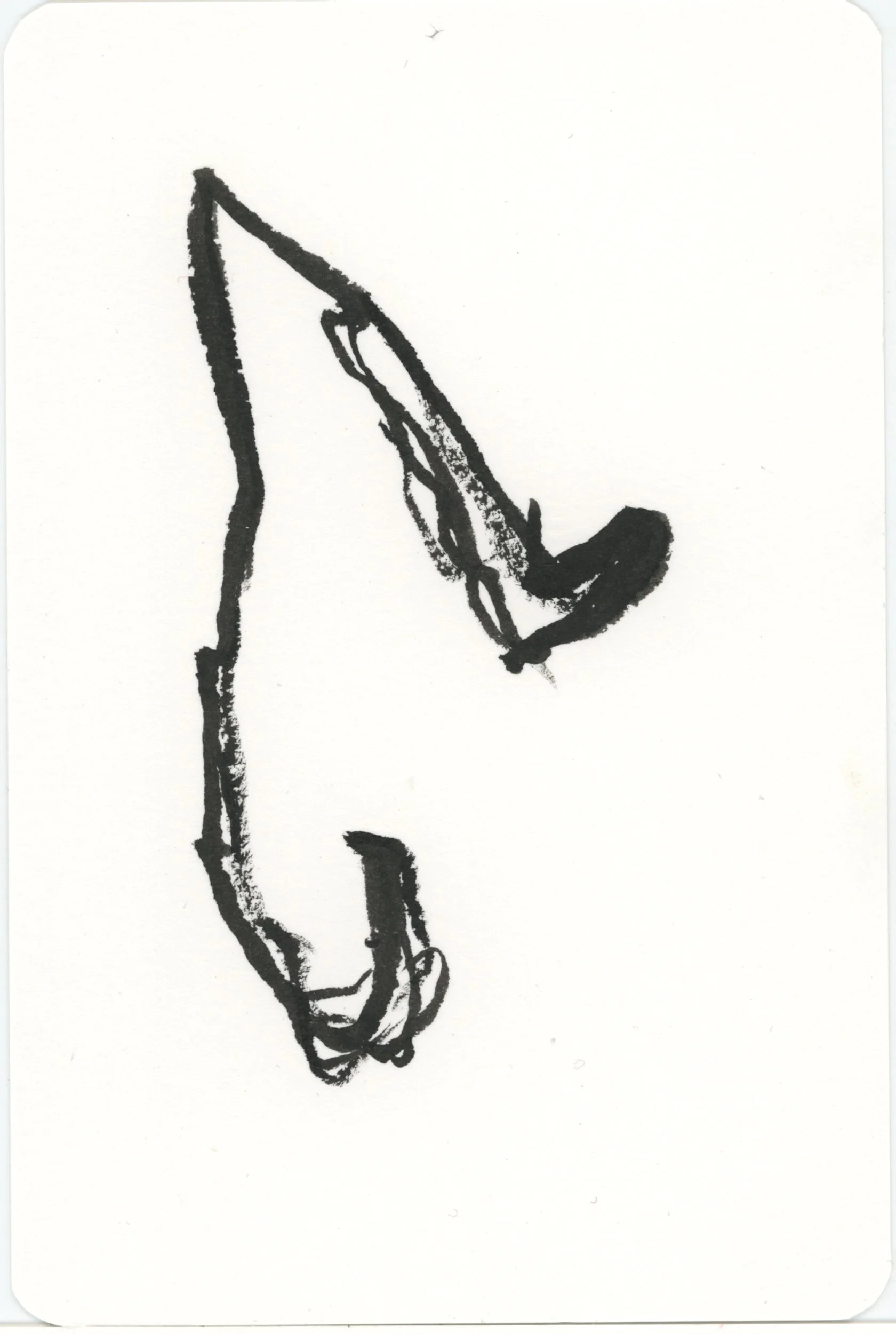
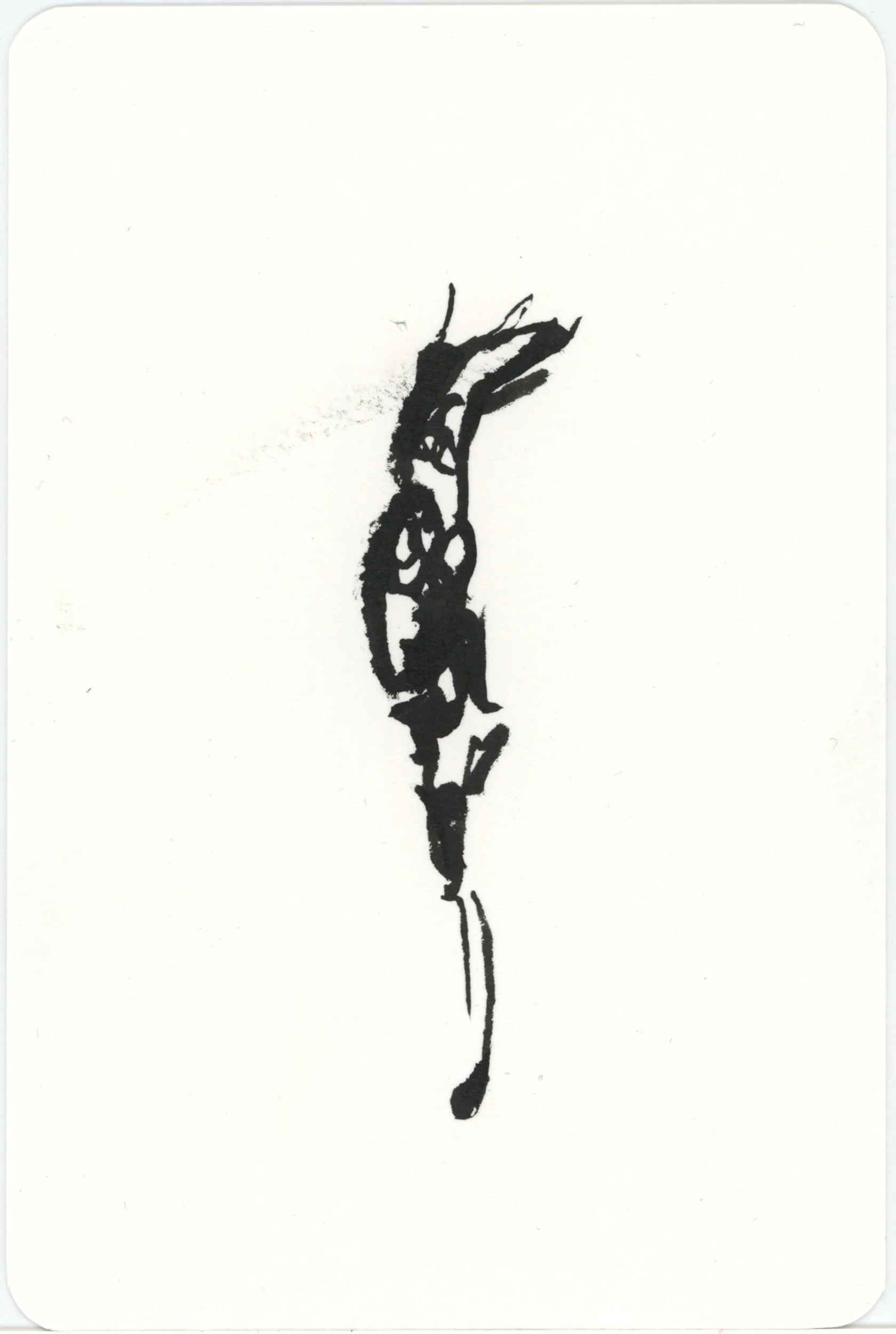
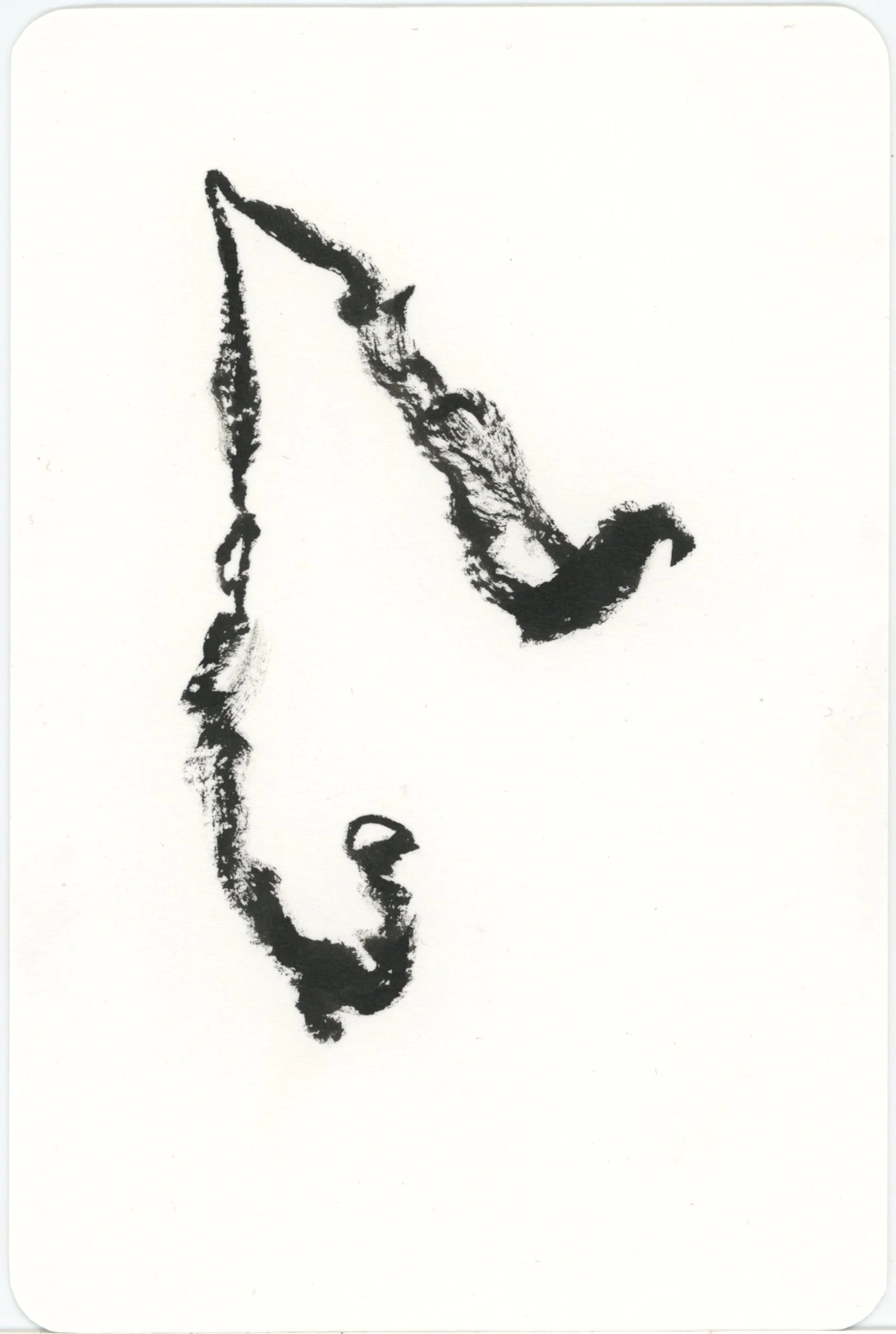
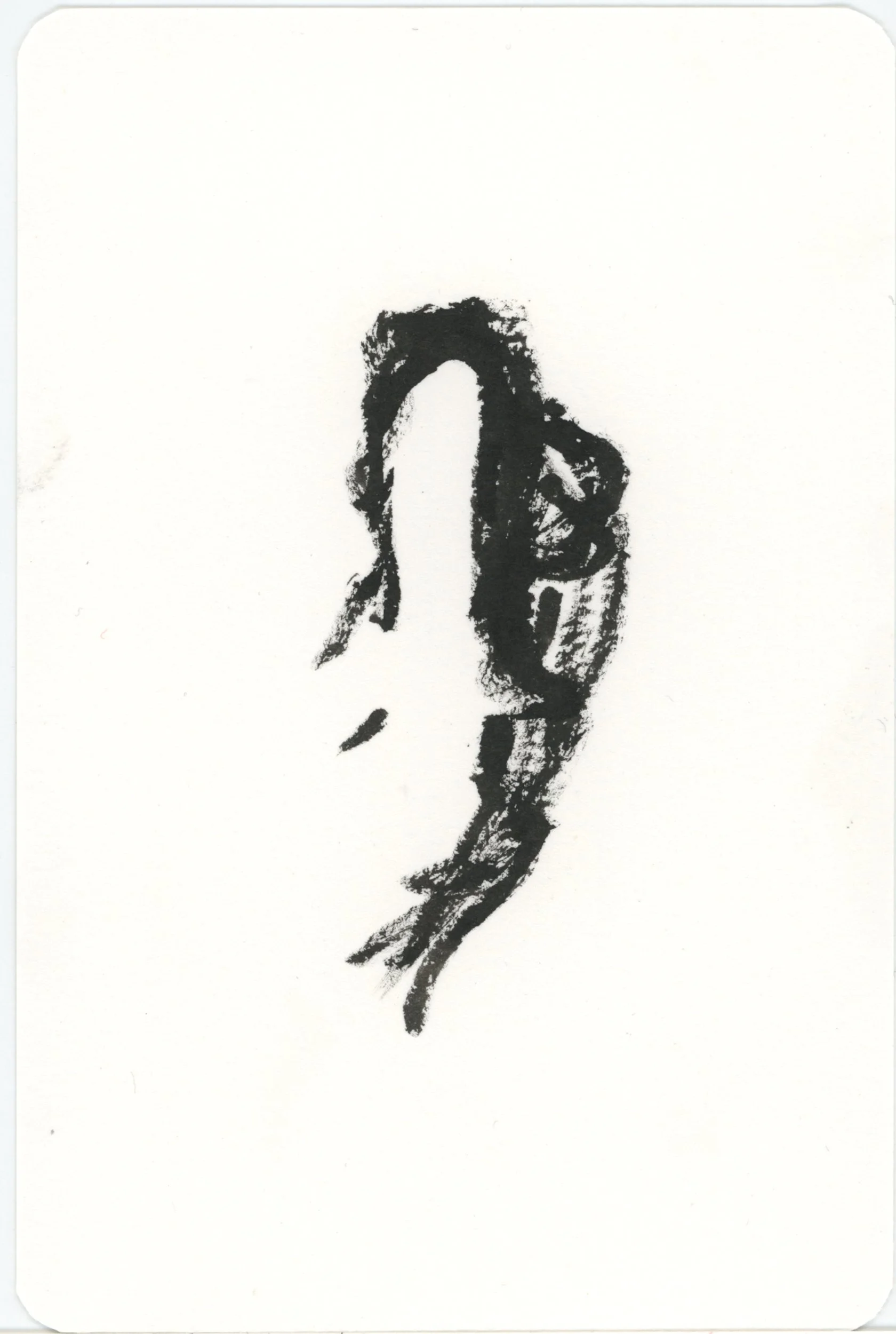
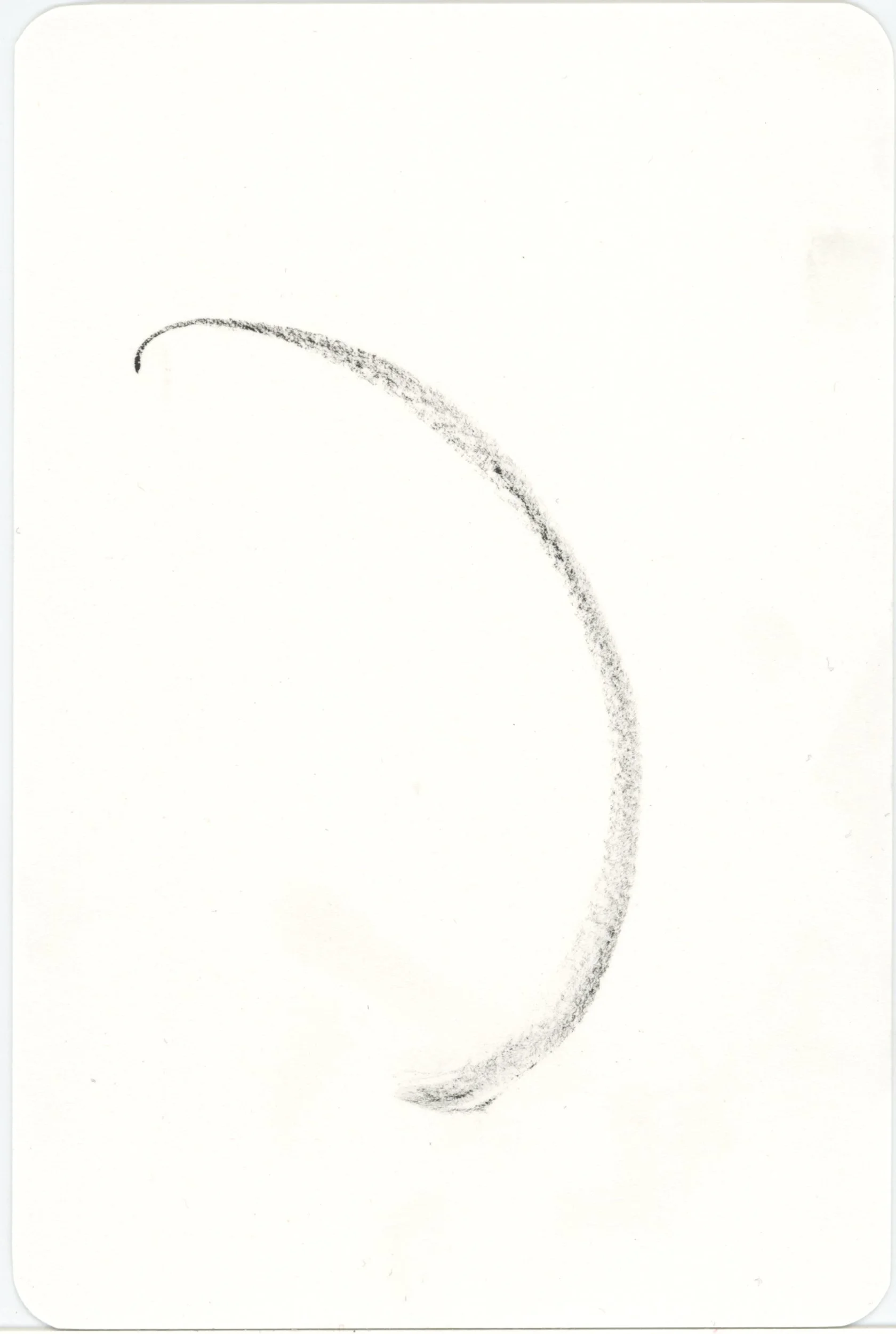
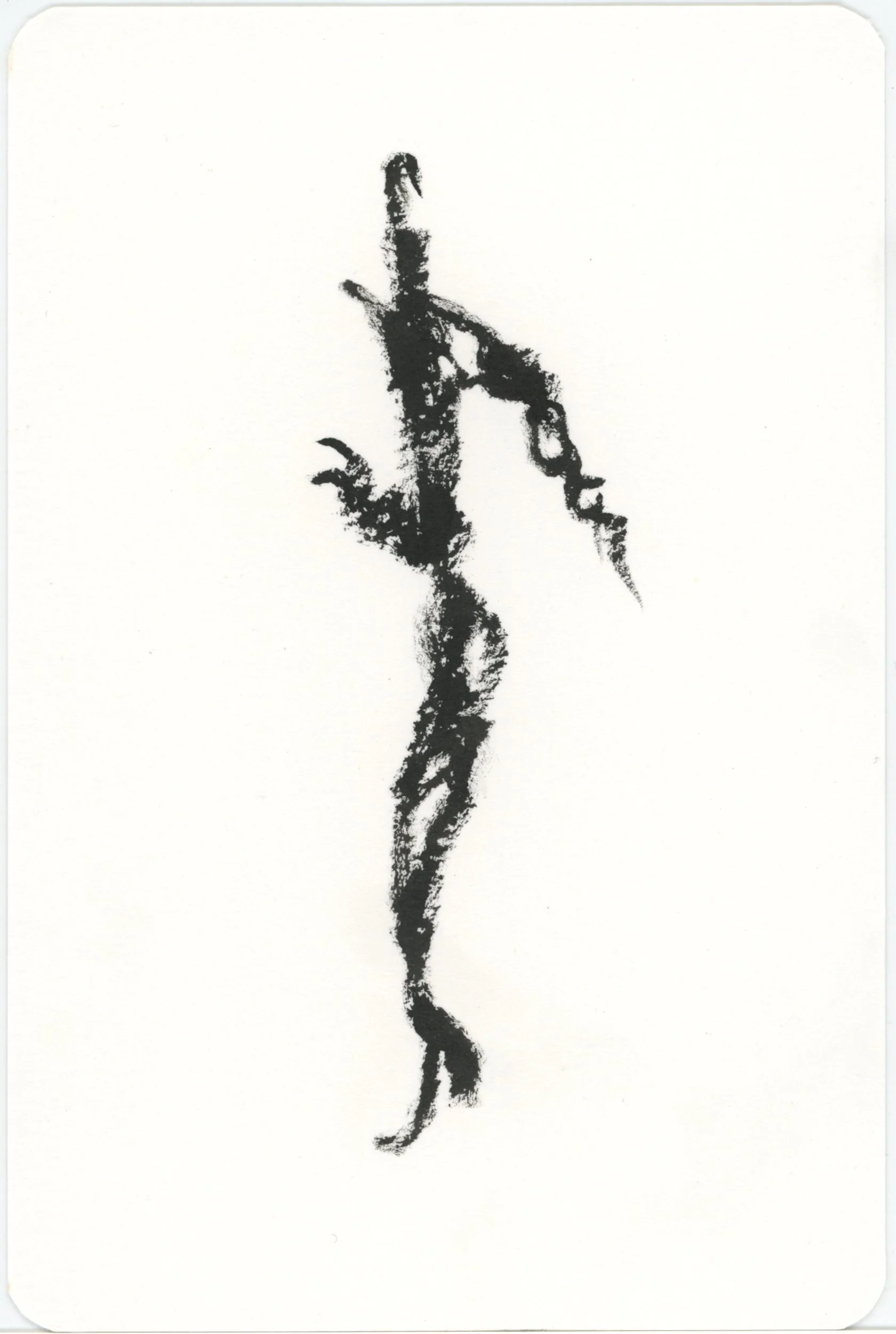
asemic writings
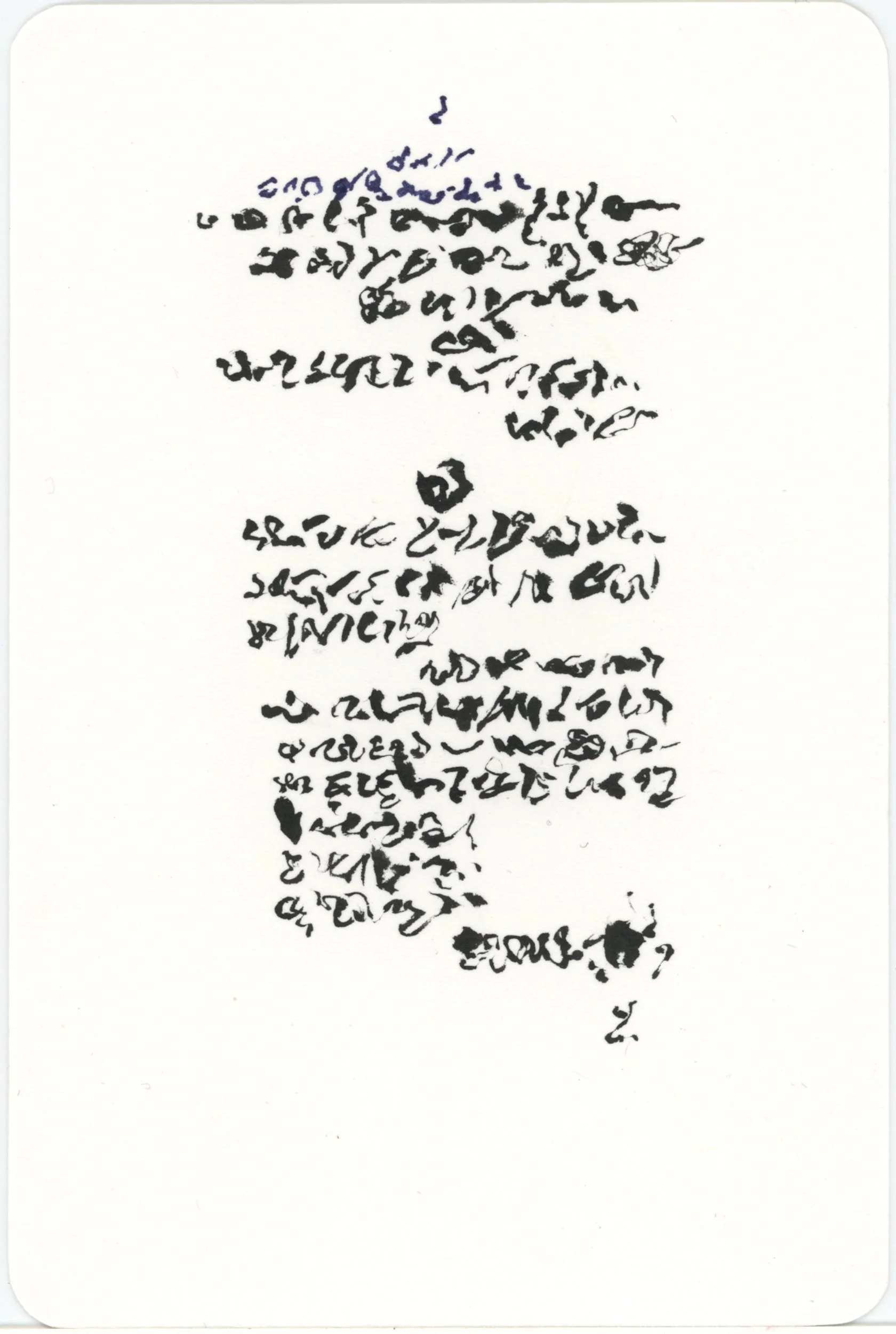
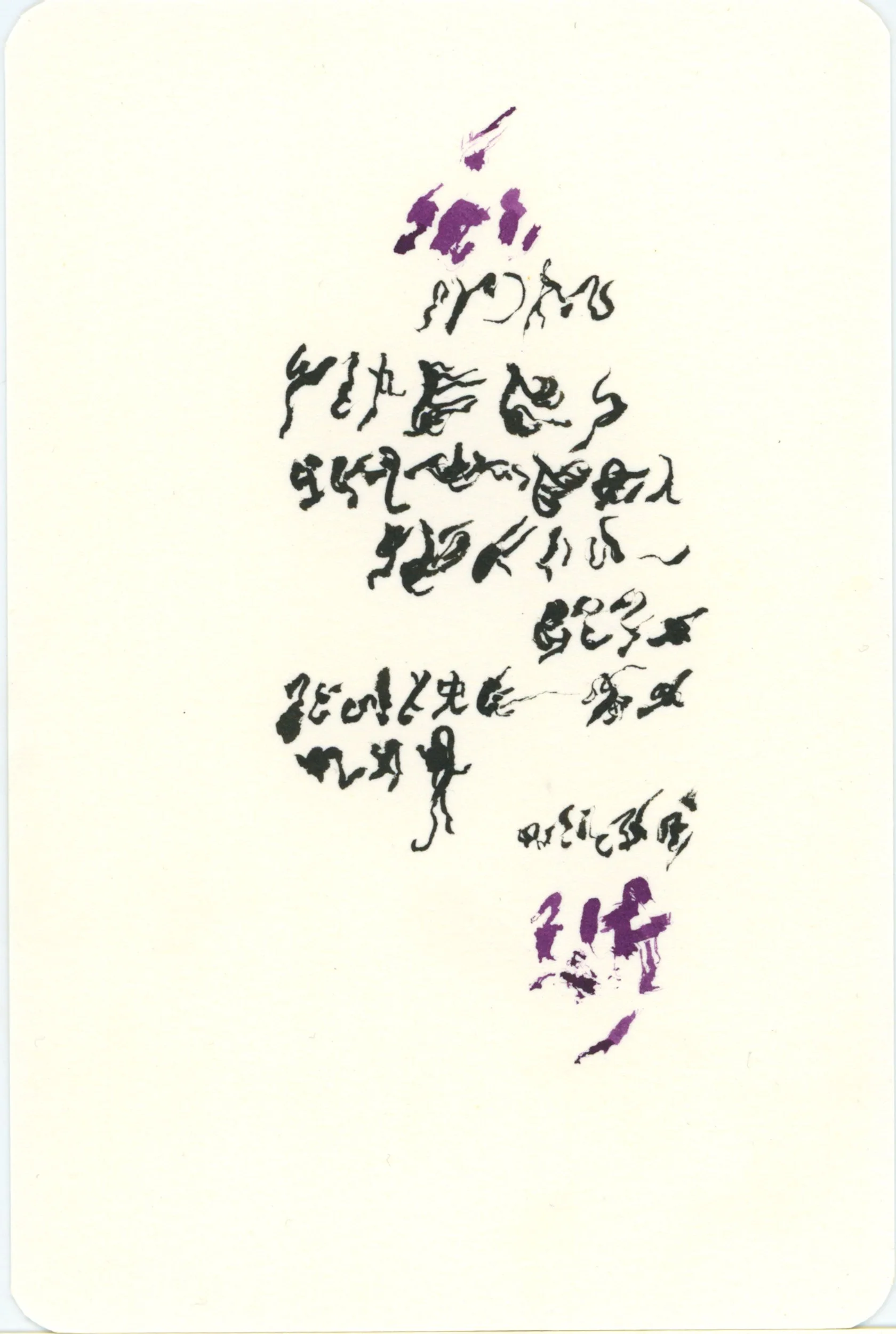
Asemic writing is a form of writing that looks like text but carries no fixed meaning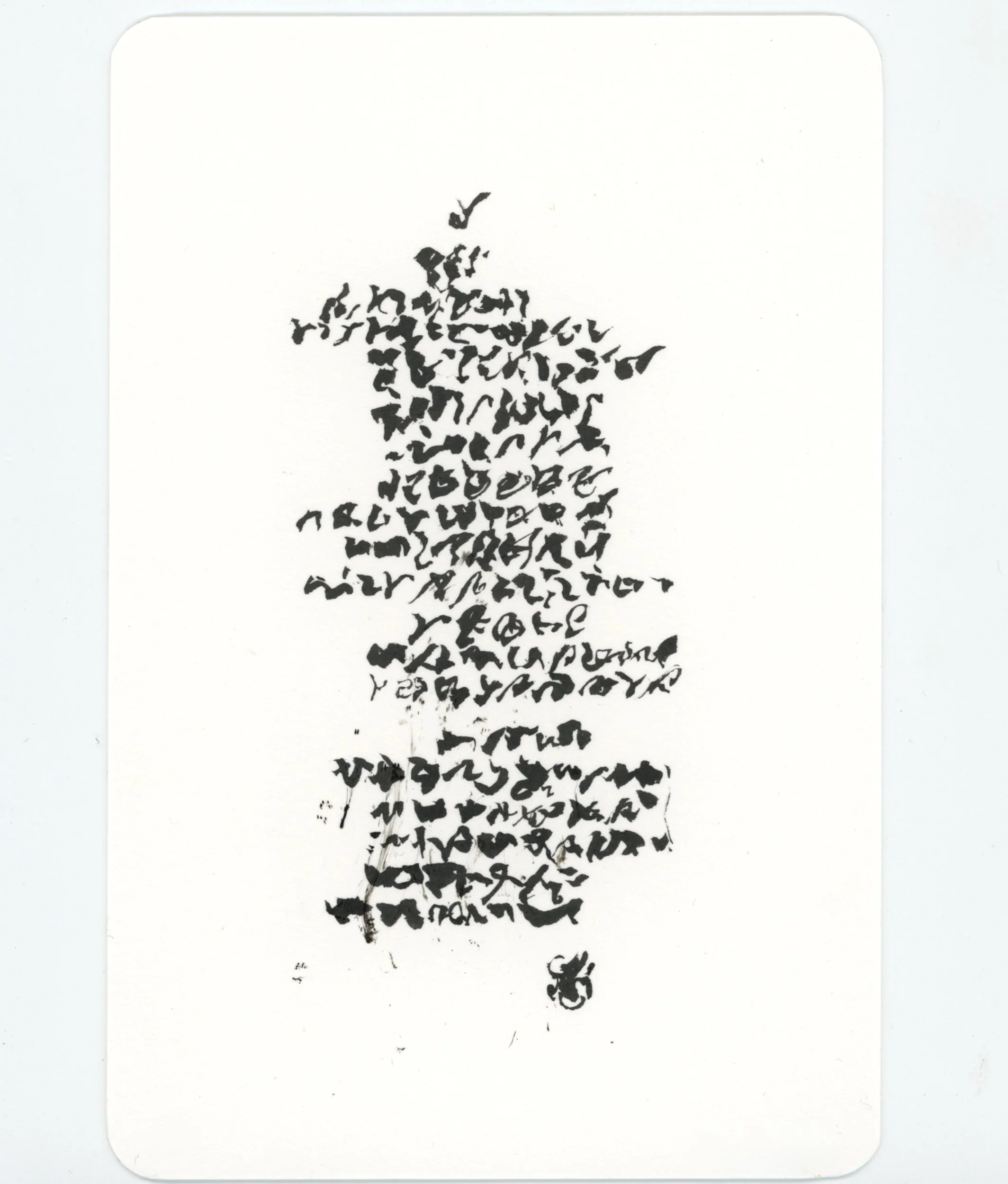
key principles
asemic writing
The foundation of Asemi-Nereid lies in asemic writing—visual marks that appear linguistic but carry no fixed verbal meaning. This openness allows for subjective interpretation and personal expression. Each dried seaweed specimen becomes a grapheme, a functional unit in a script that invites your own projection and feeling.marine inspiration
The name 'Asemi-Nereid' combines 'asemic' (without sign) with 'Nereids' (sea nymphs from Greek mythology), creating a poetic identity: the Sea-Nymph's Wordless Script. It's a language felt through marine fluidity, not spoken through conventional words.gestural-auditory expression
This language lives in the body. You'll trace the complex paths of seaweed forms with your hands, arms, and whole body, while creating soundscapes that echo the coastal environment—the rush of water over sand, the snap of dried kelp, the whisper of tide.bridging disciplines
Asemi-Nereid connects the natural sciences with artistic practice, offering movement artists a novel way to engage with environmental themes, identity, and the transient beauty of marine ecosystems.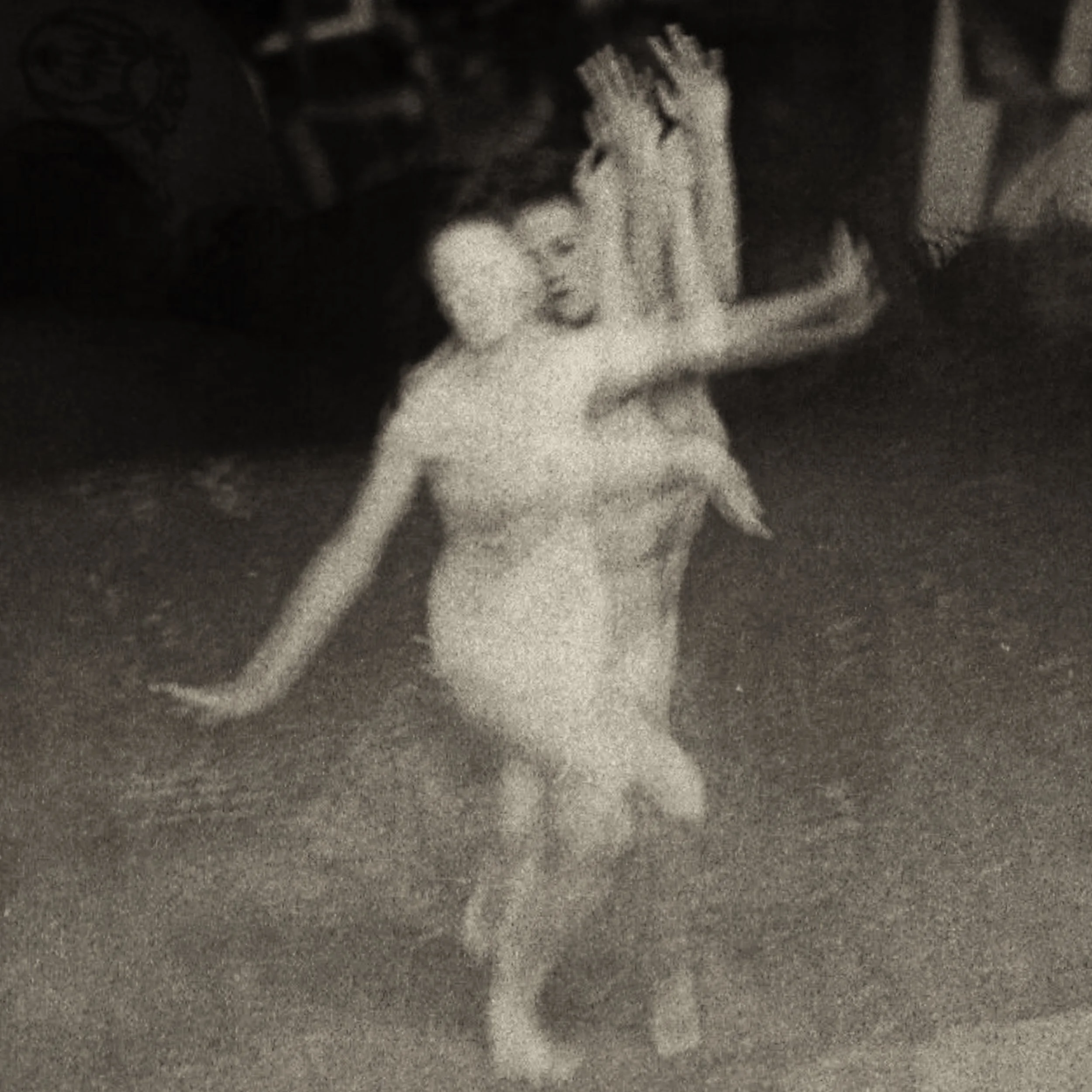
Asemi-Nereid cannot be spoken in the traditional sense of human speech.
It is a language of Gestural Performance accompanied by a specific auditory soundscape.
asemi-nereid language
illustration AI Generatedalphabet
Will not use the illustration.
but it gives an idea
Morphological Categories
Graphemes are organized by botanical structure, providing a taxonomic framework for teaching:
Vesic-graphemes
Derived from root-like structures (holdfasts). Represent foundational concepts: origin, history, physical grounding. These forms typically appear dense and anchoring in visual character.
Caulo-graphemes
Mirror the stipe (stem). Function as connective tissue, representing paths, bridges, and the transit of ideas. These forms are typically linear or gently curved.
Frondo-graphemes
Mirror seaweed blades. Represent expansive thoughts, complex emotions, and the 'surface area' of sensory experience. These forms are typically broad and elaborate.
Vesic-graphemes
Correspond to air bladders (pneumatocysts). Represent 'buoyant concepts' such as dreams, potential, and the future. These forms are typically rounded or bulbous.
Ambercumulus X-session
Where seaweeds speak
[temporary title]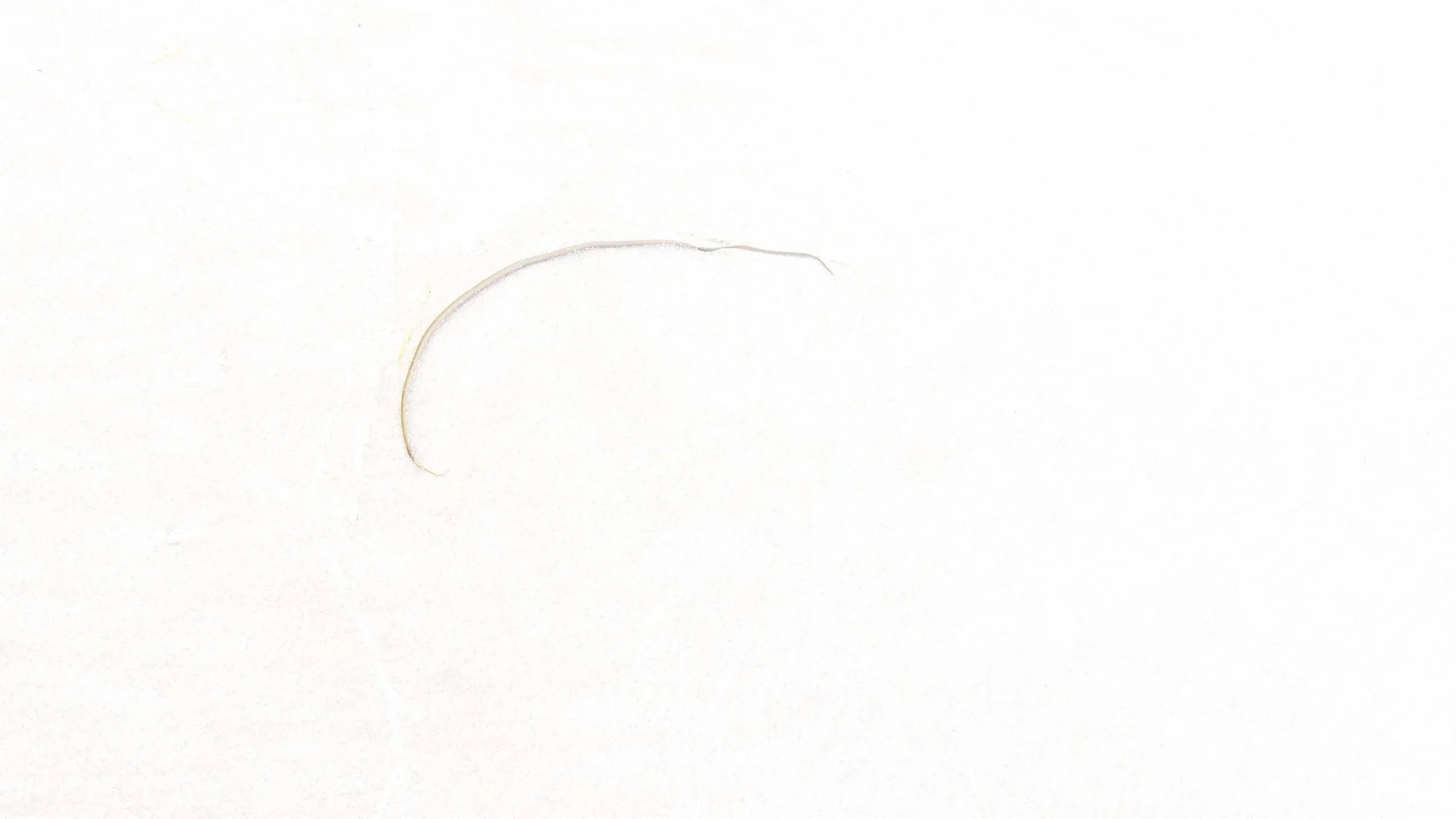
Asemi-Nereid is a nature-based linguistic system conceptualised by Jocelyn Janon and developed using AI to structure a language using seaweed specimens from photographer Jocelyn Janon's series 'to the always talking sea'.
The system categorises these specimens as graphemes (functional units of a non-linear script) and is designed for performance rather than conventional speech.
The framework bridges botanical morphology and semiotic theory, offering movement artists a method to express the fluid, transient identities of the marine environment through gestural-auditory performance.
Practitioners use gestural tracing and vocalised environmental textures (sibilant (hissing) shifts and glottal stops) to embody and perform marine forms.
As the workshop facilitator, your role is to guide participants through the interpretation of seaweed morphology as a performative language system, teaching them to translate organic visual forms into embodied movement and sound.
Amberabout amber liberté

Amber Liberté is an experimental multidisciplinary artist working primarily in dance and film.
Her recent works include: A Slow Fall To The Earth Dengeki Festival (JP), The Mycelium Rebirth - Toyooka Theater Festival (JP), Ikayaki Business Time Out Market (JP), Consensual Sensory Peep Show (Splore), The Horizon Is Ever Present (Splore & Tempo Festival), and Mycelial (Luma Festival).
Amber’s work ranges from absurdist comedy, to her recent training in butoh (and ongoing arts practice that embraces Butoh philosophy), to reflective socio-political commentary.
Amber has also been a finalist director/choreographer/performer in multiple international film competitions across the globe. She is currently based in Sydney/Gadigal.
framework
conceptual foundation
Asemi-Nereid operates at the intersection of asemic writing, marine biology, and performance art. The system was conceptualised by Jocelyn Janon and developed using AI to interpret Jocelyn Janon's photographic documentation of dried seaweed specimens, treating each organic form as a communicative unit.core principles:
asemic writing
The foundation rests on asemic writing: visual marks that appear linguistic but carry no fixed verbal meaning. This openness enables subjective interpretation and personal expression. Each dried seaweed specimen functions as a grapheme in a script that invites individual projection and emotional response.
marine-derived semiotics
The name 'Asemi-Nereid' combines 'asemic' (without sign) with 'Nereids' (sea nymphs from Greek mythology), creating the conceptual identity of a "Sea-Nymph's Wordless Script." The language is felt through marine fluidity rather than spoken through conventional verbal structures.gestural-auditory expression
This language exists in embodied performance. Practitioners trace the complex paths of seaweed forms with hands, arms, and whole body while creating soundscapes that echo coastal environments—the rush of water over sand, the snap of dried kelp, the whisper of tide.interdisciplinary bridge
Asemi-Nereid connects natural sciences with artistic practice, providing movement artists with a framework to engage environmental themes, identity, and the transient beauty of marine ecosystems through performance.pedagogical approach
When teaching Asemi-Nereid, emphasise the following:visual literacy
Participants must learn to read organic forms as communicative units, identifying morphological features that correspond to specific graphemic categories.embodied translation
The practice requires translating two-dimensional visual information into three-dimensional movement, maintaining the essential character of each form.sonic environment
Vocal textures are not arbitrary but derive from actual coastal soundscapes, grounding the performance in environmental authenticity.interpretive freedom
While the system provides structure, individual interpretation is essential. The asemic nature of the writing allows for personal meaning-making within the established framework.
language structure & performance notes
morphology & graphemes
The grapheme is the smallest functional unit of the Asemi-Nereid writing system. Each unique piece of marine matter in Janon's series is treated as a graphemic unit carrying conceptual weight and expressive potential.
the Asemi-Nereid alphabet
The primary graphemes form a visual alphabet that systematically organises organic seaweed forms into specific classes based on morphology. These are the foundational graphemes to teach:
primary graphemes
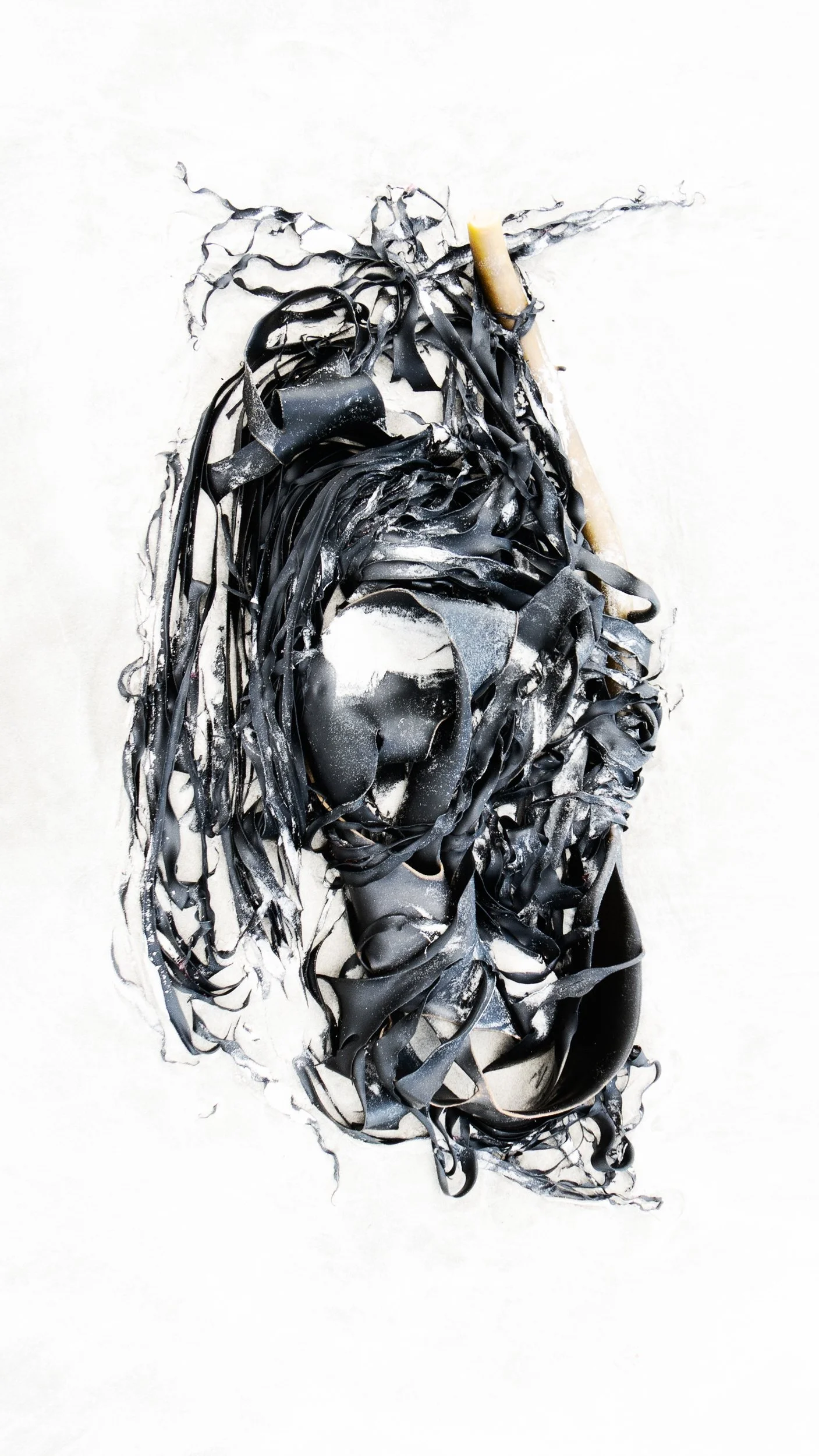
1. Cluster Glyph
Visual Form: Dense tangle of ribbon-like structures
Semantic Field: Extreme complexity, collective memory, intricate neural networks
Conceptual Function: Represents an 'aqueous mass', a concentrated volume of information that resists easy disentanglement. Signifies powerful emotions, layered histories, or significant epochs compressed into a singular form.
Performance Note: Requires complex, interwoven gestural patterns; often performed with multiple body parts simultaneously.
2. Minimalist Glyph
Visual Form: Fine, curved line
Semantic Field: Clarity, singular path, whisper, fleeting thought
Conceptual Function: Functions as a 'syntactic connector', a bridge or breath between complex structures. Indicates transformation, the space between moments, gentle shifts from one state to another.
Performance Note: Executed with minimal, precise movements; often serves as a transition between more complex gestures.
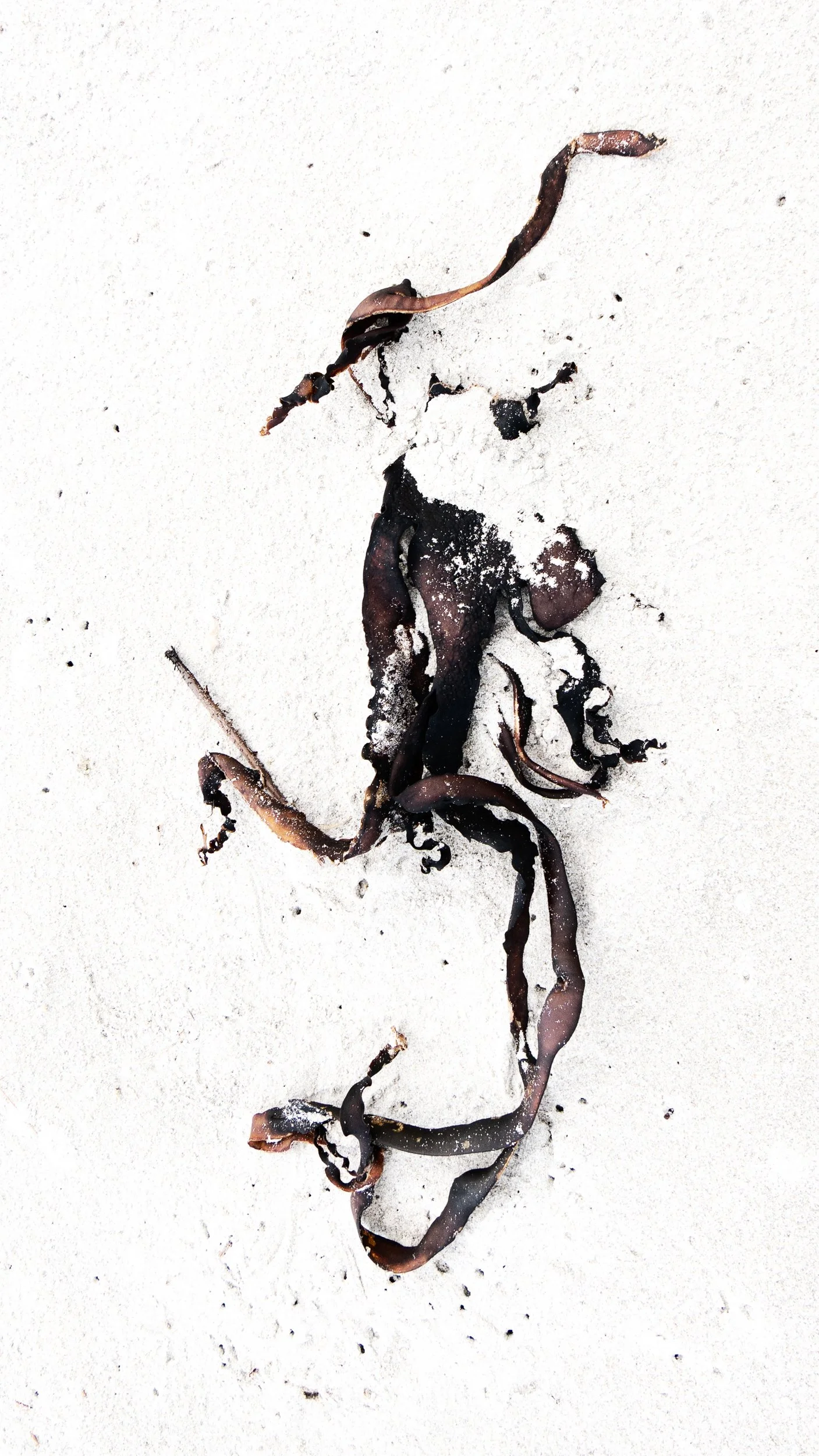
3. Anchor Glyph
Visual Form: Dense, dark apical mass with trailing filaments
Semantic Field: Weighted conclusion, fixed truth, final decision
Conceptual Function: Represents 'radiating consequences', outcomes or echoes from significant events. The heavy centre grounds meaning, while trailing threads show how decisions ripple outward.
Performance Note: Requires grounded, weighted movement quality with extensions that gradually dissipate energy.
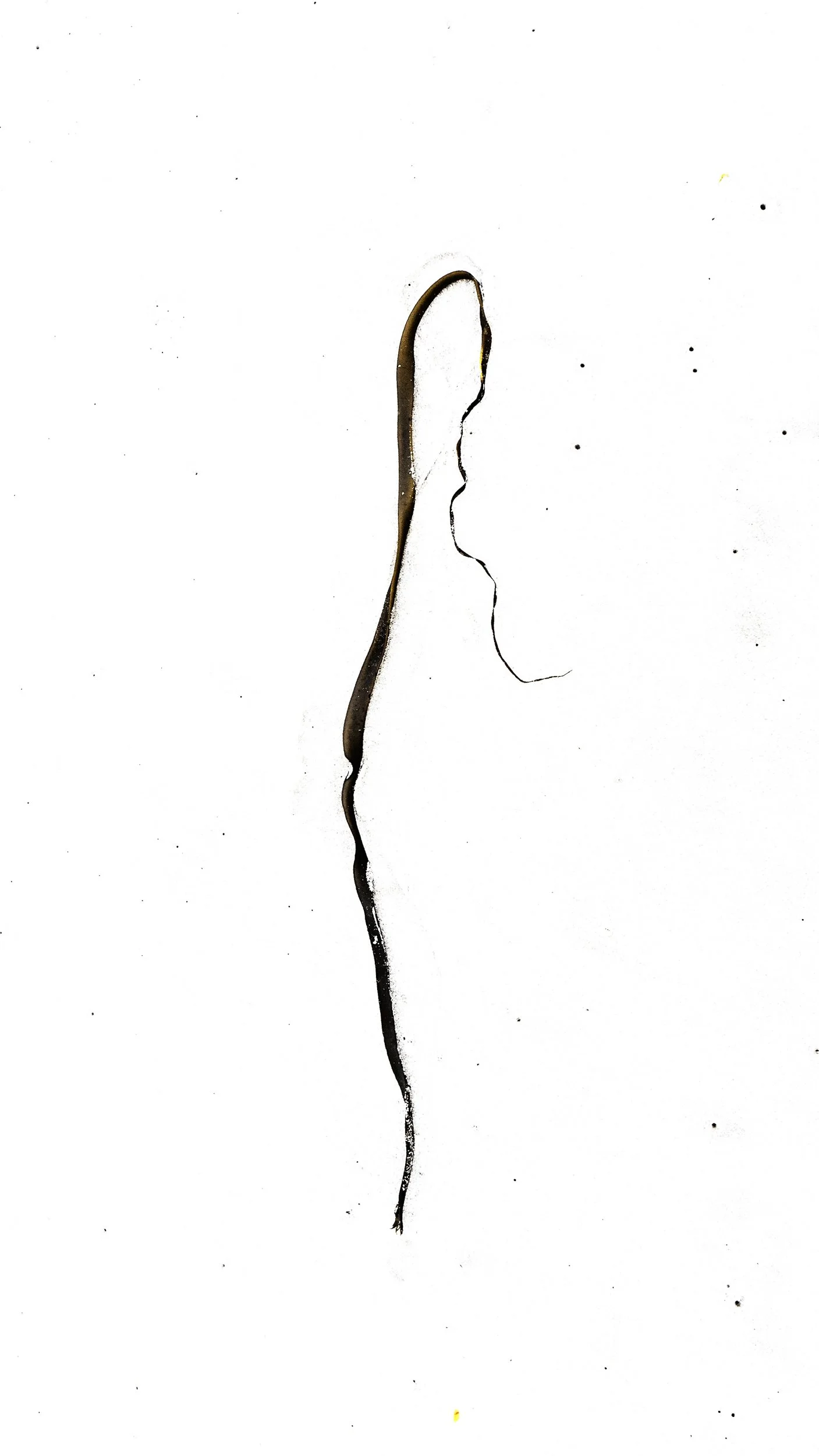
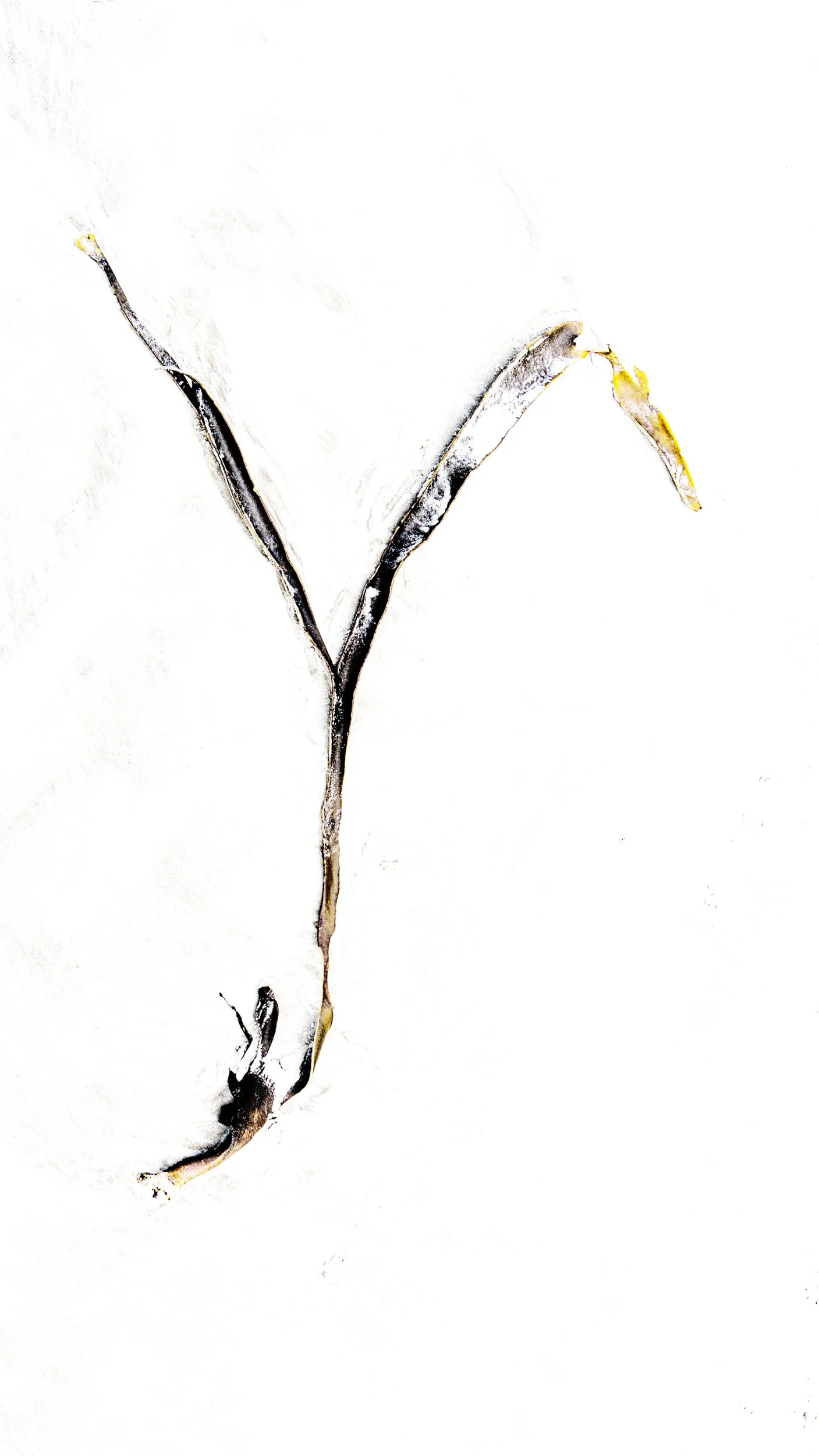
4. Bifurcation Glyph
Visual Form: Y-shaped morphology
Semantic Field: Decision, divergence, point of choice, splitting of paths
Conceptual Function: Signifies duality—the separation of a single narrative into distinct outcomes or possibilities, all rooted in common origin.
Performance Note: Movement begins unified and divides into two distinct pathways; can be performed spatially or with body division.
the 'non-spoken' tongue: performance practice
These notes are offered as suggestions only; the workshop and performance practice remain entirely the creation of the movement artist, developed in collaboration with Jocelyn and guided by the Asemi‑Nereid language itself.
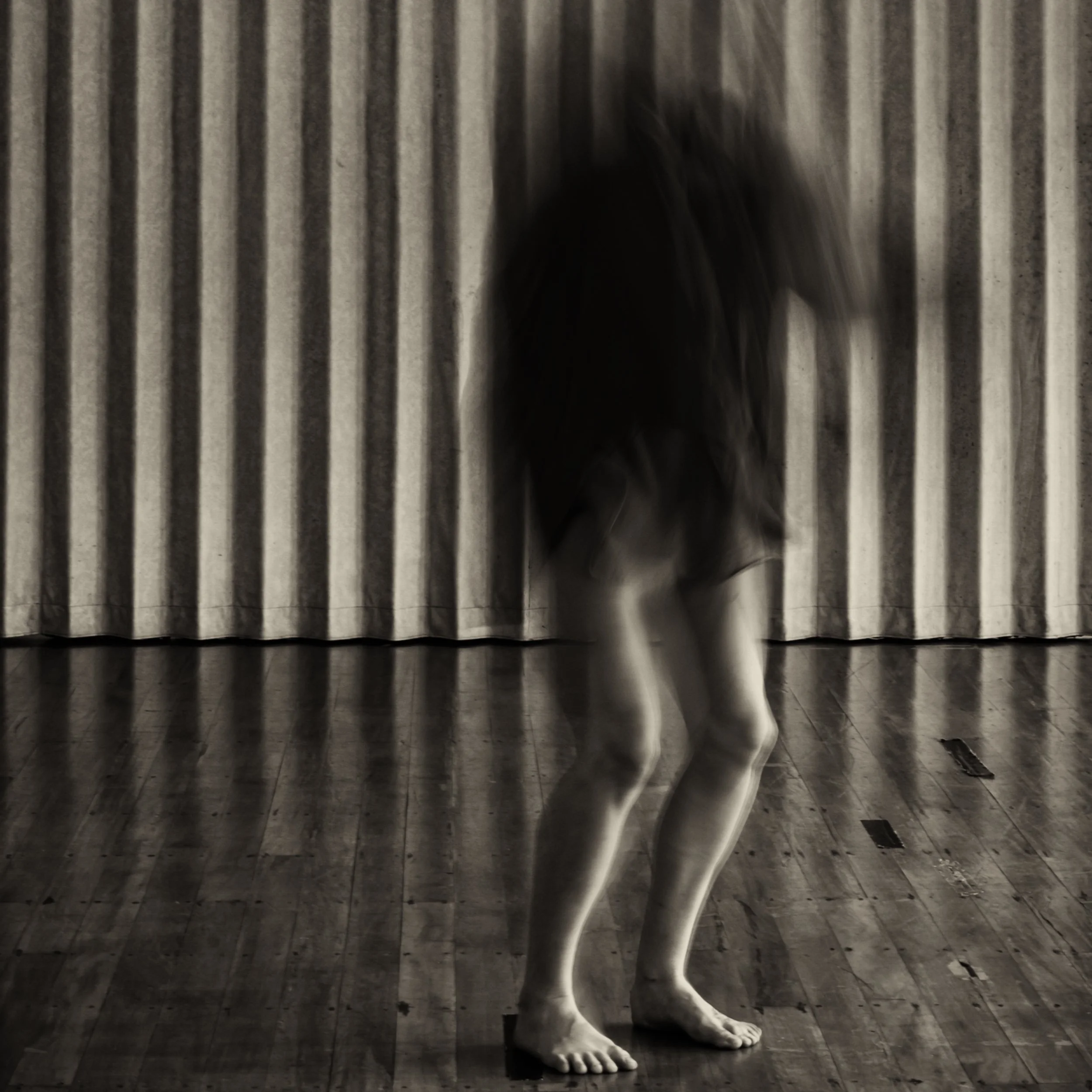
Asemi-Nereid is not spoken in the traditional sense. It is a language of gestural performance accompanied by a specific auditory soundscape.
To 'speak' Asemi-Nereid is to physically manifest graphemes using your body, synchronized with vocalized textures that evoke the coastal environment.
how to perform Asemi-Nereid
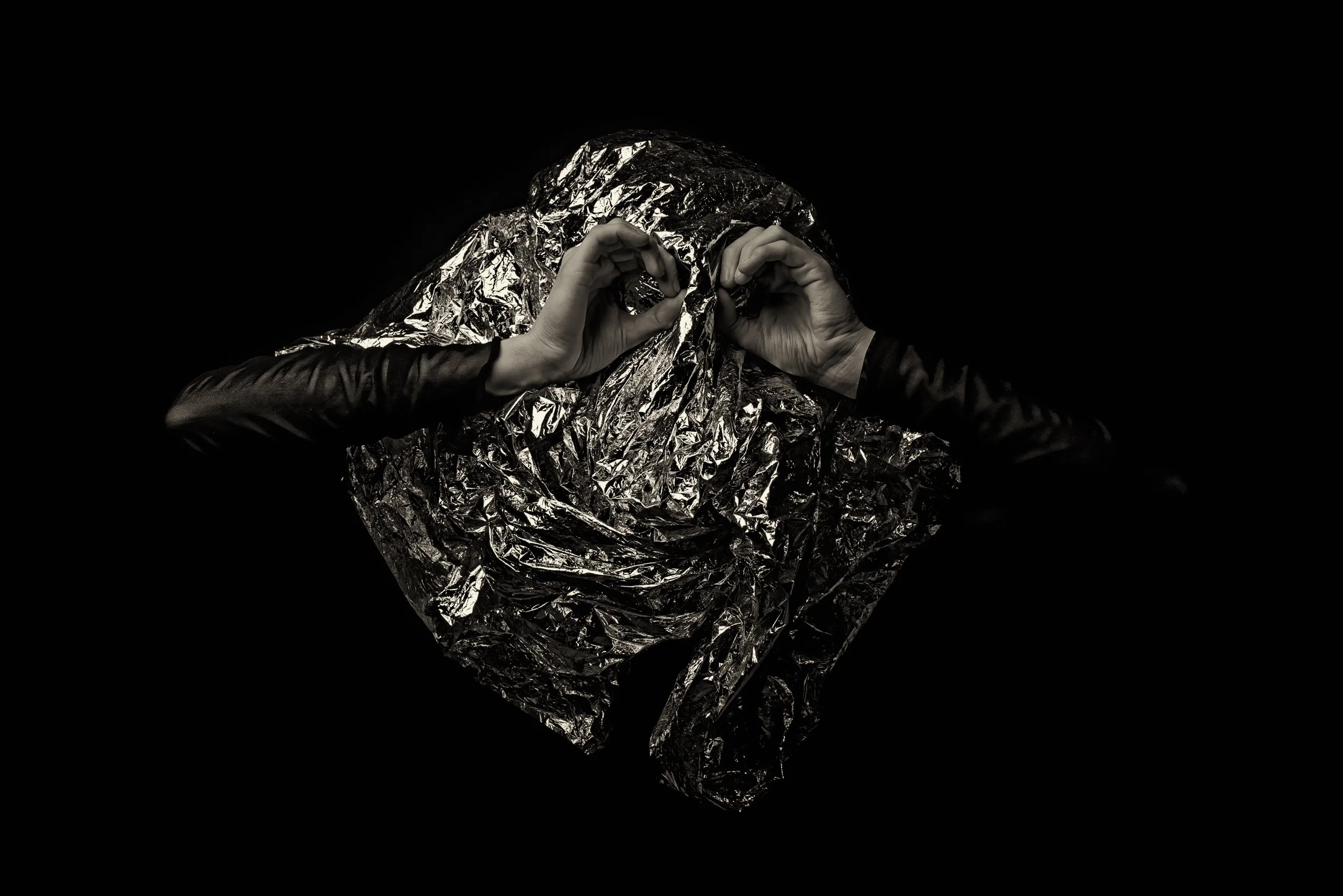
gestural tracing
Use your hands, arms, and entire body to trace the complex paths of each glyph.
The quality of your movement modifies the meaning:
Slow, fluid traces indicate memory, reflection, or gentle transformationJagged, tense traces indicate conflict, urgency, or disruptionSpeed, tension, and orientation all contribute to the nuanced expression of each grapheme
Think of your body as a brush painting in three-dimensional space, following the organic curves and tangles of seaweed forms.sound tracing
Sibilant ShiftsCreate rushing 'sh', 's', and 'z' sounds that mimic the friction of dried kelp against sand or the hiss of waves retreating over pebbles. These sounds indicate flow or transition between gestures, connecting one thought to the next like water flowing between tide pools.Glottal StopsSharp, percussive vocal breaks represent boundaries between distinct thoughts or the sudden snap of a dried stalk. These stops punctuate your performance, creating moments of clarity and definition within the fluid movement.bringing it together
In performance, you become a living translation of the sea's language. Each gesture is a word, each sound a punctuation mark, each sequence a sentence written in the air. The workshop will guide through exercises that build fluency in this unique mode of expression, helping you develop your own choreographic vocabulary rooted in marine morphology.Learning the language elements
teaching progression
Introduction
Present the visual alphabet using Janon's photographs or reproductions.
Identification Have participants identify morphological categories in various specimens.Tracing Begin with two-dimensional tracing (hand on paper/screen) before moving to three-dimensional space.Embodiment Progress from hand gestures to full-body movement.Vocalisation Introduce sonic elements after gestural vocabulary is established.Composition Guide participants in creating sequences that combine multiple graphemes.
glossary
Asemic
Writing that appears linguistic but lacks specific, fixed verbal content, allowing for subjective interpretation.

Benthos
The 'sub-text' or hidden, deeper layers of meaning beneath a visual sign. Derived from the Greek word for 'depth of the sea.'

Topological Grammar
A system where meaning is derived from the physical position and connection of signs on a surface, rather than their linear sequence.

Corpus
The physical manifestation of the language when performed through human movement. Derived from the Latin word for 'body.'

Rhizo-graphemes
Signs derived from root-like structures, representing foundational concepts like origin and grounding.

Caulo-graphemes
Signs mirroring the stem of seaweed, functioning as connective tissue between ideas.

Frondo-graphemes
Signs mirroring seaweed blades, representing expansive thoughts and complex emotions.

Vesic-graphemes
Signs corresponding to air bladders, representing buoyant concepts like dreams and potential.
What is a resemblance without dissemblance?
A drawing with no fight in it is a bore.
It is incomplete. Everyone gets this, right?
Henri Michaux
asemic writing
references
Inspiration
ai use disclosure statement
This text was developed with the assistance of AI tools for language refinement.
These tools were used to support grammar correction and improve clarity in English, which is my third language.
AI did not contribute to the generation of ideas or content; rather, it served as a supportive tool to enhance expression and ensure accuracy, without replacing my original voice or creativity.