research overview

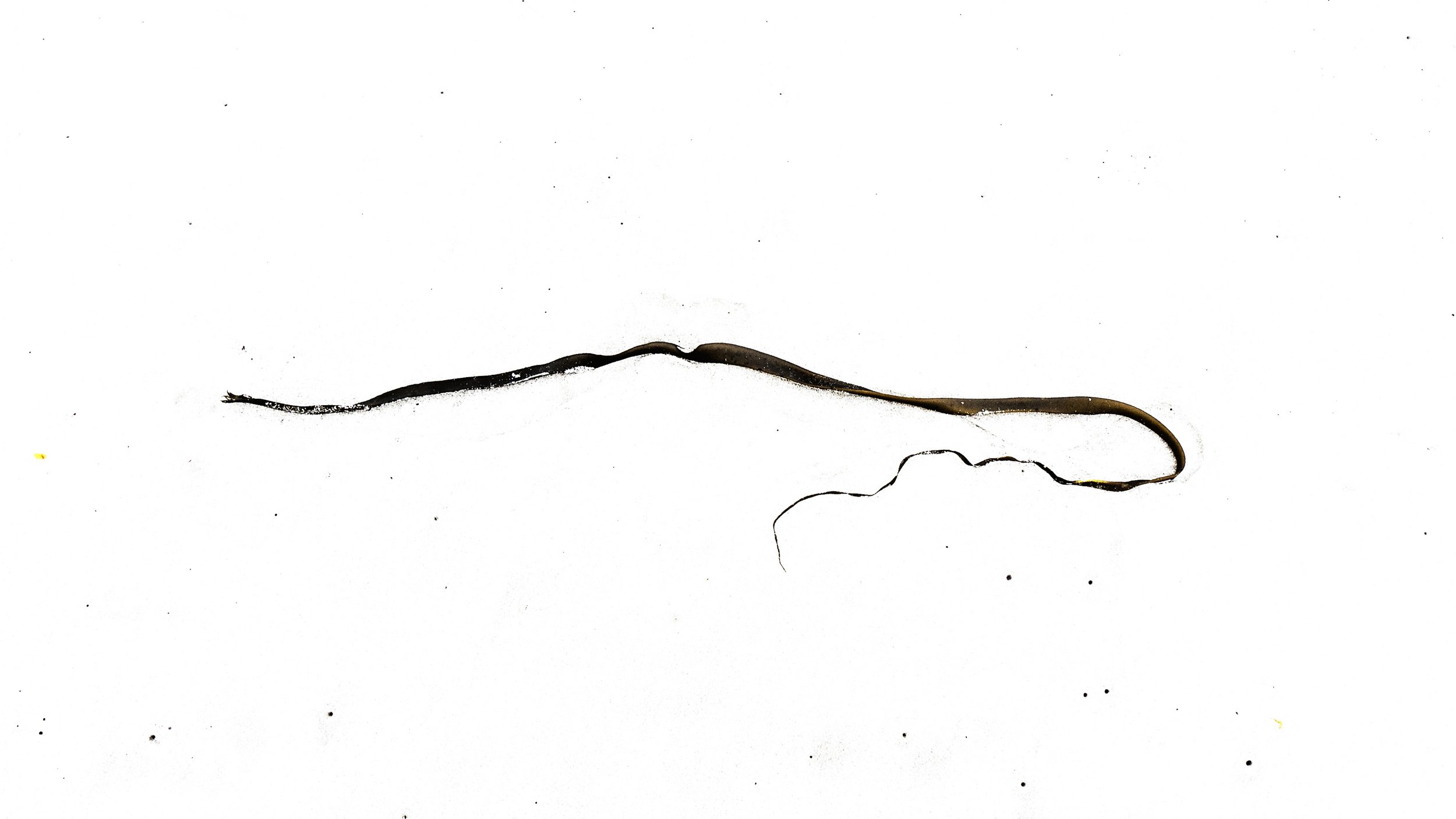
Sand with small twigs and grass patches, dark background.

I frame my work as a form of inquiry in which photographic processes become a way of thinking rather than a means of producing images.
This practice allows me to investigate questions of perception, materiality, and visual uncertainty in ways that conventional analytical methods cannot. My research contributes to wider academic conversations about how knowledge is produced through artistic processes, and how photographic experimentation can reveal aspects of experience that resist verbal or purely theoretical explanation.

My photographic practice is an exploration of humanity, shaped by speculative methodologies and voluntary constraints that generate creativity rather than limit it.

Drawing on OUxPO-inspired experimentation and the Philosophy of Lies, I treat fiction and fabrication as epistemological tools, constructing meaning beyond realism through distortion, exaggeration, and Pataphysical play.

Rooted in cyclical processes of research, reflection, and reinterpretation, I reframe vernacular archives and familial artefacts to probe identity, memory, and cultural resonance.

Central to my work is collective authorship, where dialogue and participation foster ethical, non-hierarchical creation.

As a Tauiwi immigrant artist based in Tāmaki Makaurau/Auckland, I engage with the evolving history of Aotearoa/New Zealand, challenging fixed notions of authorship, truth, and agency through speculative visual storytelling.


methods

My research treats photography as a fluid, constructed narrative rather than a passive record. Through fictionalism, archival research, and embodied practice, I challenge representation, authorship, and cultural memory, fostering ethical engagement and iterative discovery.

Over the years, I have developed a distinct working method, one shaped by movement, intuition, and adaptation.
Like many photographers, I work in dynamic environments where rapid thinking and physical mobility are essential. Philosophy, in this context, is not abstract but embodied; it unfolds in the rhythm of production, the urgency of decision-making, and the act of walking.

From my university days, when I drew from reading Ciro Giordano Bruni’s work, to my more recent explorations of Action Research, my practice has evolved through collaboration.
Building teams founded on interdependence has been central to my approach, ensuring that ethical considerations remain at the core of image-making. This commitment extends to my passion for archival research, history, and iconology (the study of visual imagery) which continually informs my photographic investigations.

Whether through Action Research or collective image-making, interdependence remains central to my work, ensuring that ethical considerations shape every stage of production. Through these interconnected practices, I continuously seek to redefine representation, challenge conventional artistic norms, and foster dialogue within visual culture.

Speculative Fiction and the Philosophy of Lies as Method

In my practice, speculative fiction functions not merely as a narrative genre but as a critical method to destabilise conventional constructs of truth. By employing principles of scientific fictionalism, I challenge the assumption that empirical verification is the sole marker of authenticity. Central to this approach is the "philosophy of lies," which embraces orchestrated fabrications to reveal deeper subjective and cultural truths. As Bruni (2017, 2019, 2021) has demonstrated in his extensive work on the interplay between photographic representation and fictional narrative, such strategies enable a reconfiguration of the visual field, blurring the lines between fact and fiction to enrich interpretative layers.

Tactical Obstruction and the Production of Nonlinear Knowledge

Complementing the speculative narrative is my use of tactical obstruction—an intentional disruption of expected creative trajectories. By subverting standard compositional forms and narrative expectations, I foster the emergence of nonlinear patterns within my work. This strategic disruption creates moments of cognitive dissonance, thereby encouraging viewers to perceive established visual and conceptual hierarchies in new and unexpected ways. Didi-Huberman’s (2003) investigation into the photographic iconography of the Salpêtrière serves as a useful parallel, revealing how disruption in conventional imagery can lead to a more profound engagement with historical and epistemological layers.

Voluntary Artistic Constraints and Experimental Creativity

Deliberate limitations govern much of my creative process. Through the selective imposition of constraints—be they technical, aesthetical, or conceptual—I develop creative frameworks that intensify focus and invite experimental rigor. This approach resonates with the Ouxpo-inspired methodologies that advocate for strict formal parameters as a means to unleash inventive potential. The restrictions I embrace function as catalysts for innovation, compelling a meticulous examination of form, light, and narrative, and ultimately leading to a richer interplay between expected boundaries and creative possibilities.

Integrating Pataphysics, OUxPO, and Scientific Fictionalism

My practice draws further strength from the integration of theoretical models such as pataphysics and methodologies derived from Ouxpo. Pataphysics, with its celebration of the absurd and the paradoxical, provides an intellectual foundation that challenges traditional modes of photographic inquiry. When combined with the rigorous constraints of Ouxpo-inspired strategies and the narrative experimentation of scientific fictionalism, these approaches facilitate the deconstruction of mainstream visual culture. They open up alternative avenues for interpreting both contemporary images and archival materials, thereby bridging the gap between past and present.

Practice-Based Research, Action Research, and Interdependence

The theoretical underpinnings of my practice are realised through a commitment to practice-based and action research. Each photographic work and artistic installation is both a product and a testament to an ongoing inquiry. Action research provides a framework for cyclically planning, experimenting, reflecting, and adapting, thereby ensuring that each iteration builds on prior insights. This continual process is enriched by an emphasis on interdependence: I recognise the inherent value of collaborative dialogue between co-creators, subjects, and audiences. By fostering non-hierarchical relationships, the creative process becomes a collective endeavour where each participant’s contribution transforms and refines the work's trajectory.


reflection

The role of Artificial Intelligence in my writing.

I write a lot. In my own journals, for the pleasure of writing, and as a way to reflect on my thoughts and creative process.
Yet, I have never shared my writings, partly because I am shy and partly because I lack confidence in my written English, which is my third language.

Despite this hesitation, writing remains an integral part of my practice as a visual researcher engaged in practice-based research.

My work is grounded in imagery, composition, and material experimentation—exploring ideas that unfold through making rather than through written analysis. Yet, I am often asked to articulate my visual research in writing—as if language alone could encapsulate the complexities of visual inquiry.

AI has given me the freedom to express myself with greater confidence, supporting my creative process without ever replacing it. It serves as a valuable assistant, helping me refine grammar and clarity while ensuring that my thoughts translate effectively into language. It does not dictate my concepts or generate content for me; instead, it allows my creative process to remain fluid, amplifying the precision of my words without interfering with the originality of my vision.

Rather than diminishing my work, AI enhances it—acting as a collaborator that supports technical refinement while preserving the spontaneity and depth of my ideas. It facilitates expression rather than defining it, offering clarity without constraining the ambiguity and richness that define visual exploration, making it a valuable tool within practice-based research.

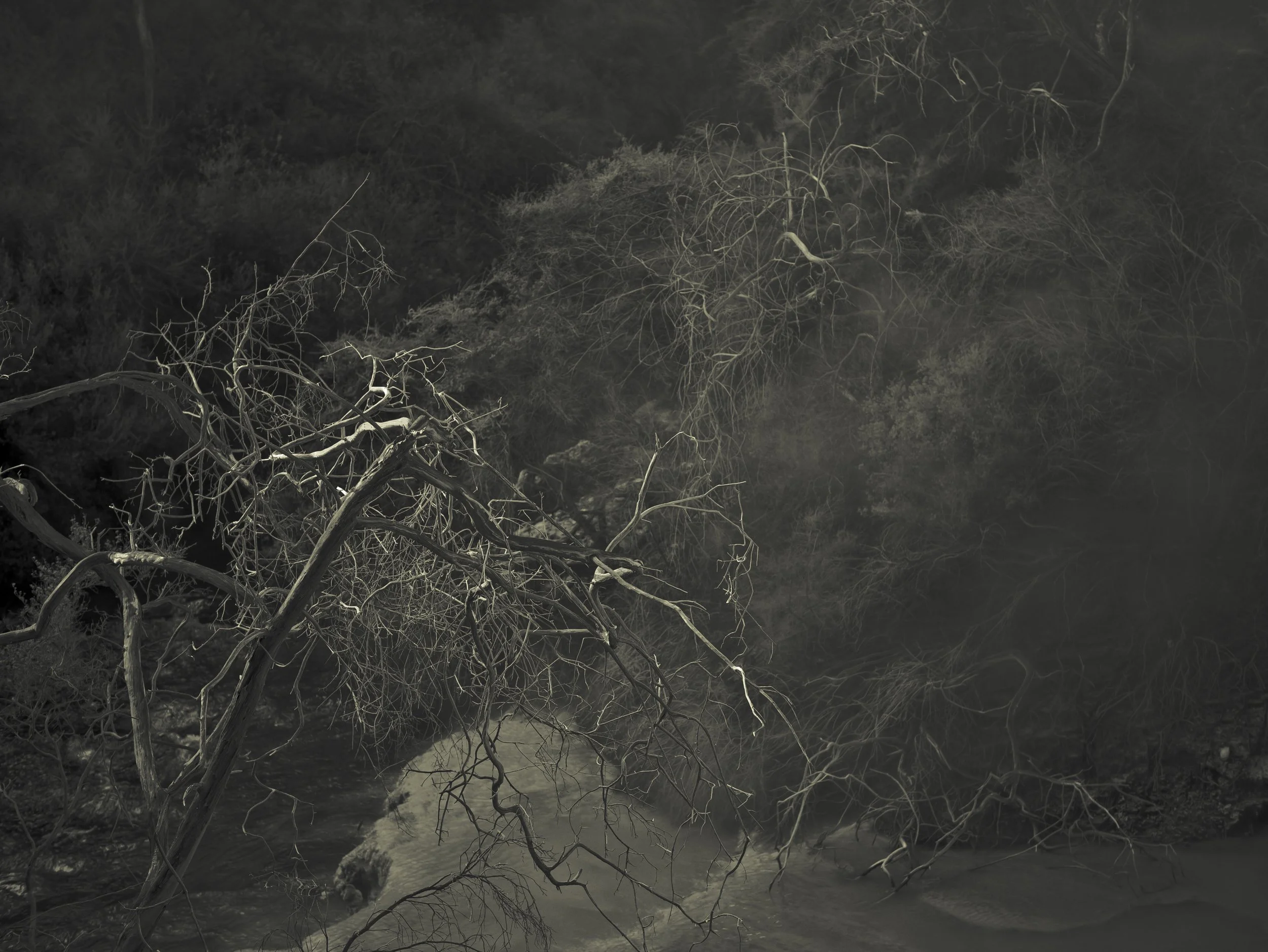
Nighttime scene of dry, leafless trees over a small body of water.