A parallel history of panic.
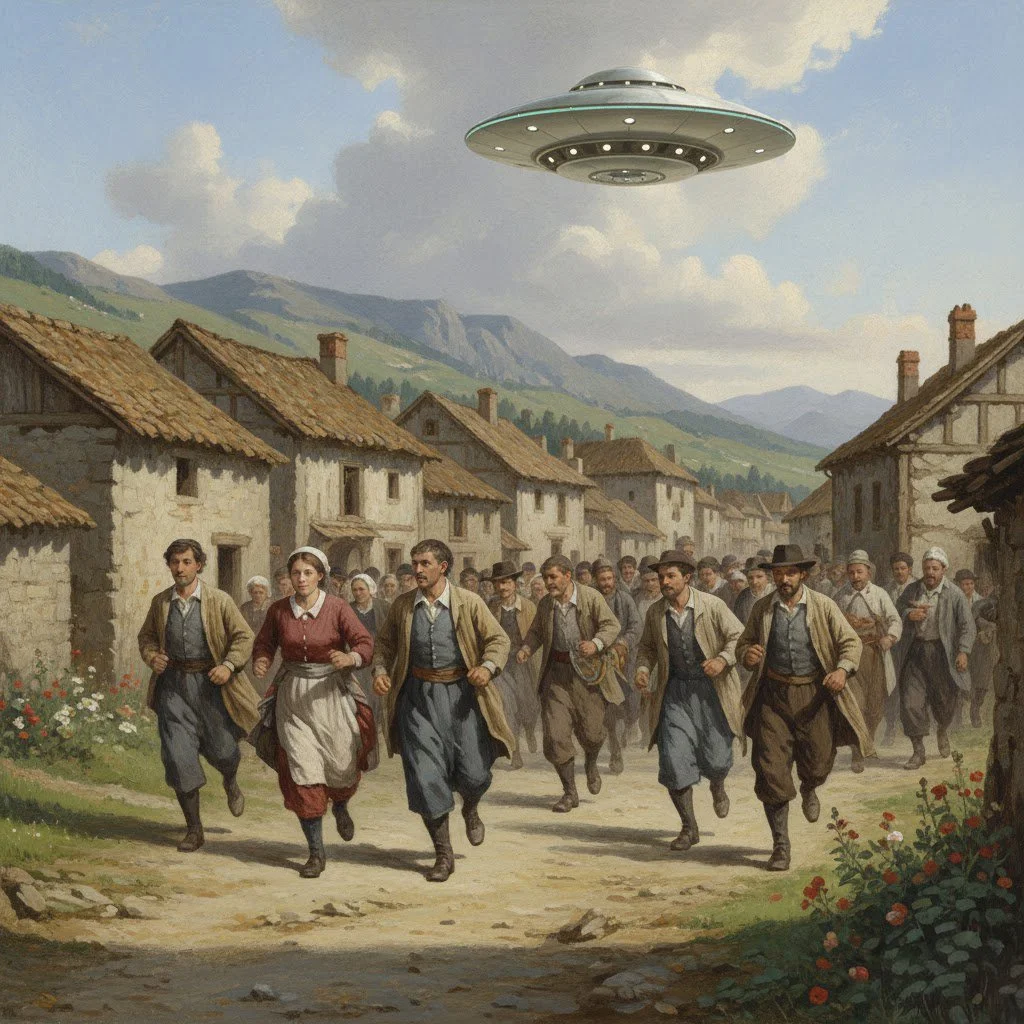
AI generated image.
The dangerous new technology.
Every time a new technology arrives, we seem to have the same argument. Is it real art? Is it cheating? Will it ruin everything?
Right now, we’re having that conversation about AI. But if you look back to the 19th century, you’ll find an almost perfect echo in the moment photography appeared.
It’s oddly comforting. We’ve been here before.
A machine that makes images? Outrageous.
When photography was introduced in 1839, people were stunned. A machine that could capture the world with perfect accuracy felt almost magical. But for many artists and critics, it also felt like a threat.
Portrait painters worried about their livelihoods. Critics worried about the future of art. And the public, as always, was fascinated by the novelty.
If this sounds familiar, it should. Replace “camera” with “AI model” and you have today’s headlines.
Baudelaire was not impressed
Charles Baudelaire, the great French poet, was one of photography’s loudest sceptics.
In 1859 he wrote a furious essay arguing that photography was a mechanical trick, not a creative act. He feared it would encourage laziness, flatten imagination, and drown out true artistic vision.
He even called photography a refuge for failed painters.
If you’ve heard people say AI is “soulless”, “derivative”, or “just pushing a button”, you’re hearing the same tune Baudelaire played 160 years ago.
The fear behind the fear
Underneath the complaints, something deeper was happening. Photography changed who could make images. Suddenly, you didn’t need years of training. You didn’t need to master anatomy or perspective. You just needed a camera and a steady hand.
It was a shock to the system.
Art had been a protected territory.
Photography opened the gates.
AI is doing something similar. It lowers the barrier to entry. It lets people who can’t draw create images. It lets people who don’t have access to expensive tools experiment freely. And, as in the 19th century, this shift makes some people uneasy.
Did photography destroy painting?
Not quite.
The panic around photography didn’t last. Instead of killing painting, photography pushed it somewhere new. Freed from the pressure to reproduce reality, painters explored impressionism, abstraction, symbolism, and everything that followed.
Photography didn’t end art. It expanded it.
AI may end up doing the same.
It might push artists to rethink what creativity means, what labour means, and what originality looks like. It might open new paths we can’t yet see.
A reminder
When we look back at the 19th century, the pattern is clear:
A new tool appears.
People panic.
The tool becomes normal.
Art adapts, shifts, and grows.
We’re living through that cycle again.
The arguments feel loud because we’re in the middle of them. But history suggests that creativity is far more resilient than we think.
Photography once looked like a threat. Now it’s simply part of the landscape.
AI may follow the same path — unsettling at first, then ordinary, then indispensable.
And perhaps, in a century or two, people will look back at our moment and smile at how worried we were.
