Wandering as method
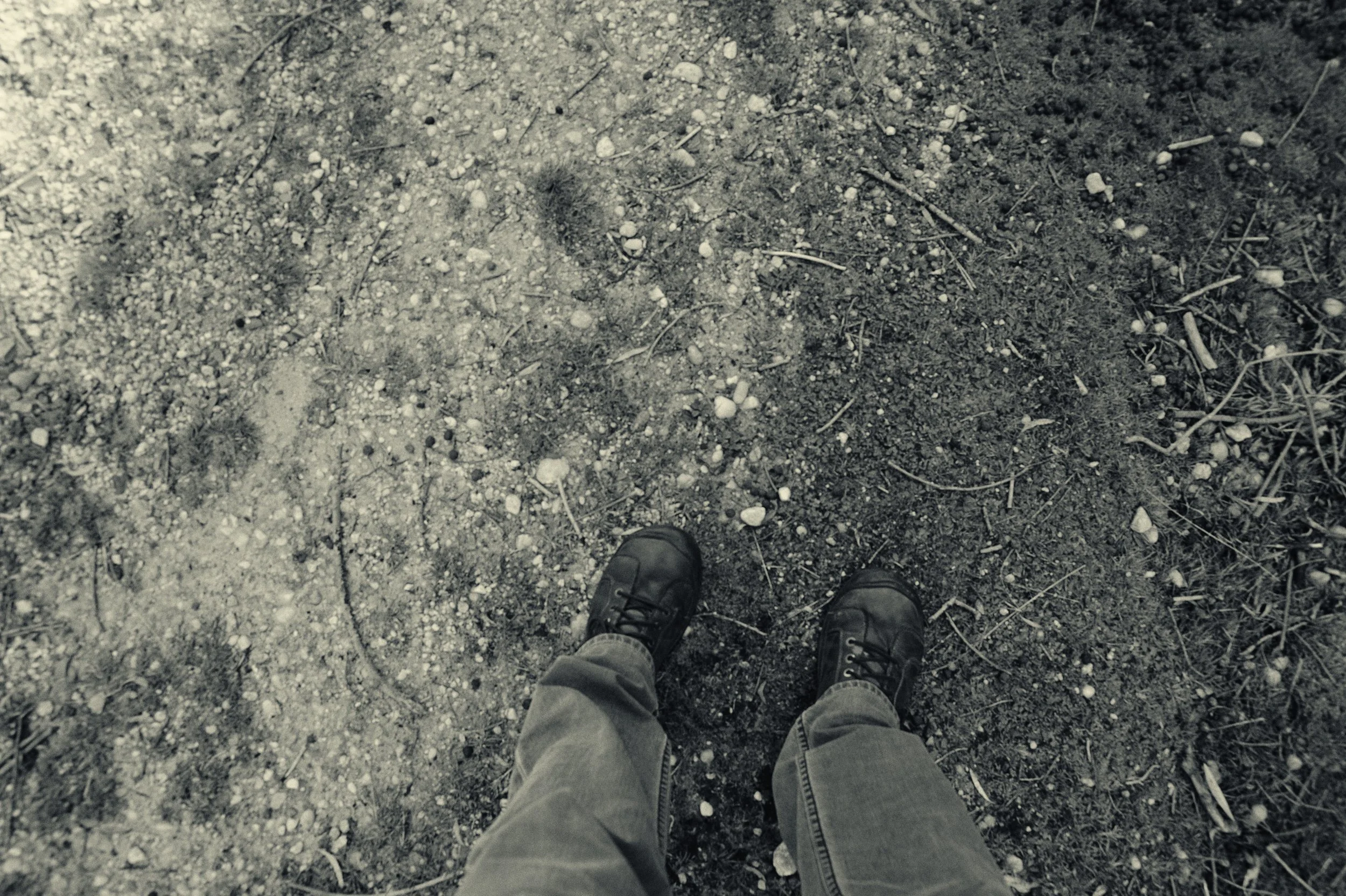
What happens to the work when I stop insisting it go somewhere?
Most of design and art practice runs on a straight line: Brief, research, idea, prototype, deliver.
Every hour is supposed to earn its place by moving the work closer to a finished thing. Time spent without a destination gets treated as time lost, a gap in the schedule rather than part of the process.
Wandering asks something different of me.
Walk without a fixed goal, and see what the walking generates.
This isn't new.
Writers have traced it through centuries of pilgrims, philosophers, and poets who thought with their feet rather than despite them. Others have read the ordinary act of walking through a city as a kind of unauthored language, the way ordinary people write their own meanings onto streets no planner intended.
Some have gone further still, treating walking itself as an aesthetic practice, the same gesture that carried Dada strollers and Land Art trekkers into landscape and called it art.
Design research has picked this up too.
At the Royal Academy of Art in The Hague, walking has become an explicit method: a way to explore an inner landscape, or to sit inside a place, urban or rural, digital or imagined, and let it work on you (Twemlow, n.d.).
No single technique is prescribed. Wander, saunter, drift, or follow the map exactly. The tools are optional too. A camera, a recorder, or nothing at all. What matters is the thinking the walk makes possible.
There's a whole research field built around this now.
WalkingLab, co-directed by Stephanie Springgay and Sarah E. Truman, studies what they call critical walking methodologies, work that asks who gets to walk where, under whose terms, and what kind of publics get made when people walk together. Feminist, queer, anti-racist, anti-ableist, and anti-colonial thought all sit inside that question. Walking, it turns out, was never neutral. Someone always decides who gets to wander freely and who doesn't.
I think what draws me to this is how quietly it refuses productivism.
Productivism has its own history in design.
A century ago, an entire movement rejected art as private and contemplative, remaking it as an instrument of industrial efficiency, folded into labour and mass production in service of the state. That same instinct still runs most studios. If an hour didn't produce a deliverable, what was it for.
Wandering as method won't answer that question on productivism's terms. It treats drift, slowness, and aimlessness as generative conditions rather than inefficiencies, a stance shared with wider anti-productivist and degrowth thinking that calls for less extraction, less output, more time that isn't accountable to anyone. It has company, too, in design's own history of refusal. The anti-design movements of the 1960s treated design as a site of critique rather than a delivery mechanism, disillusioned with everything modernism had promised and failed to give. Wandering belongs there.
A quiet refusal, carried out one unhurried step at a time.
There's a cognitive story underneath this too, one I find genuinely reassuring.
Mind-wandering isn't only a lapse in attention. Some who've studied the surrealist method argue it can be intentional, a deliberate withholding of control rather than a failure of it. Automatic writing, dream logic, the discipline of not interrupting the flow of your own thought, because the unsteered flow is where the material lives. Not the absence of rigour. A different rigour. The discipline of staying open long enough for something unplanned to arrive.
I think about this alongside walking meditation, even though the two seem to pull in opposite directions.
Wandering has no destination and no instructions.
Thich Nhat Hanh's mindful walking gives you almost the opposite: each step paired with the breath, sometimes a silent phrase held in the mind, I have arrived, I am home, so the walk becomes a practice of presence rather than drift.
One opens attention outward into wherever it wants to go. The other narrows it down to a single step, taken with full awareness. But they meet in the same place. Both refuse to treat the walk as a means of getting somewhere. Both trust that something arrives simply because you kept walking, on purpose, with nowhere to be.
So I let the route be the research, sometimes. I let a wrong turn count as material rather than noise to be filtered out. I try to remember that an hour doesn't need to become a sketch or a slide to have been worth having.
None of this makes deadlines disappear. I still have them, most days.
But wandering as method gives me a countercurrent to work against, inside a field that wants to measure every hour as productive or wasted. Some of the most useful thinking I do happens exactly when no one is measuring it. On a walk with no destination. In a thought I didn't steer. In time that never had to justify itself in advance.
________________________________________________________________________________________
References
Nhat Hanh, T. (1996). The long road turns to joy: A guide to walking meditation. Parallax Press.
Twemlow, A. (n.d.). Walking as method. Retrieved August 8, 2026, from https://alicetwemlow.com/walking-as-method/
WalkingLab. (n.d.). WalkingLab. Retrieved August 9, 2026, from https://walkinglab.org/
