Henri Michaux, the gesture of unwriting.
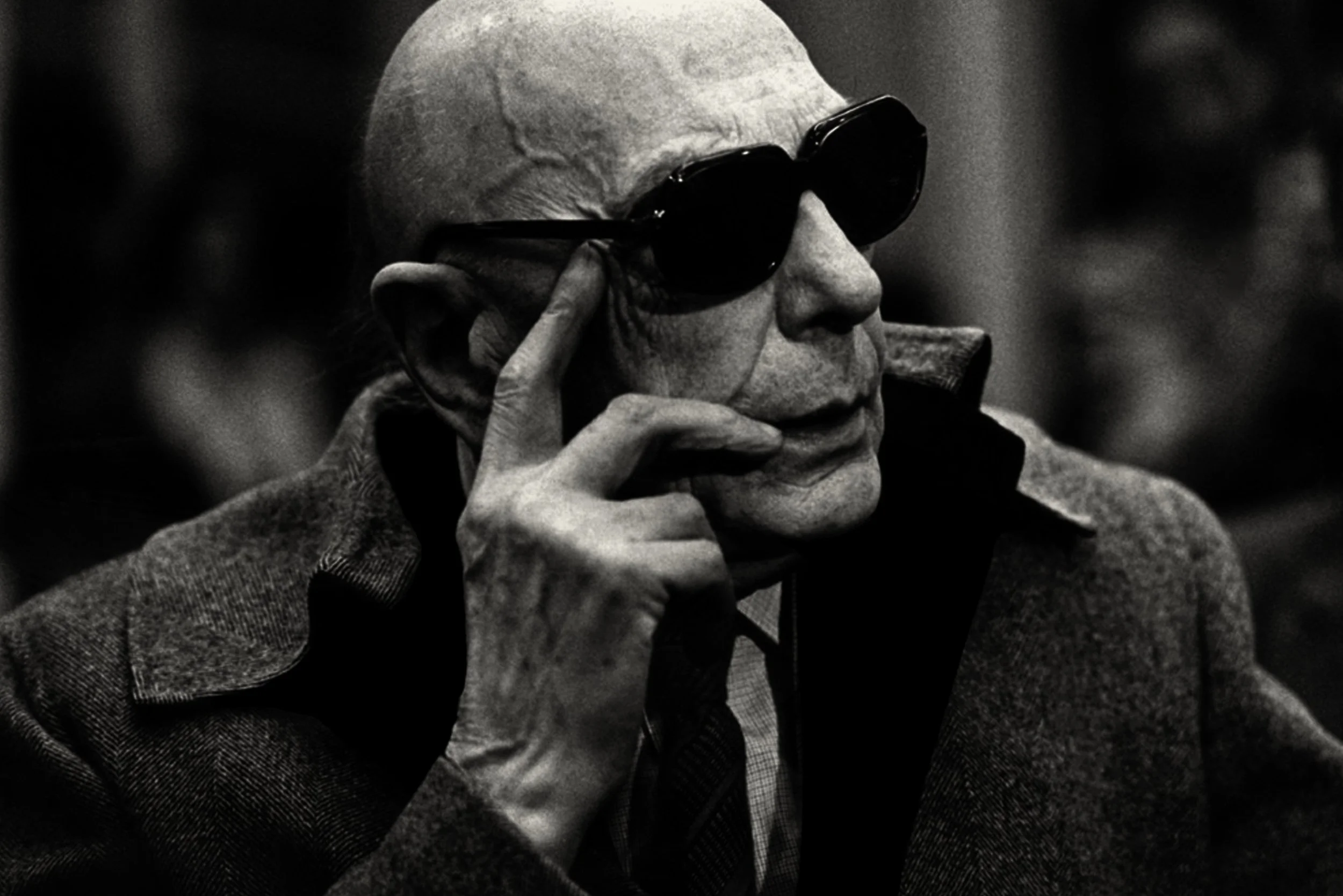
Henri Michaux, 1983
Henri Michaux’s drawings and ink works have long shaped how I think about gesture, trace, and the possibility of a language that does not rely on words. His marks quiver, scatter, and collide across the page.
They behave like organisms, like weather, like thought in motion.
They refuse the stability of the alphabet or symbol.
Instead, they form a field of gestures that sit between writing and drawing, between intention and accident. This refusal of fixed meaning has become a quiet but persistent influence in my own explorations of asemic language.
Michaux’s practice is grounded in movement.
His lines register internal pressure rather than external description. They are not representations but events. They enact states of being that cannot be spoken, only performed. This approach resonates with my own interest in how meaning might arise from the body’s encounter with material rather than from predetermined linguistic structures.
In my experiments with asemic writing (*), I work with similar principles: gesture as syntax, trace as vocabulary, and the body as the site where meaning is formed and unformed.
I began experimenting with asemic writing in the 1990s, shaped by my early encounters with learning Japanese and by the gestural freedom of monotype printing. Henri Michaux’s work offered a crucial point of orientation, encouraging me to explore writing as movement rather than message. Over time, this opened into a broader interest in allowing material processes to guide the emergence of form.
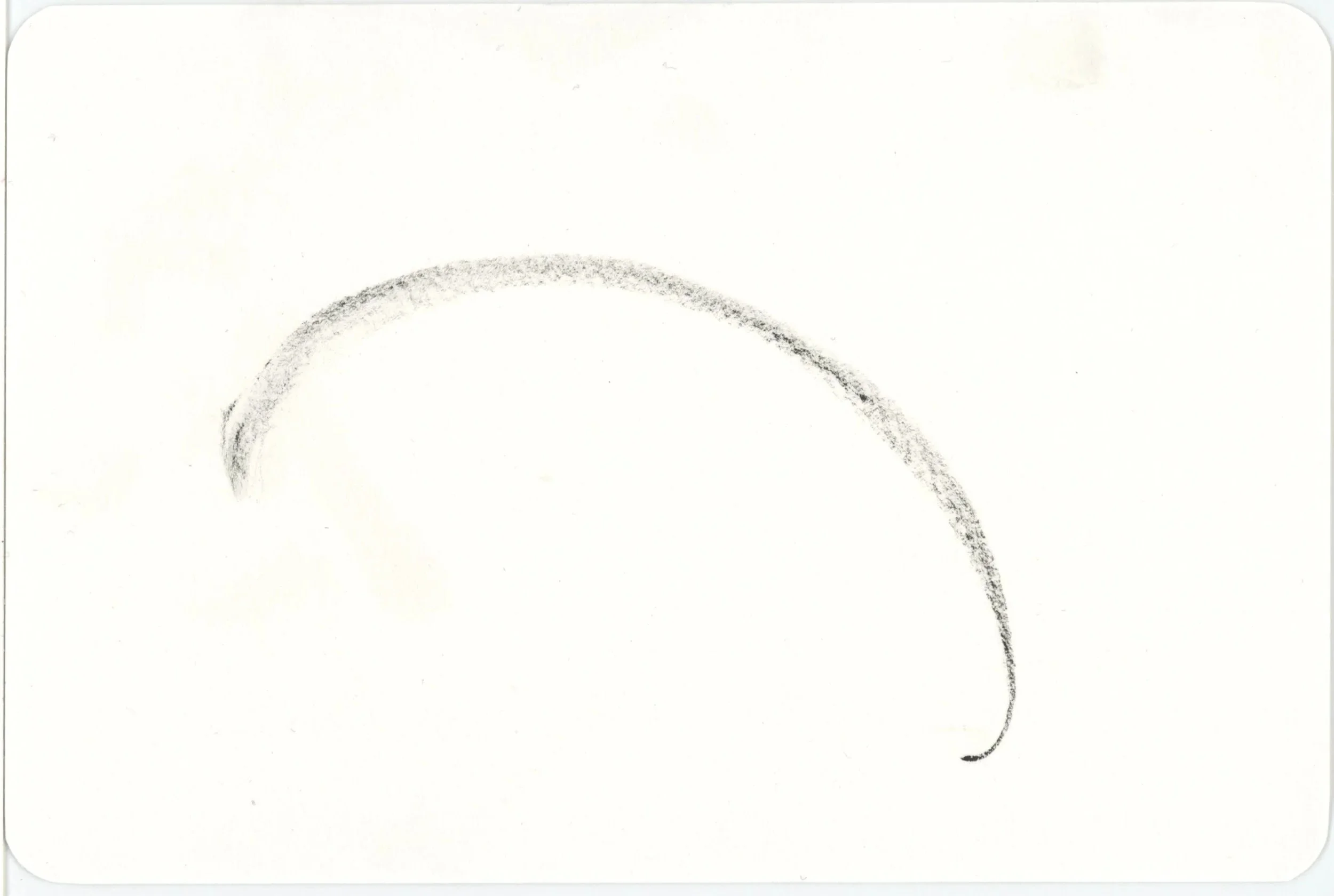
Sign, Jocelyn Janon, 2026.
Michaux’s work offers a way of thinking about communication that is porous, unstable, and alive. His drawings suggest that language need not be bound to human grammar. It can be shaped by movement, drift, and the forces that exceed the self.
In this context, my asemic experiments become a way of listening. They are attempts to register the gestures of the world rather than impose structure upon it. I work with materials that resist stability. I allow forms to emerge through contact, pressure, and chance.
I let the body respond through movement rather than through language. Michaux’s commitment to the expressive force of the non‑verbal continues to shape how I approach both material and method.
Michaux’s legacy is not a technique but a stance. His drawings invite a form of attention that is open, receptive, and unafraid of the untranslatable.
They remind me that language can be a living thing, a shifting field of gestures rather than a fixed system of signs.
In my own practice, I take up this invitation.
My asemic work becomes an exploration of how the body might listen differently, how it might learn from natural rhythms, and how it might participate in forms of communication that are always in motion.
(*)Asemic writing is defined as a wordless, open semantic form of writing that uses lines, symbols, and calligraphic gestures to create an abstract, visual art form that resembles writing but lacks a conventional linguistic message. (Cambridge Dictionnary).
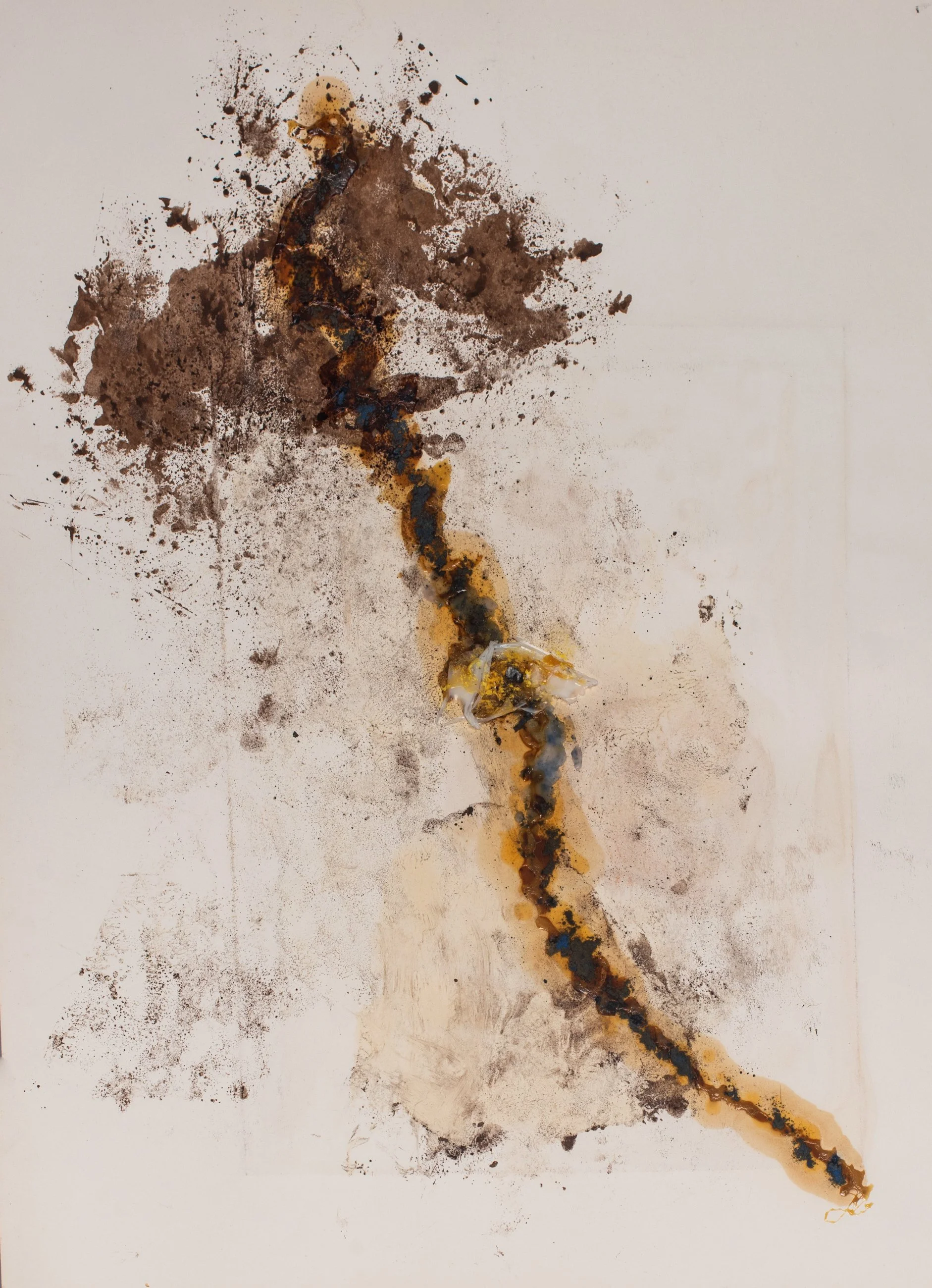
Trace. Jocelyn Janon, 1990. Monotype, mixed techniques.
