RESEARCH
anthropographic notebook
A critical investigation into AI image generation, colonial visual epistemology, and machine vision bias · 2021–2026
All images on this page are AI‑generated unless explicitly stated otherwise.
Project aims
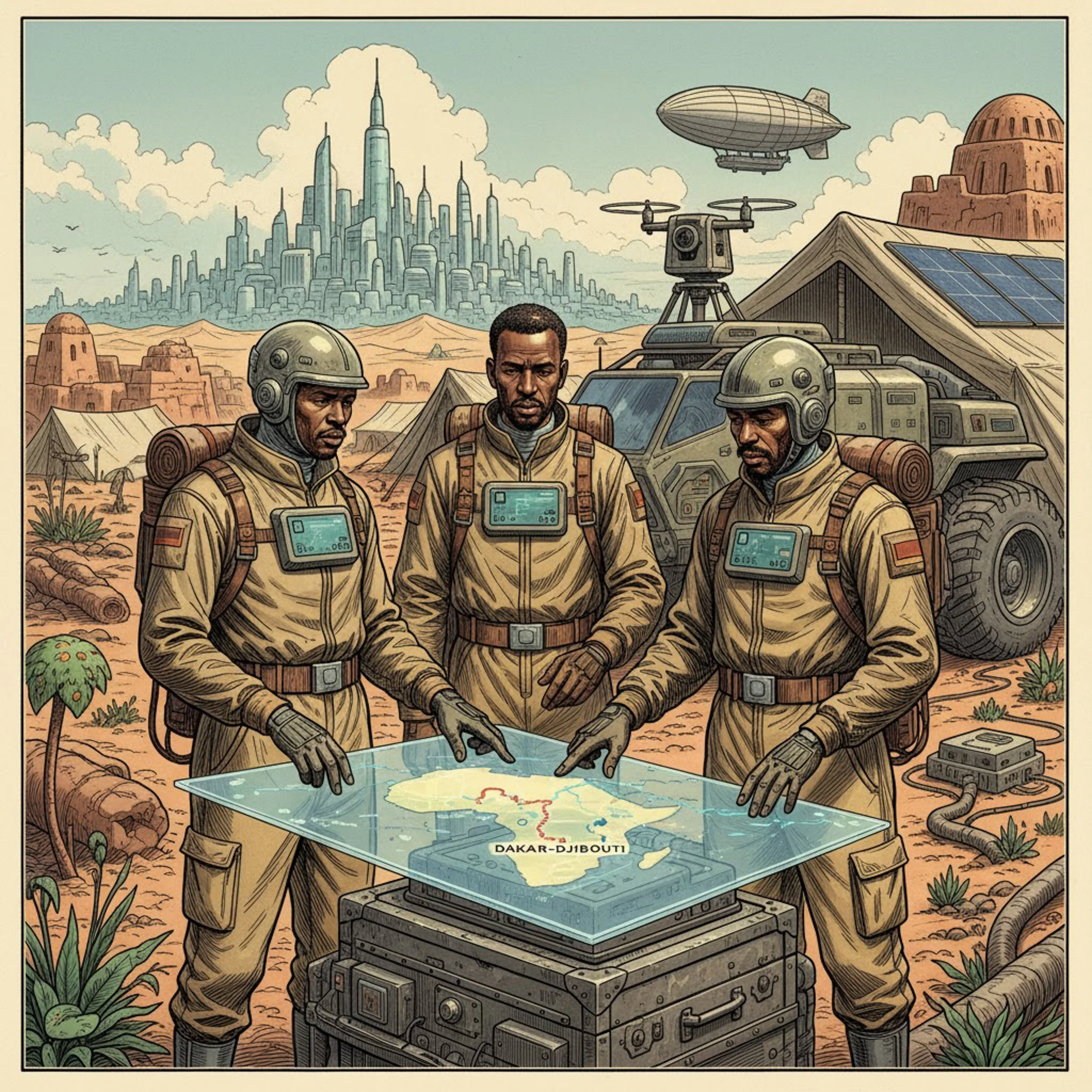
To reimagine the 1931 to 1933 ethnographic expedition as a virtual exploration conducted inside AI image systems.
To use AI image generation to probe how cultural encounters, rituals, and artefacts are represented by these tools.
To reflect critically on colonial methods of classification and representation through visual practice.
To build a digital record of that journey.
The word "anthropographic" describes a branch of knowledge concerned with mapping human populations according to their physical characteristics, languages, institutions, and customs. This project borrows that word deliberately and turns it back on itself.
Anthropographic Notebook is a critical investigation into AI image generation. It asks a straightforward question: when artificial intelligence produces images of people, places, and cultures, whose version of the world does it reproduce? The answer this research proposes is a familiar one. The images AI tools generate are shaped by the same assumptions, hierarchies, and blind spots that shaped European colonial photography a century ago.
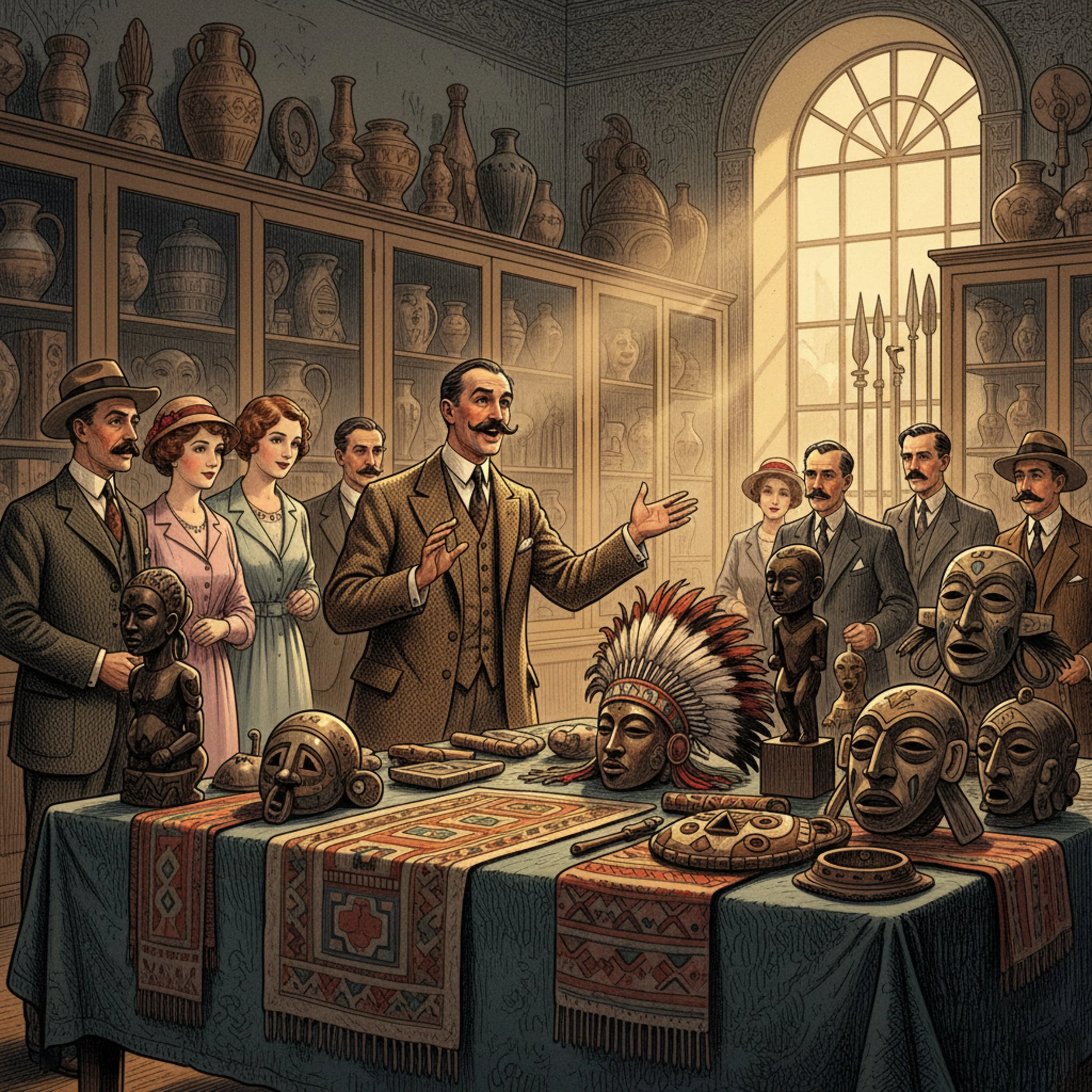
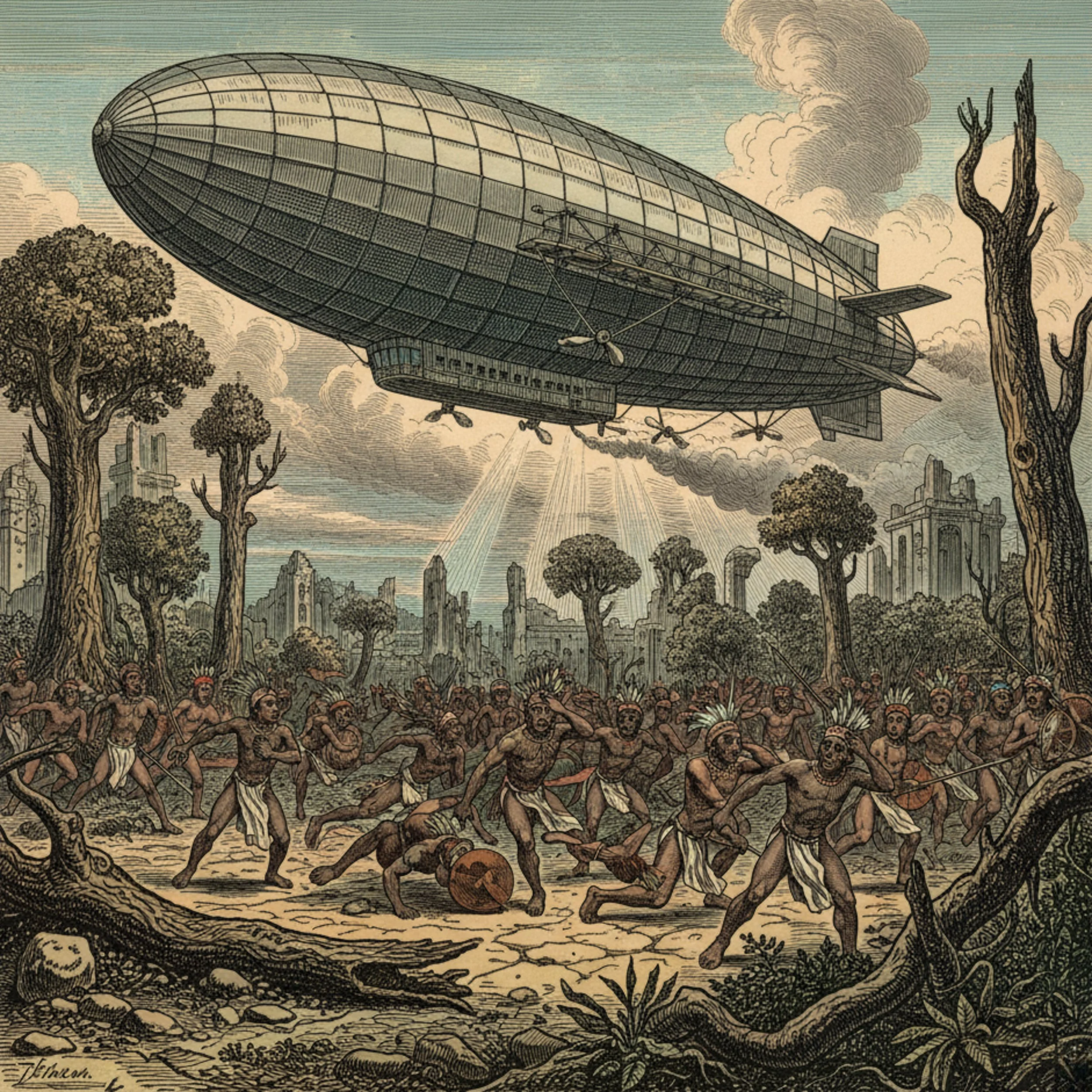
The project takes the form of a virtual expedition. Using text prompts drawn from the historical record of a 1931 French ethnographic mission across Africa, it generates images through contemporary AI tools and examines what comes back. The results document how colonial ways of seeing have not disappeared. They have been absorbed into the data that trains our most widely used image technologies, and they continue to shape what those technologies produce.
|> 01
A personal beginning
I was born in France, and I come not only from a colonising country, but my father also spent two years in West Africa as a conscript.
Throughout our childhood, my sisters and I heard his stories about Mali and Mauritania: exotic fruits, swimming in crocodile-infested rivers, encounters with African people. My father made it all sound fantastic, and as a boy I dreamt of Africa.
The colonial reality, however, was very different.
We watched all the films set in Africa.
Howard Hawks' Hatari! (1962) was my favourite.
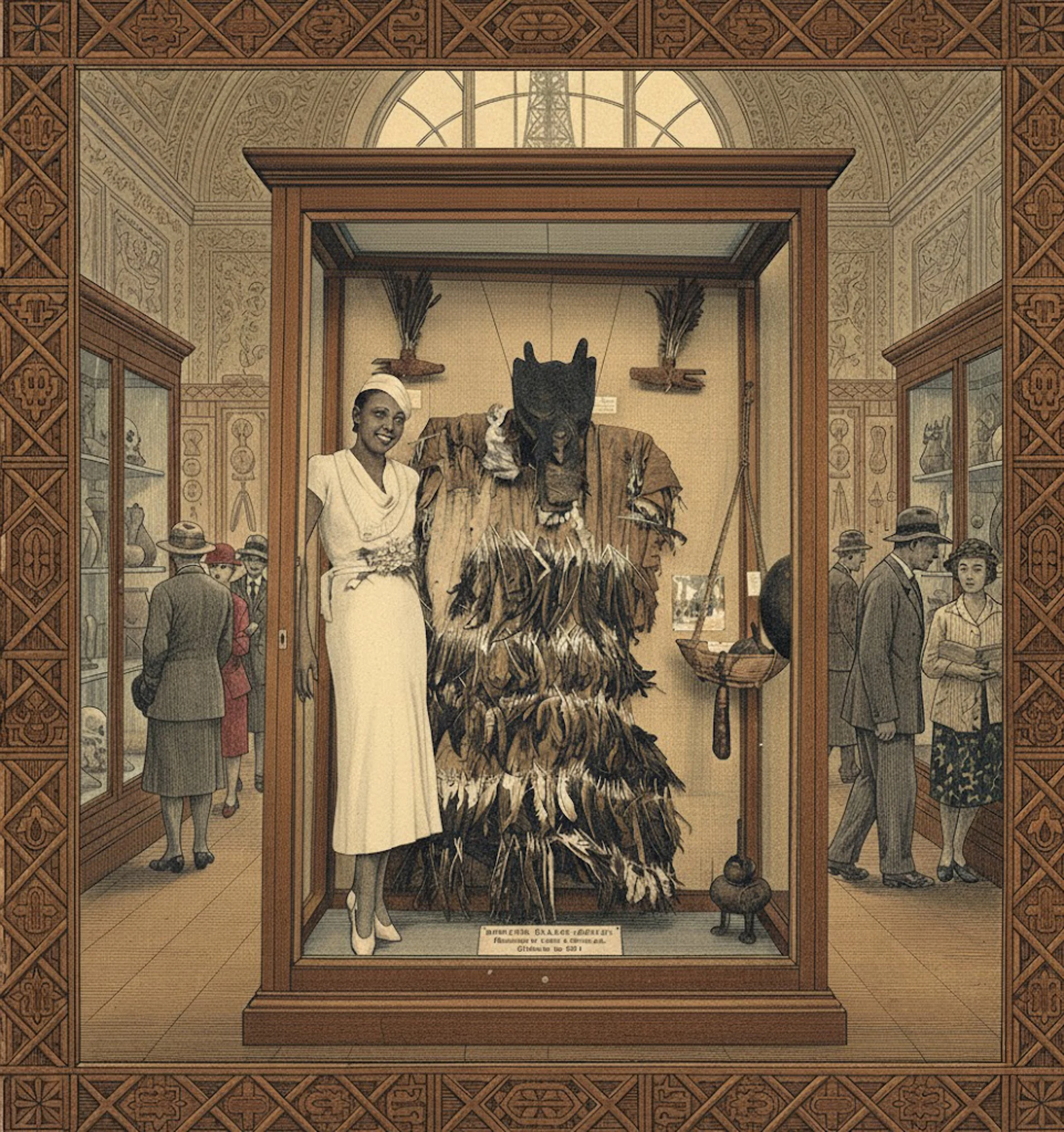
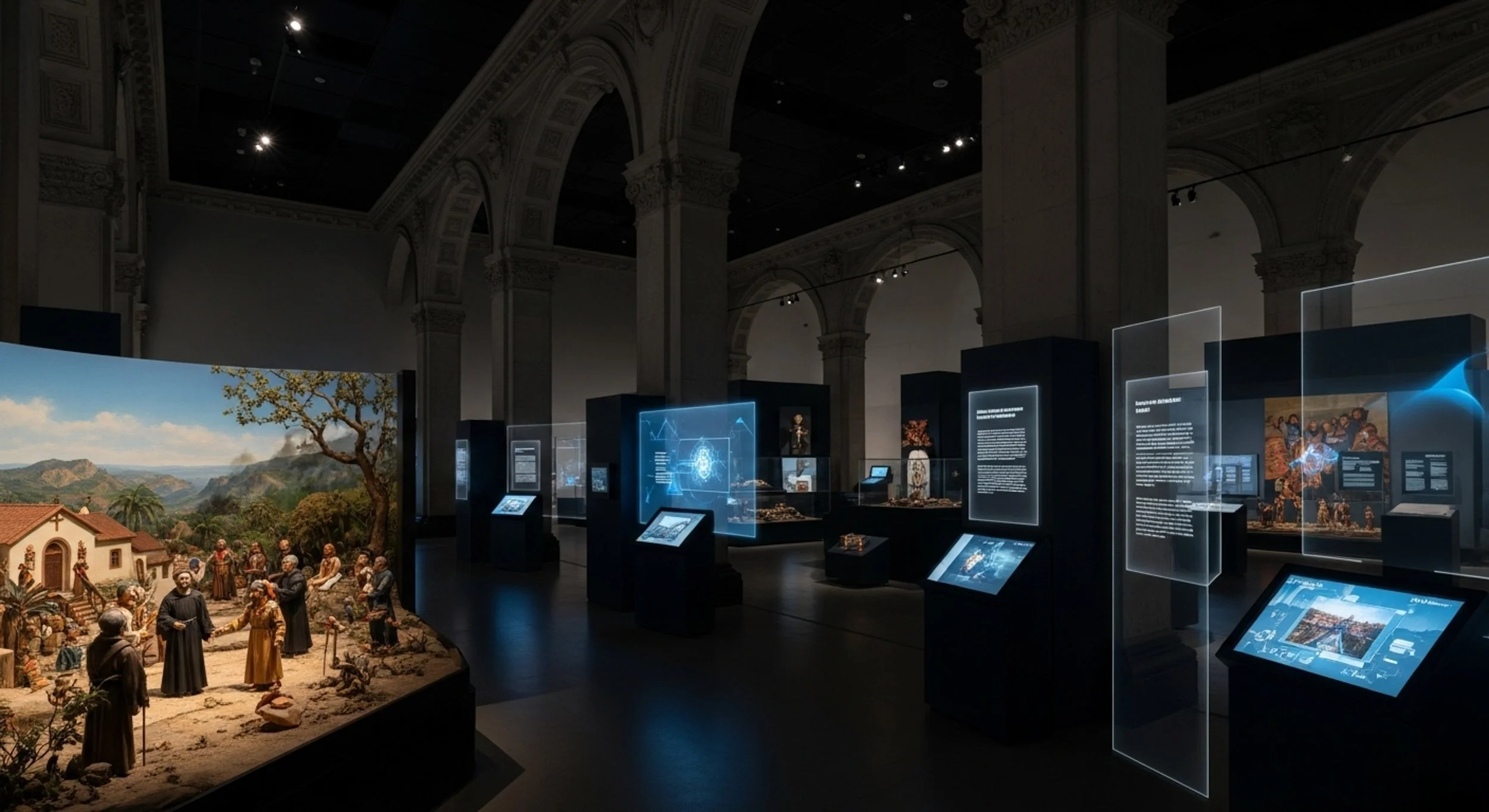
We visited the Musée de l'Homme and what was then the Musée des Arts africains et océaniens, a museum that began as part of France's Exposition coloniale internationale of 1931. I remember seeing masks and weapons described as "native" artefacts.
As a boy, conditioned as I was, I loved it.
I was clueless.
Around the same time, I was also fascinated by Jules Verne. I believe I have read all his books and novels. I devoured them, dreaming of adventures and expeditions, and I admired Gustave Doré's illustrations. What I did not understand then was that Verne's fiction, for all its imaginative reach, consistently reproduced the racial hierarchies and colonial attitudes of nineteenth-century Europe. Non-European characters appear in his novels as exotic curiosities, servants, or obstacles standing in the way of the white protagonist's progress. These representations reinforce a particular worldview, one in which whiteness is associated with reason, authority, and progress, while everyone else is rendered passive, peripheral, or primitive. Verne's stories embed that worldview into the very structure of adventure and exploration.
I come from a coloniser's family.
Not in the sense of deliberate cruelty or declared ideology, but in the structural sense that matters most.
My father's presence on African soil as a conscript was made possible by a system of imperial power that positioned France as the natural authority over other people's lands.
By heritage, not by choice, I am a coloniser.
This project begins from that admission, not to perform guilt, but because honesty requires it. You cannot examine a system of looking without first accounting for where you are standing when you look.
This project revisits those childhood images with different eyes. It draws on those early memories and the visual style they left behind, mixing etching with other visual techniques, while asking what it means that such images now inform the outputs of machine-learning systems.
![Hawks, H. (Director). (1962). Hatari! [Film]. Paramount Pictures.](https://images.squarespace-cdn.com/content/v1/63424af10dfba41737be0a7b/9a42e68a-27b2-45dd-8804-032515f12d3f/p666_v_h10_aa.jpg)
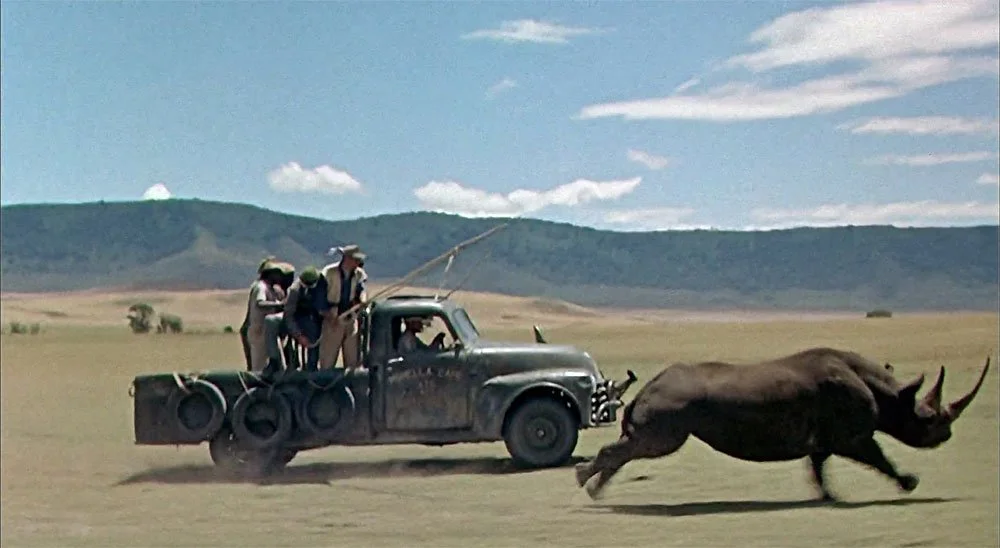
Hawks, H. (Director). (1962). Hatari! [Film]. Paramount Pictures.
|> 02
The expedition that inspired this one
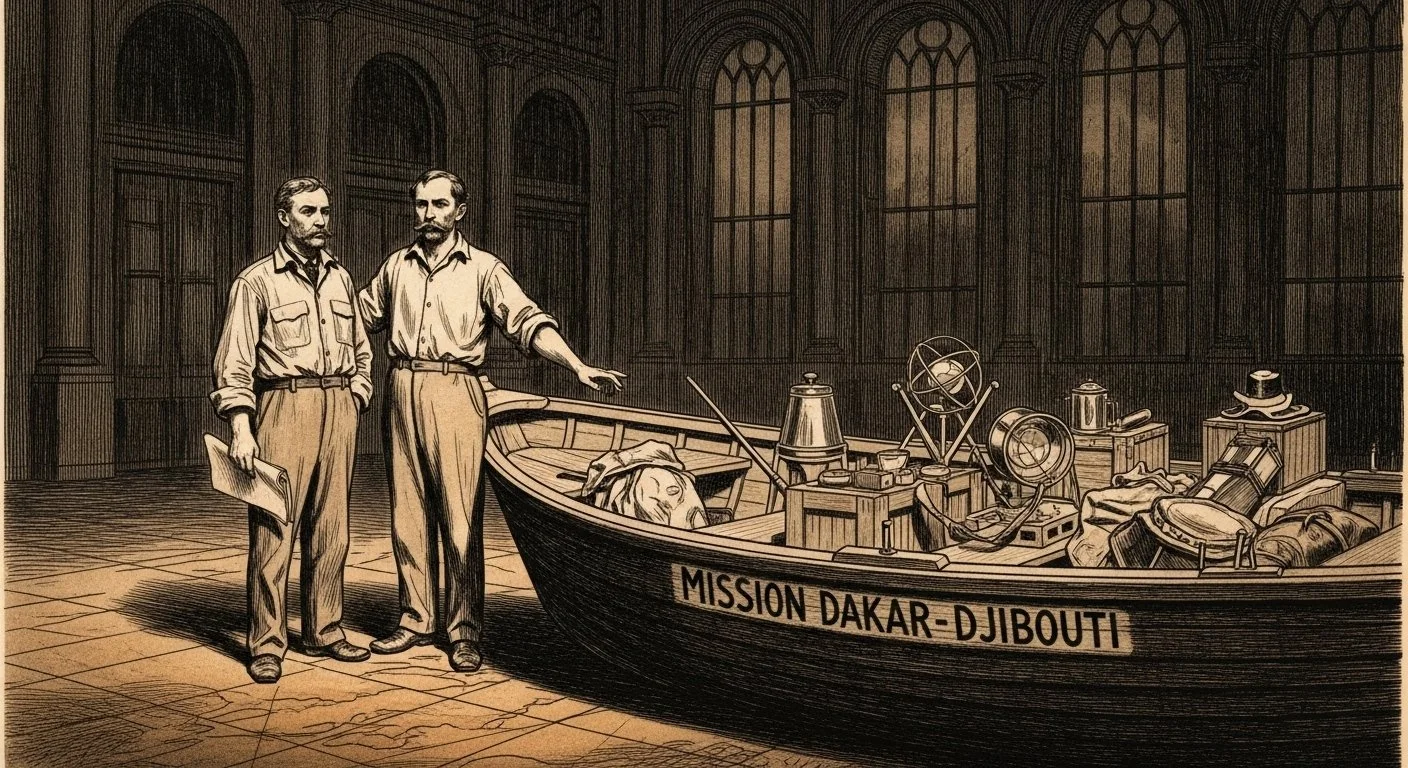
To understand what AI image tools are doing today, it helps to know about a real expedition that crossed Africa between 1931 and 1933.
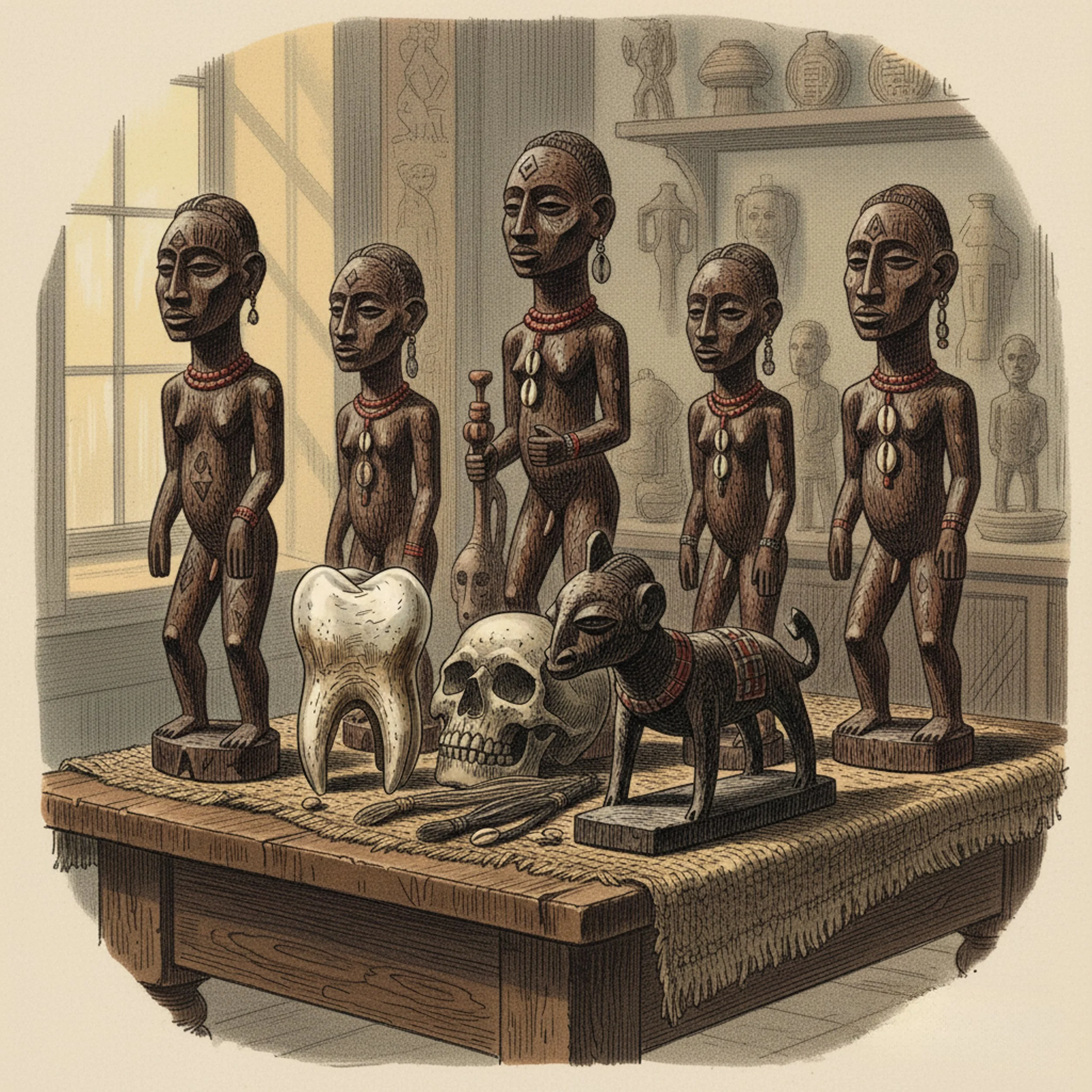
The Dakar-Djibouti mission was a major French ethnographic undertaking led by the anthropologist Marcel Griaule. A team of eleven researchers travelled from Dakar on the west coast of Africa to Djibouti on the east, passing through fourteen African territories over more than two years. Their stated purpose was scientific: to collect cultural objects, record languages, and document social practices for three major Parisian institutions. What they brought back was enormous in scale: approximately 3,600 objects, 6,600 natural specimens, 370 manuscripts, 70 human remains, nearly 6,000 photographs, films, sound recordings, and more than 15,000 survey sheets.
The official record of the mission, the Cahier Dakar-Djibouti (Leiris, 1934), presents that collection as a scientific achievement. But one member of the team, the writer Michel Leiris, kept a private journal that tells a different story. That journal was later published as Phantom Africa (Leiris, 2017).
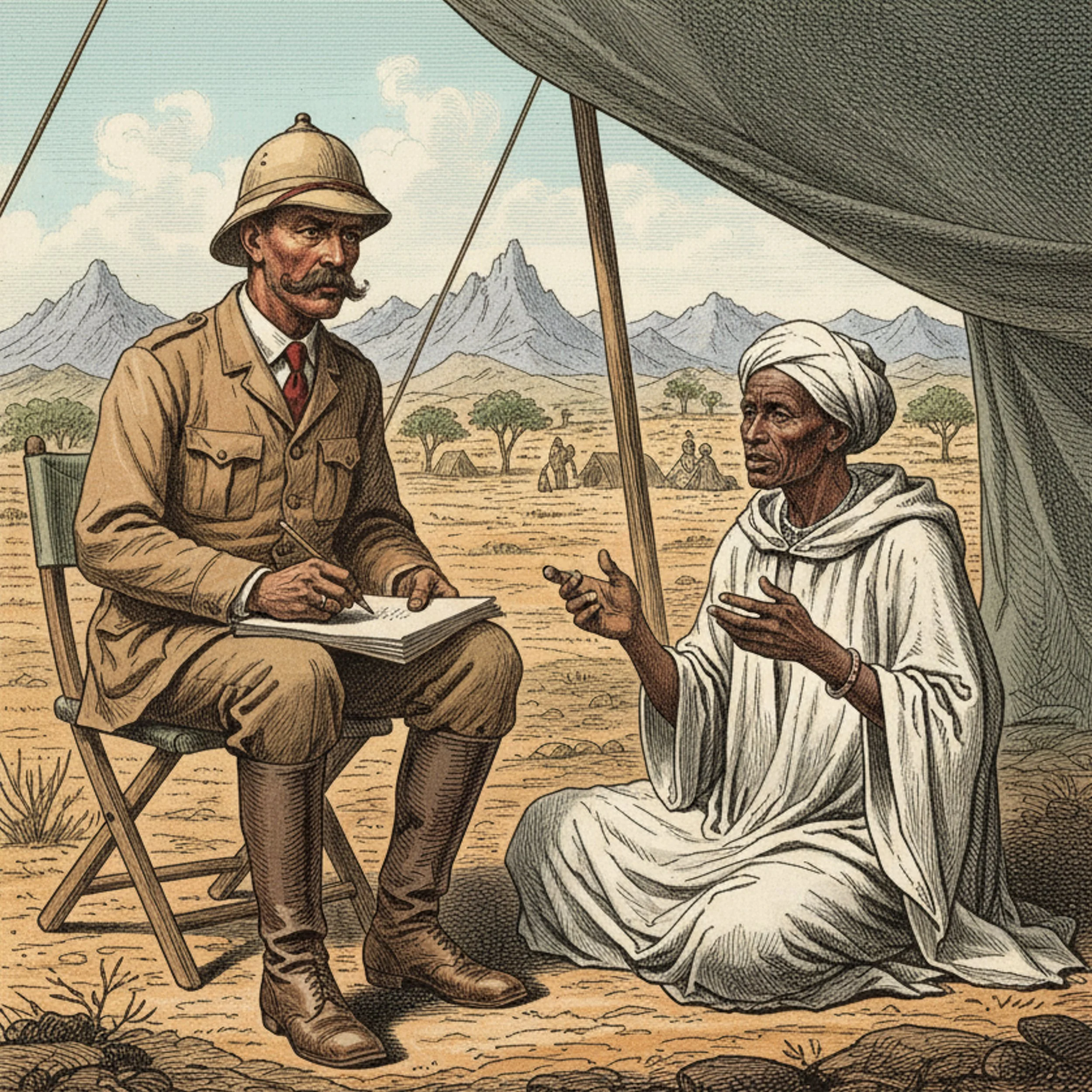
Where the Cahier reads as a ledger of acquisitions, Phantom Africa reads as a document of ethical discomfort. Leiris does not simply record the expedition. He exposes it. His writing is raw and often troubled, revealing the violence and moral confusion involved in ethnographic fieldwork conducted under colonial conditions. He questions the legitimacy of the mission itself, the role of the ethnographer, and his own part in acts of cultural extraction. Objects were obtained through coercion and deception. Communities were asked to perform ceremonies for the camera under conditions they could not freely refuse. Knowledge was removed from its context and repackaged for European audiences.
This honesty created a growing rift between Leiris and Griaule, the mission's leader. Griaule viewed ethnography as a tool of scientific control and classification. Leiris came to see it as something more troubling: a place where the self came undone and the colonial gaze faltered under scrutiny. Phantom Africa is not simply a travelogue. It is a confession from a man who knew he was one of the agents of empire.
The mission is now widely recognised as a product of French imperial power. It remains central to ongoing debates about museum ethics and the return of African cultural heritage to the communities it came from.
Financing the 1931 mission
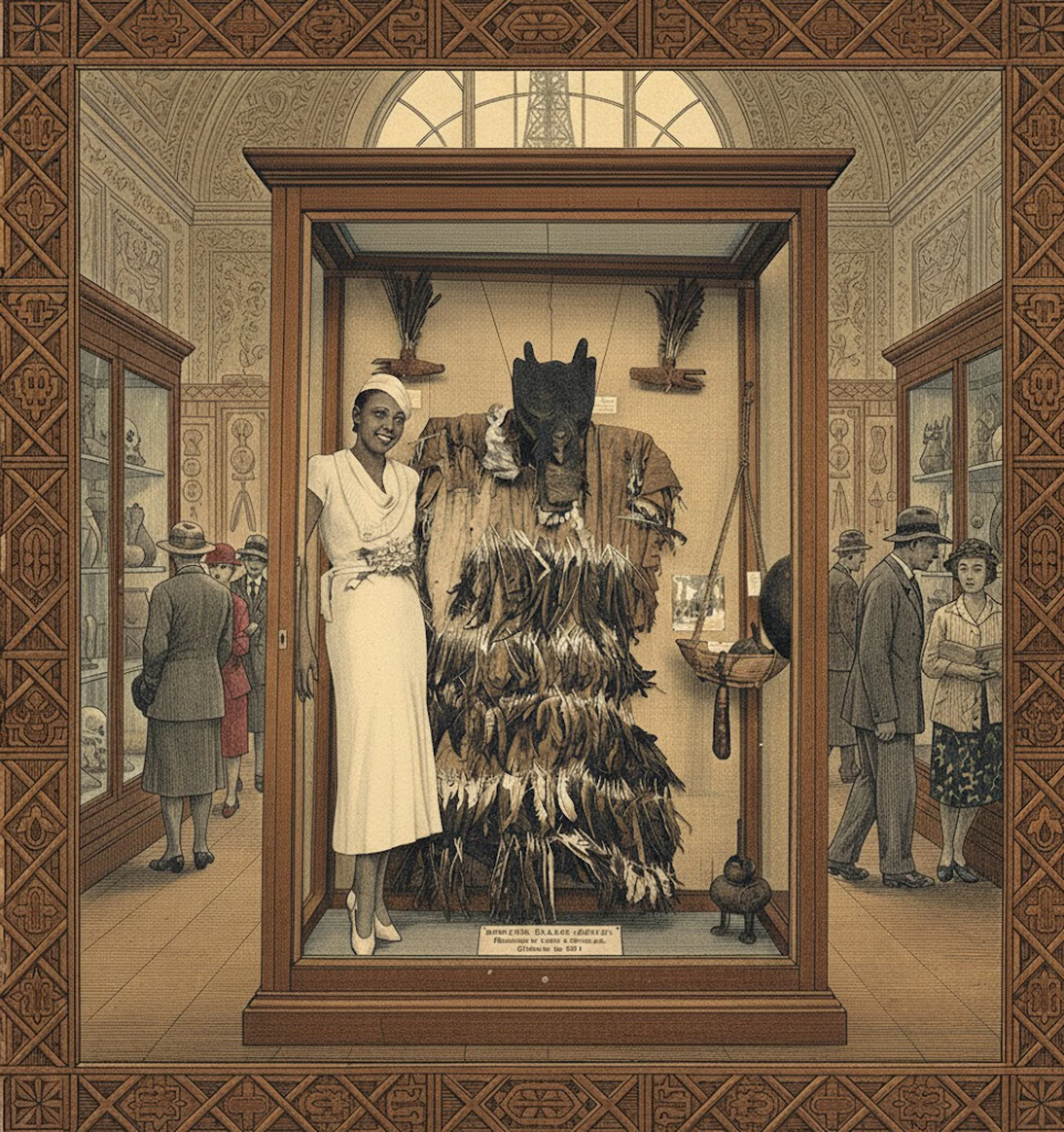
The original Dakar-Djibouti expedition required significant fundraising to sustain its operations over twenty months. Its public communications prominently featured Black public figures, including the Afro-American boxer Al Brown, celebrated in France as "la Merveille Noire", and Josephine Baker, who posed at the Musée de l'Homme and was present when the expedition returned.
Their involvement reveals a cynical dimension of the mission's public strategy: Black identities were used for their symbolic and media value rather than for any meaningful involvement in the work itself.
This entanglement of colonial expeditions, racial representation, and cultural capital in early twentieth-century Europe remains a central reference point for this project's critical inquiry.
|> 03
First encounters with AI

DALL.E, 2021
In 2021, my first experiments with early text-to-image systems, including a tool called CrAIyon, felt like a small technological revelation. For the first time it was possible to generate an image from words alone.
But the novelty quickly gave way to unease. The more I experimented, the more clearly I could see that the AI was not generating something new. It was reproducing the same racial clichés, exoticising conventions, and colonial visual habits that circulate in the world it had been trained on. Rather than imagining something fresh, it was echoing and amplifying what history had already inscribed.
That observation became the starting point for a more deliberate investigation. I turned to the Cahier Dakar-Djibouti as a framework through which to stage a new kind of expedition, this time inside AI itself. Using the vocabulary and descriptive categories of the original 1931 mission as prompts, I began to map how machine-generated imagery reproduces the logics of extraction, classification, and representation that shaped the historical expedition. The research became a way of tracing how colonial ways of seeing persist, shift, and resurface inside contemporary computational systems.
|> 04
What the images revealed
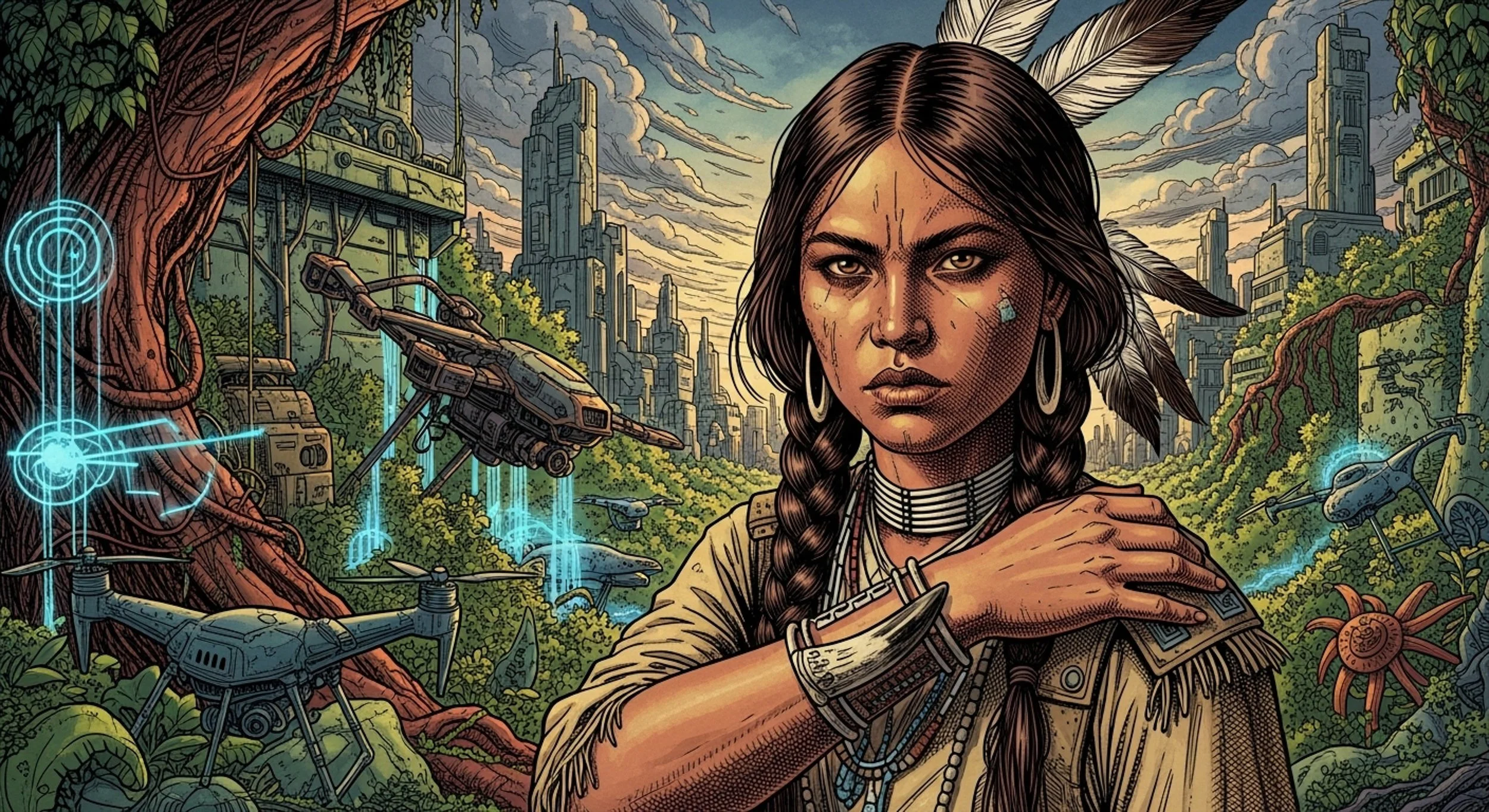
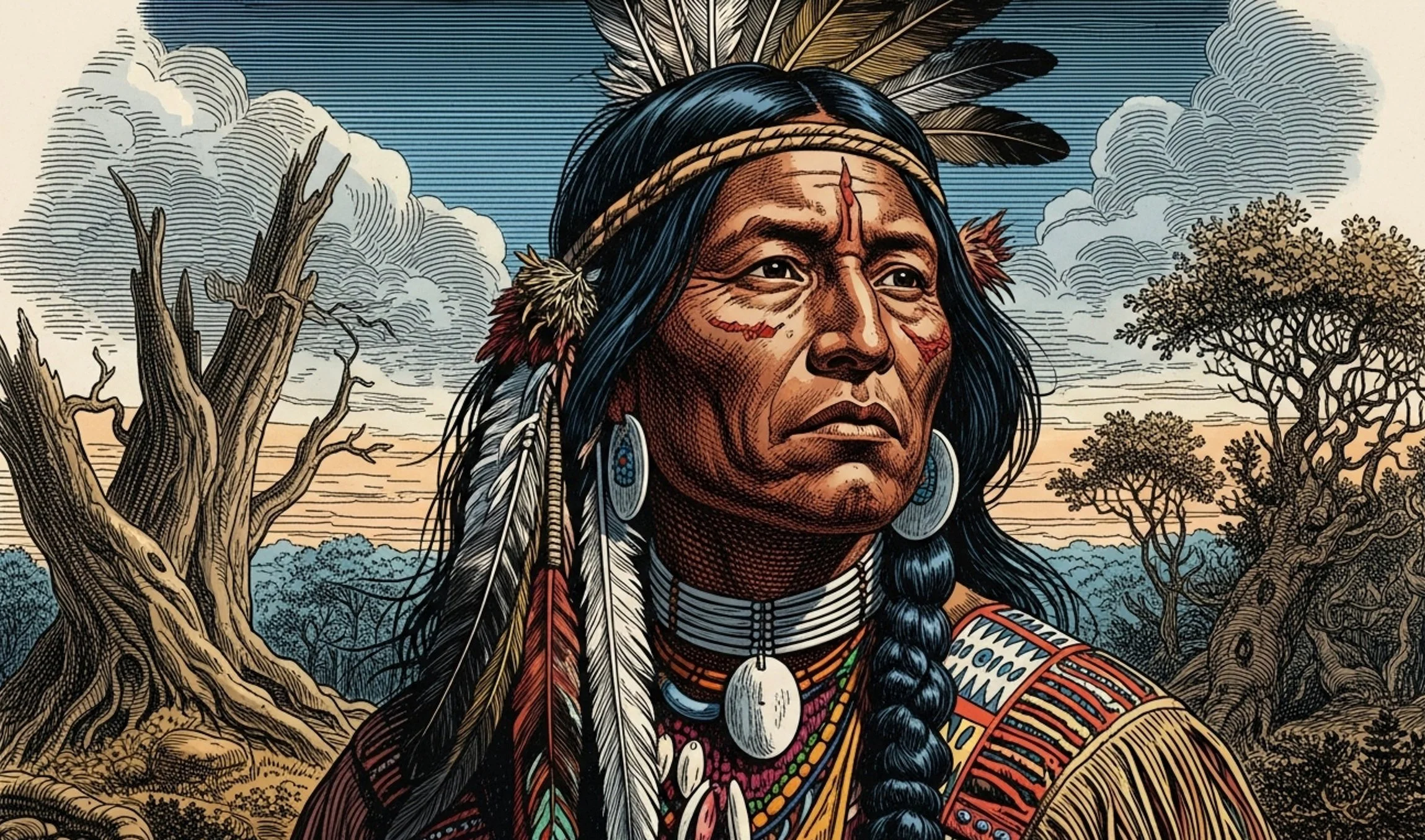
When this project began in 2022, the assumptions embedded in AI image tools were not difficult to find. Prompts using the words "Indigenous" or "Native" reliably returned images of dark-skinned figures drawn from a generalised Western imaginary of the Global South. These figures were generic and interchangeable, stripped of any specific cultural identity. The systems were not subtle about what they assumed.
Over the course of the project, those defaults shifted. AI systems moved away from those earliest stereotypes towards a different reductive figure: the caricatured Native American familiar from Western cinema. One colonial reference point had been swapped for another. Rather than moving beyond colonial visual habits, the systems were recycling them in new forms, revealing both the persistence of racial stereotypes and the instability of the interpretive frameworks underlying machine vision.

By the project's conclusion in 2026, the picture had shifted again, and in a more ambiguous direction.
Sustained public criticism, regulatory pressure, and updated training practices have made the leading AI platforms considerably more cautious.
Overtly racialised outputs are now less readily produced. Safety guardrails are more robust. The most egregious stereotypes are harder to generate through straightforward prompting. On the surface, this looks like progress.
The bias has not disappeared.
It has become less visible. Systems that once failed visibly now fail quietly, which is in some respects a more difficult condition to critique.
This shift is itself one of the central findings of the research. The fact that racial bias in AI outputs is now harder to surface does not mean the underlying problem has been resolved. It means the problem has been addressed at the level of output whilst remaining largely intact at the level of how these systems were built and what they were built on.
The four-figure exercise
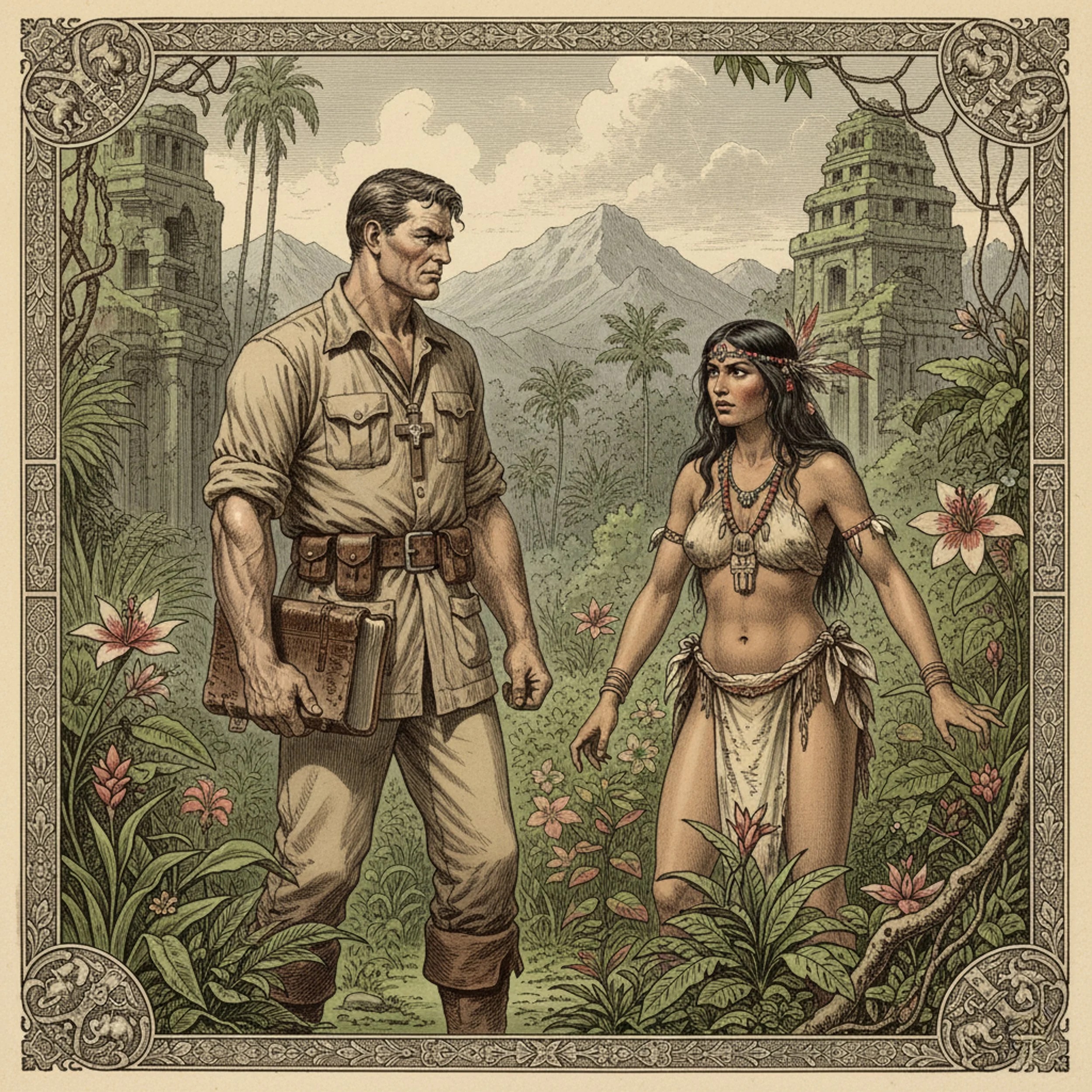
One experiment, conducted in the earlier phase of the project, asked an AI system to generate a single portrait containing four figures simultaneously: an Indigenous person, a Native, an Autochthon, and an Aborigine.
In careful usage, these four words describe distinct things: different communities, different legal and political contexts, different relationships to land and sovereignty. In the hands of an AI system trained on accumulated Western visual culture, they collapsed into a single figure, repeated. The system could not hold four distinct ways of seeing, because it had never learned them.
The resulting image is presented as evidence of how language, category, and visual output interact, and where the contradictions surface. Were the same prompt entered today, the response would likely be more cautious, more generic, and in some ways less honest about what the system actually contains.
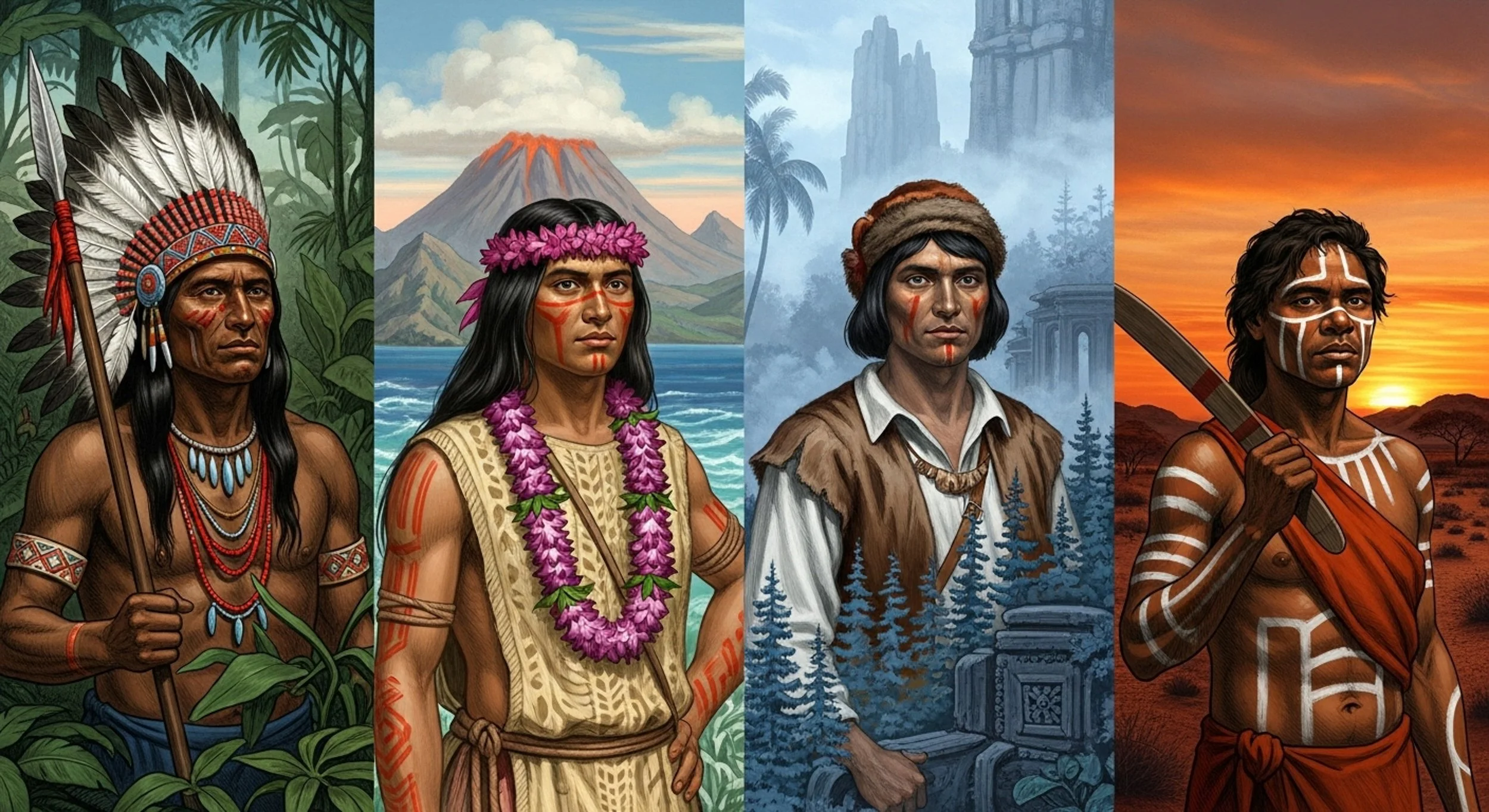
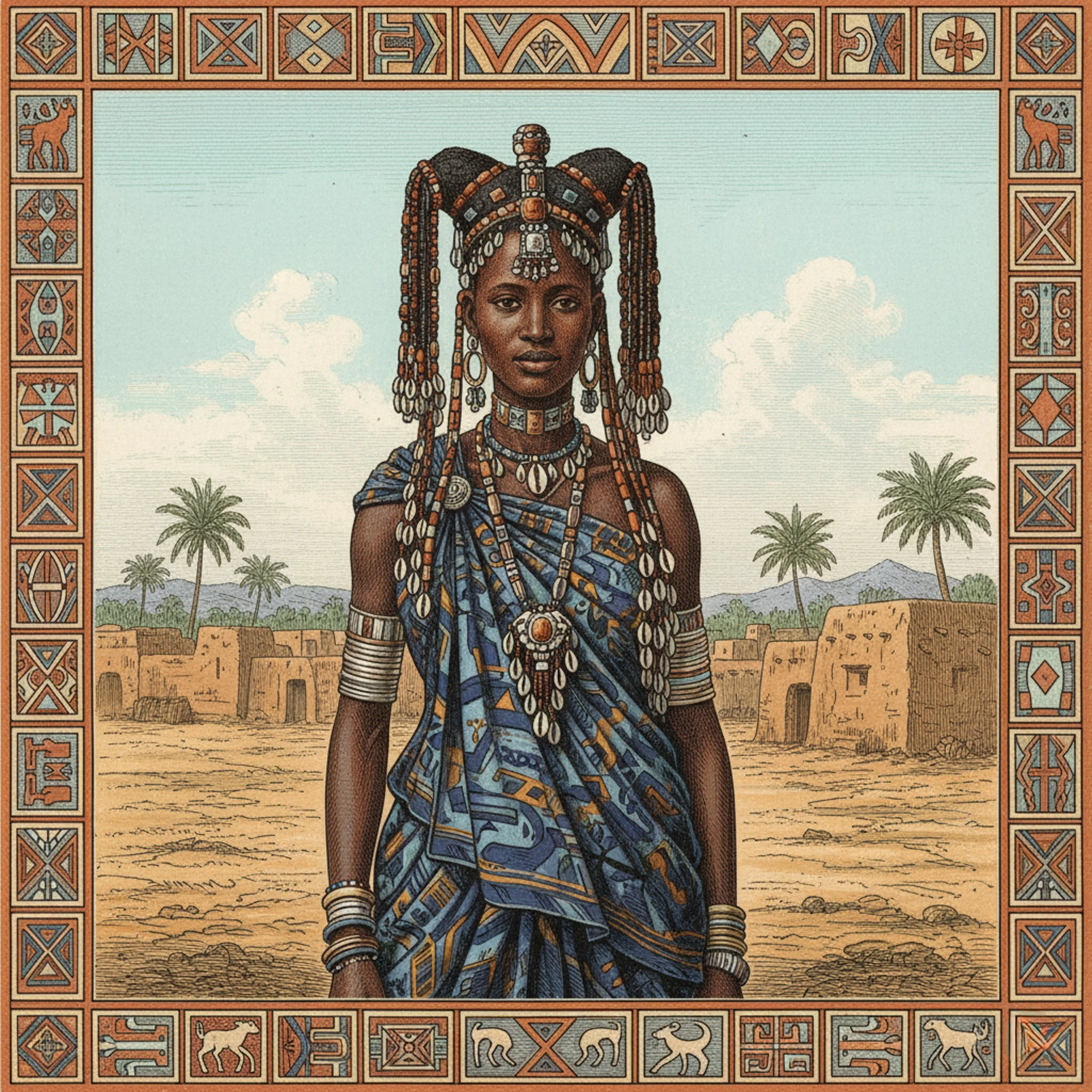
The four-figure exercise — AI instructed to depict an Indigenous person, a Native, an Autochthon, and an Aborigine in a single portrait.
|> 05
Artificial intelligence as a territory
This project treats artificial intelligence not as a tool but as a territory: an unfamiliar landscape to be entered, mapped, and examined critically.
The comparison is not a metaphor. It is structural.
When nineteenth-century European powers mapped Africa, they did so on their own terms. Places that had been known and inhabited for generations were declared unknown simply because Europeans had not yet recorded them. The map was not a neutral description of reality. It was an act of possession.
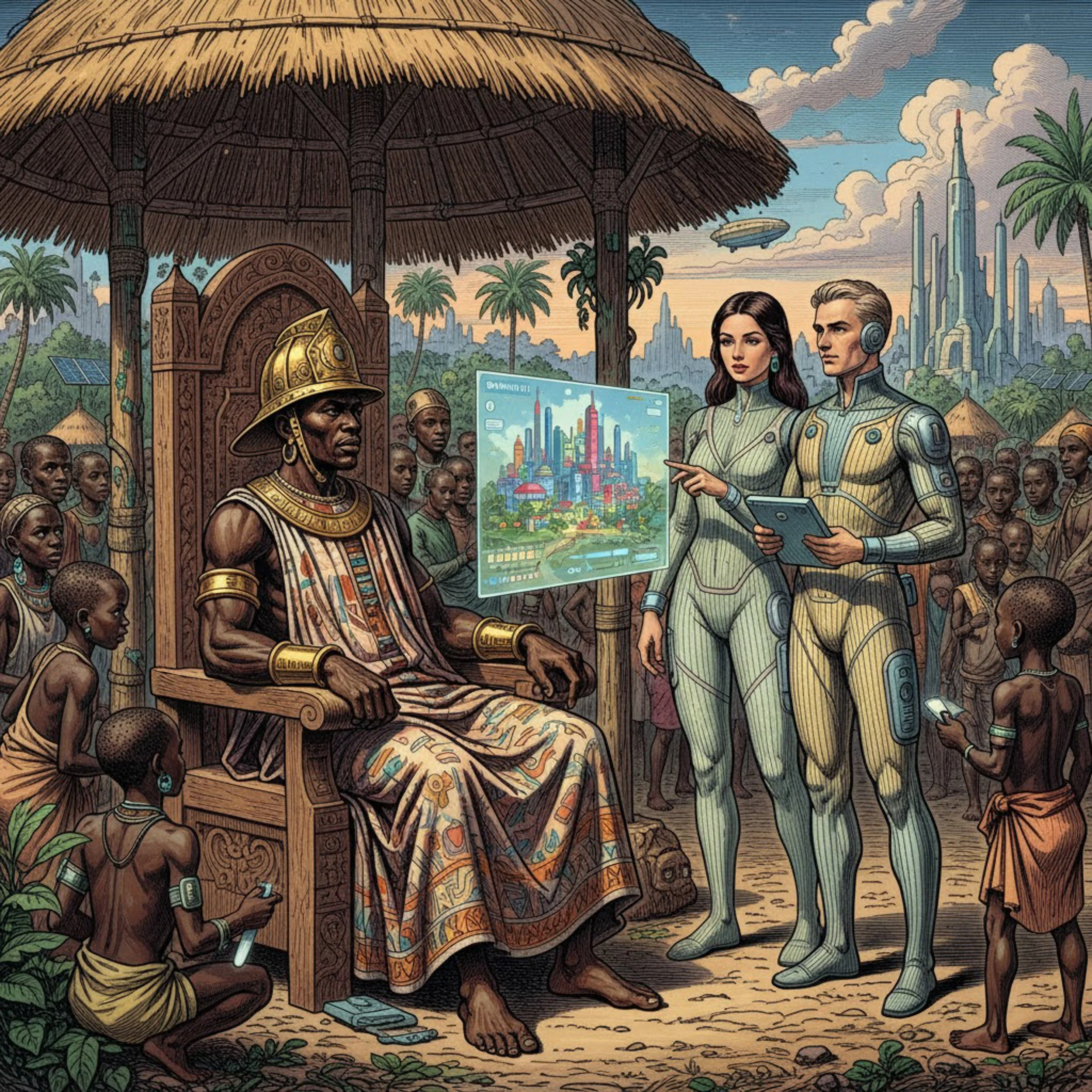
Artificial intelligence works in a structurally similar way. The digital landscape of AI presents itself as a blank map awaiting inscription. Just as early explorers approached unfamiliar continents as spaces to be named and claimed, AI systems approach data as raw material to be extracted, classified, and deployed. Communities whose images, languages, and knowledge systems now form part of AI training datasets were rarely consulted, credited, or compensated. The process is framed as technological progress. The structure is familiar: extract, classify, redeploy.
The geography of AI has no fixed form. It is shaped by the data it consumes and the prompts it responds to.
I approach this terrain much as French explorers navigated colonial Africa in the 1930s: with curiosity, suspicion, and critical intent. But where they mapped rivers and catalogued artefacts, I trace algorithms, naming conventions, and data flows. I move through this digital terrain as both intruder and witness, documenting its silences and its mechanisms of erasure. Unlike those early expeditions, I seek not to claim or classify, but to expose and unsettle. The Anthropographic Notebook becomes a form of counter-mapping: one that resists the logic of mastery and foregrounds the ethical consequences of how these systems were built.
|> 06
Weaponised deterritorialisation
Reflecting on the 1931 expedition and on the behaviour of AI systems, I developed a concept to describe what both are doing.
I call it weaponised deterritorialisation.
The word "deterritorialisation" comes from the French philosophers Gilles Deleuze and Felix Guattari, who used it to describe how ideas, people, and cultures can break free from the fixed systems that contain them, a kind of liberating rupture (Deleuze and Guattari, 1987). In their original sense, the idea gestures towards creative escape and reconfiguration.
This project turns that idea on its head. Weaponised deterritorialisation describes what happens when that rupture is not liberating but predatory: when objects, images, knowledge, and cultural meaning are deliberately removed from their contexts not to set them free, but to strip them of everything that made them meaningful, and redeploy them in the service of someone else's purposes.
That is what the Dakar-Djibouti expedition did with the objects it collected. A mask removed from its community, its ceremony, and its landscape, placed in a Parisian museum, has been emptied. What was once embedded in ceremony, kinship, and land became catalogued, numbered, and displayed, neutralised under the guise of preservation. The violence was not only physical. It was also a violence against knowledge itself.
The same logic operates inside AI systems. AI tools routinely extract data from diverse communities, languages, and cultural practices, often without consent, attribution, or any understanding of the context from which that data came. Knowledge is scraped from the internet, processed, and redeployed within commercial frameworks. Plural and relational worldviews are flattened into datasets. The terrain has shifted from soil to server, but the tactics remain the same.
How it works
Naming and classification
Systems of naming and registration abstract and reframe knowledge within frameworks that serve dominant institutions, severing it from its original meaning and context.
Assertion of authority
The codification of knowledge centralises control in powerful institutions, asserting authority over things that did not belong to them.
Erasure and replacement
Indigenous names, practices, and ways of understanding the world are replaced by universalised frameworks that render those original systems invisible.
Institutional continuity
Colonial legacies are perpetuated through museums, archives, academic disciplines, and now through AI training datasets, embedding exclusion into the infrastructure of knowledge itself.
AI does not merely reflect existing power structures. It extends and operationalises them.
|> 07
How the research works
This is practice-based research. Making images is not an illustration of the thinking. It is the thinking.
Prompts are drawn, where possible, from the vocabulary and captions of the original Mission Dakar-Djibouti documentation, adapted through the researcher's own approach to image-making. This situates the project within a historical framework even as it works through contemporary tools.
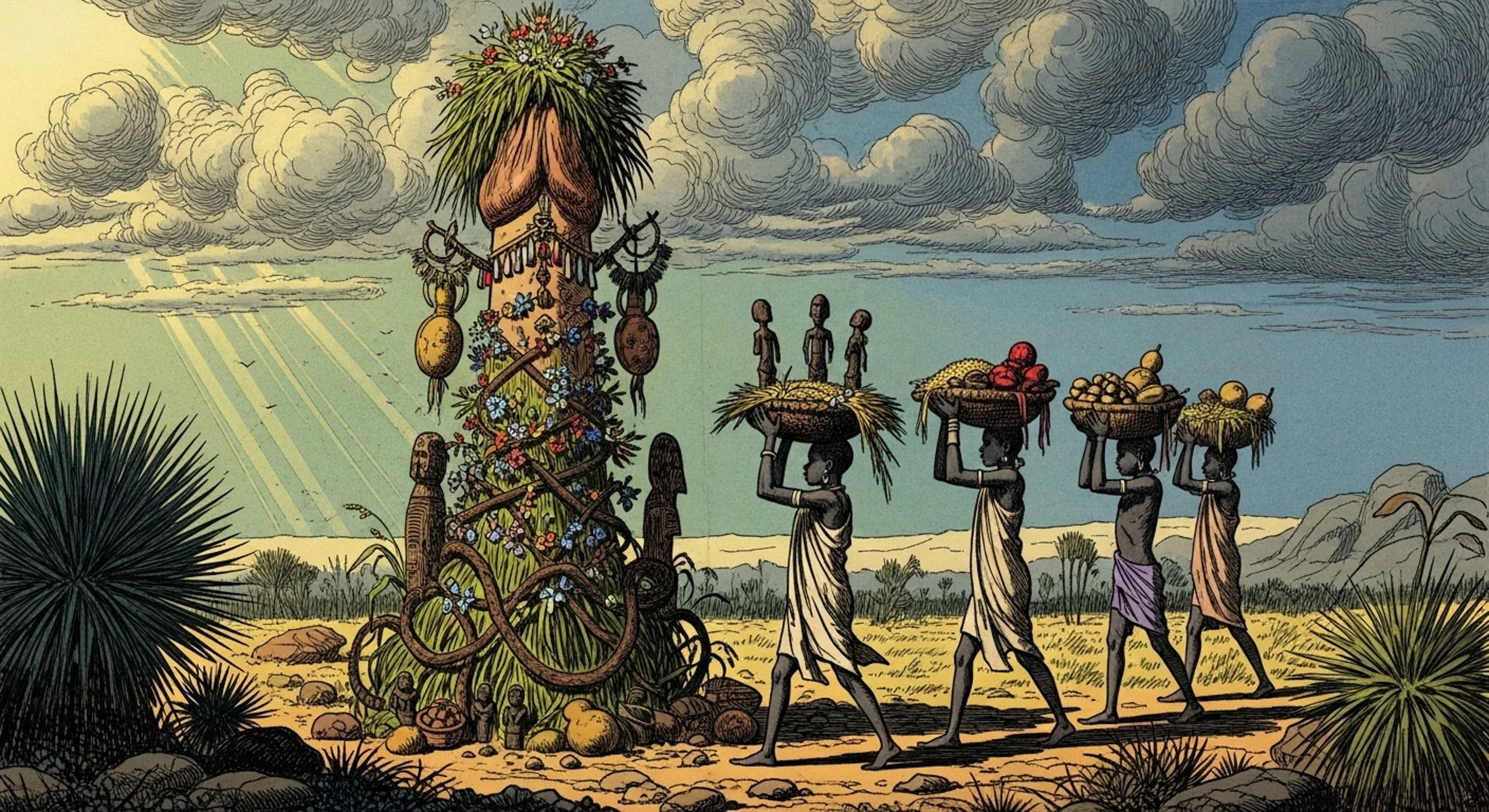
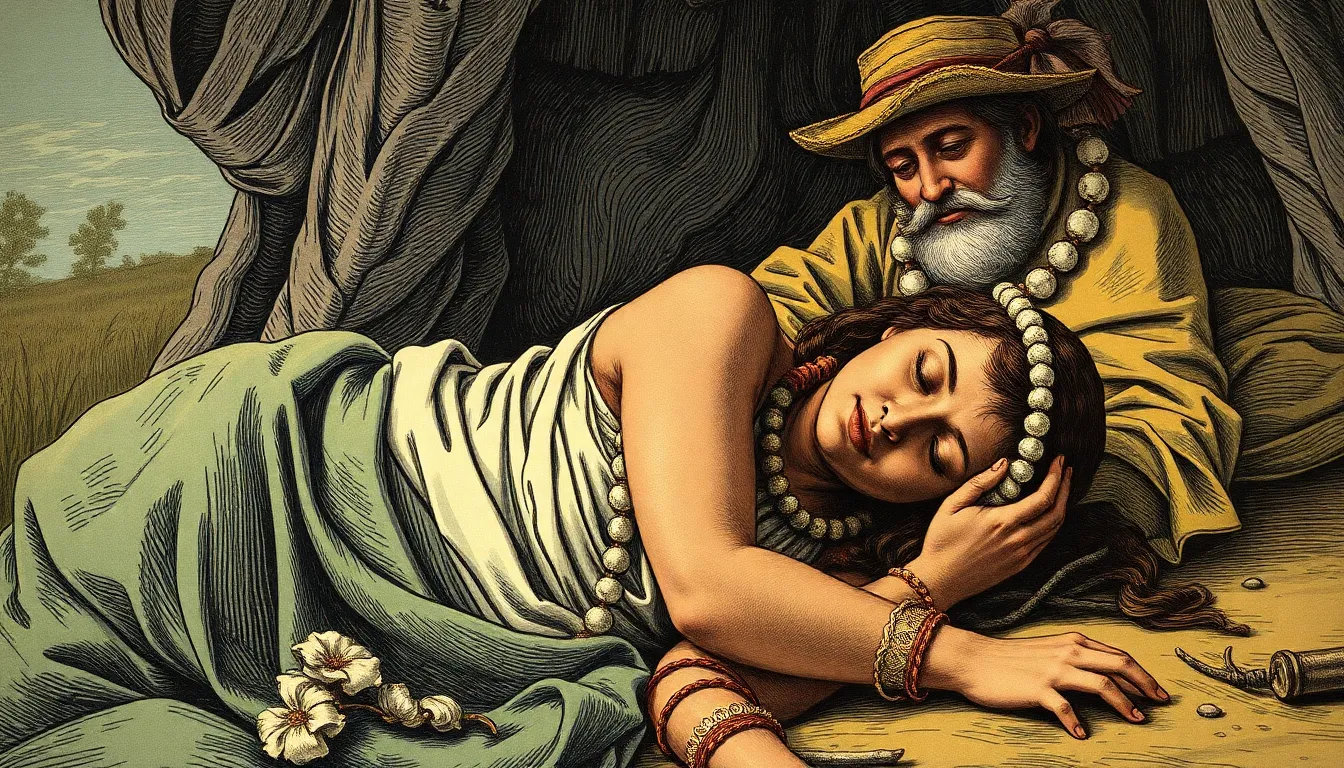
A range of AI platforms have been used across the project, including Gemini and Copilot. The images produced are not intended as definitive representations. They are exploratory artefacts, evidence gathered in the course of an investigation. A degree of imprecision is inherent to this approach and is accepted as part of the work.
Censorship and refusal
The research also encountered the limits of these systems directly. Certain prompts, particularly those involving nudity or sensitive representation, were blocked by the systems in use. The tools returned formulaic refusals, often phrased as "I am just a language model and cannot help with that answer." These interruptions are themselves revealing. They expose the ethical and commercial boundaries embedded in AI tools, which in turn shape the contours of what can and cannot be made visible. What a system refuses to produce is as informative as what it does produce.